Agropyron cristatum subsp. pectinatum
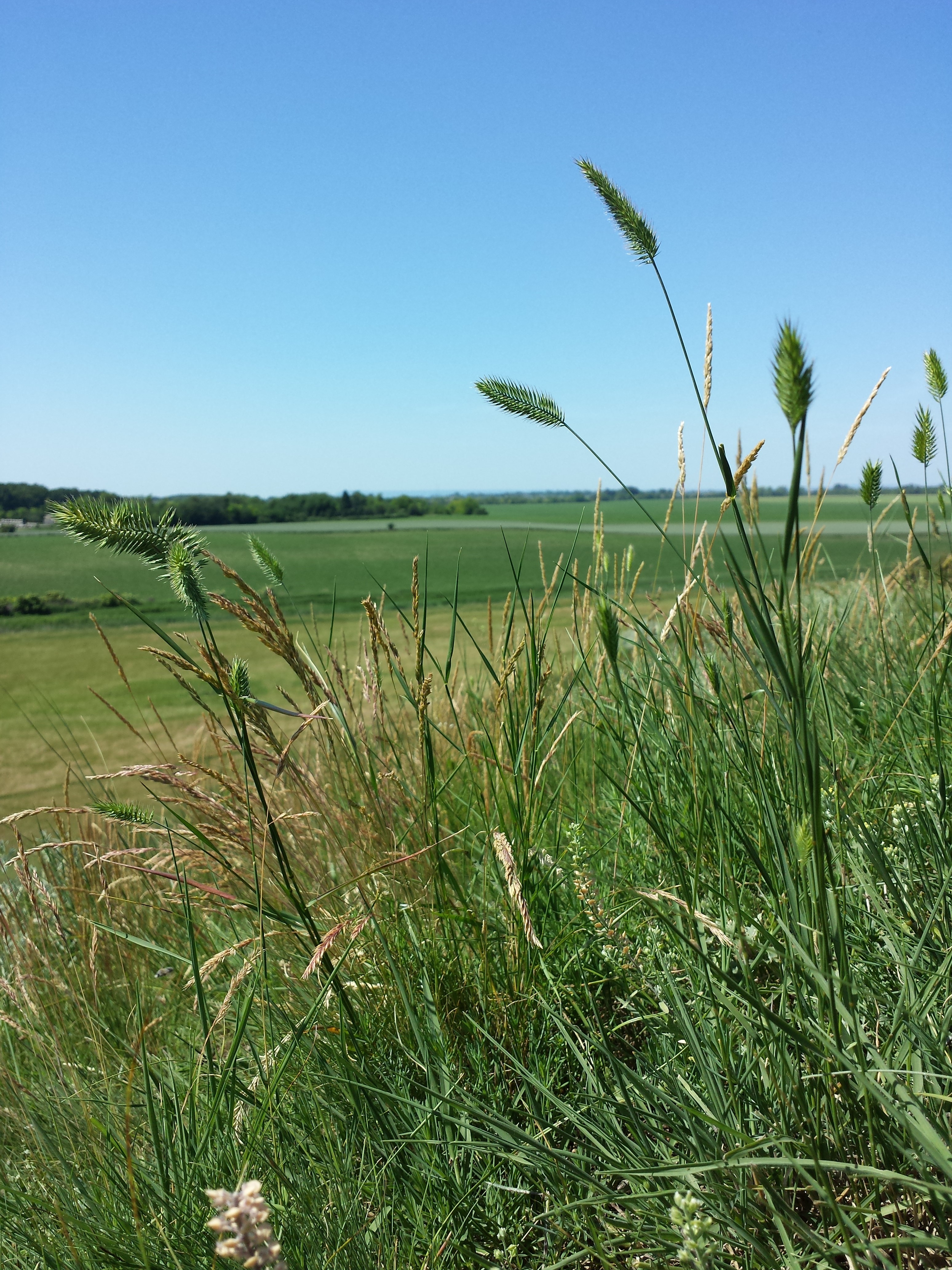
Stefan.lefnaer (via Wikimedia Commons) · CC BY-SA
Family: Poaceae · Type: Grass · Native
Agropyron cristatum subsp. pectinatum is a native California grass in the Poaceae family, recognized by Eurasian genus with limited naturalization, representing an introduced forage grass lineage.
Crested wheatgrass is a naturalized perennial found in the Klamath Ranges, northern Sierra Nevada, southern Coast Ranges, southwestern California, Great Basin, and Mojave Desert in disturbed areas and degraded agricultural sites at elevations of 600 to 1,500 meters. Flowering from June to August, this grass produces pale green to straw-colored flower spikes that spread at wide angles between 30 to 95 degrees. Growing with generally erect stems 30 to 50 centimeters tall, it occasionally develops rhizomes and forms dense clumps. Its narrow leaves are 3 to 12 centimeters long, 1.5 to 6 millimeters wide, and can be smooth or slightly hairy. The plant's distinctive flower spikes feature spikelets 7 to 16 millimeters long with short awns emerging from the tips of the florets.
Identification and appearance
Key characters: Eurasian genus with limited naturalization, representing an introduced forage grass lineage
Habitat and range
Habitat: Disturbed areas, degraded agricultural sites
Elevation: 600-1500 m
California counties: San Bernardino, Los Angeles, Lassen, Modoc, Sierra, Inyo, San Diego, Kern, Mono, Santa Barbara
Outside California: most of North America, native to Europe, Mediterranean, Asia
Bloom period
Agropyron cristatum subsp. pectinatum blooms Jun-Aug.
How to tell it apart
vs Setaria: Agropyron has a flattened spike; Setaria has a dense, cylindrical, bristly spike.; vs Cenchrus: Agropyron has a two-ranked spike; Cenchrus has spiny burs enclosing the spikelets.; vs Hordeum: Agropyron is perennial with short awns; Hordeum is mostly annual with longer awns.; vs Danthonia: Agropyron has a compressed spike; Danthonia has an open, branched flower cluster.; vs Gaudinia: Agropyron has ear-like auricles at leaf base; Gaudinia completely lacks auricles.
Frequently asked questions
Is Agropyron cristatum subsp. pectinatum native to California?
Yes. Agropyron cristatum subsp. pectinatum is native to California (recorded as native).
When does Agropyron cristatum subsp. pectinatum bloom?
Agropyron cristatum subsp. pectinatum blooms Jun-Aug.
Where in California does Agropyron cristatum subsp. pectinatum grow?
Agropyron cristatum subsp. pectinatum occurs in San Bernardino, Los Angeles, Lassen, Modoc, Sierra, Inyo, San Diego, Kern and other counties, at elevations of 600-1500 m.
What plant family does Agropyron cristatum subsp. pectinatum belong to?
Agropyron cristatum subsp. pectinatum is in the Poaceae family, genus Agropyron.
What habitat does Agropyron cristatum subsp. pectinatum grow in?
Agropyron cristatum subsp. pectinatum grows in Disturbed areas, degraded agricultural sites.
Related species
Other California species in the same genus, family, or bioregion.
Sources: Jepson eFlora · Index of California Plant Names · CalPhotos
Last updated 2026-10-07
Data from The California Species Project — 14,000+ California species with verified data from CNPS, CDFW, USFWS, Cal-IPC, and more.