Agrostis gigantea
Redtop, Redtop
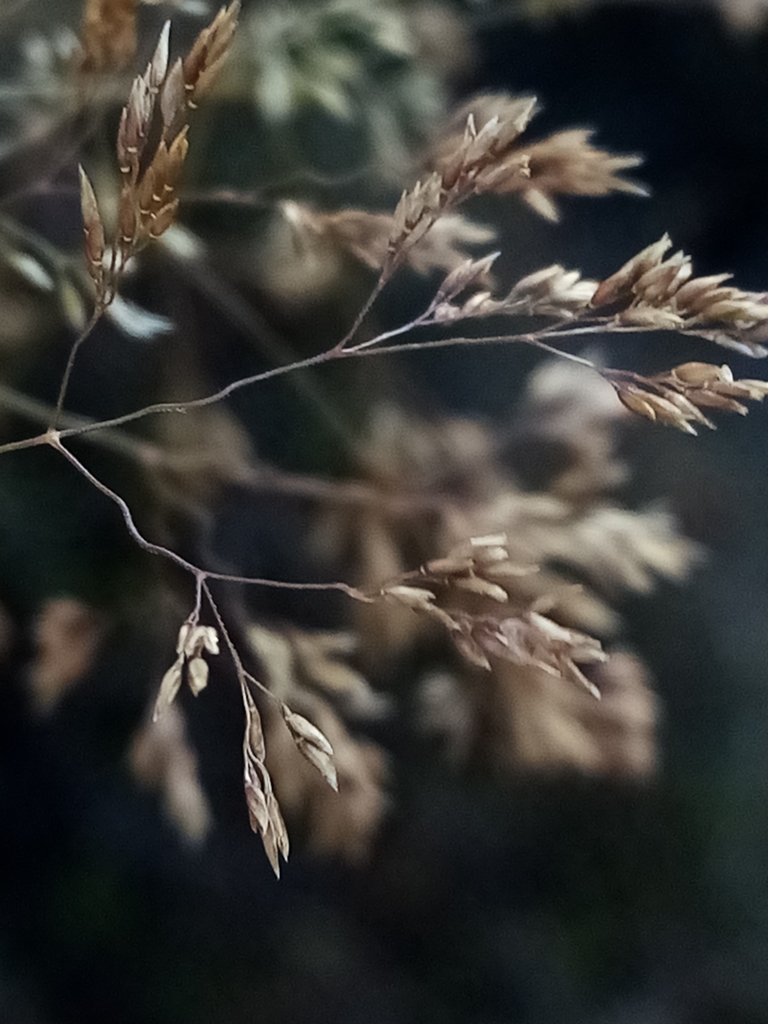
(c) Joe Potter Butler, some rights reserved (CC BY) · licence
Family: Poaceae · Type: Grass · Not Native
Agrostis gigantea (Redtop) is a non-native California grass in the Poaceae family, recognized by tall stature, scaly rhizomes, long ligule, and awnless lemmas.
Redtop is a naturalized perennial grass found in California's Central Valley and Foothills in roadsides and disturbed areas at elevations below 2,000 meters. Flowering from June to September, this grass produces small, delicate flowers in open, widely ovate panicles 8 to 25 centimeters long. Growing with spreading stems 20 to 100 centimeters tall, it develops short rhizomes up to 25 centimeters long and has a somewhat scaly base. Its leaf blades are flat, 4 to 10 centimeters long and 3 to 8 millimeters wide, with distinctive ligules 2 to 6 millimeters long that are longer than they are wide. The spikelets feature tiny glumes 2 to 3 millimeters long and lemmas without prominent awns.
Identification and appearance
Key characters: 19 sympatric species; key features are tall stature, scaly rhizomes, long ligule, and awnless lemmas
Habitat and range
Habitat: Roadsides, disturbed areas
Elevation: < 2000 m
California counties: Humboldt, Marin, Mariposa, Shasta, Siskiyou, Placer, Santa Clara, Butte, Inyo, Mono, San Bernardino, Calaveras, El Dorado, Santa Cruz, San Mateo, San Luis Obispo, San Francisco, Napa, Monterey, Madera, Fresno, Los Angeles, Glenn, Del Norte, Alpine, Kern, Lassen, Mendocino, Nevada, Plumas, Santa Barbara, Sierra, Sonoma, Tulare, Tuolumne, Ventura, Tehama, Yuba, Modoc, Trinity, Lake, Orange, Amador, San Diego, Sacramento, Yolo
Outside California: to eastern United States, native to Europe
Bloom period
Agrostis gigantea blooms Jun-Sep.
How to tell it apart
vs Oloptum: Oloptum has prominent bent awns; Agrostis awns are tiny or absent.; vs Holcus: Holcus has velvety-hairy spikelets; Agrostis spikelets are smooth and glossy.; vs Polypogon: Polypogon has dense bristly panicles; Agrostis panicles are airy and delicate.; vs Poa: Poa has boat-shaped lemmas with 5 veins; Agrostis lemmas are rounded with faint veins.; vs Festuca: Festuca has multiple flowers per spikelet; Agrostis has single-flowered spikelets.
Frequently asked questions
Is Agrostis gigantea native to California?
No. Agrostis gigantea is not native to California (recorded as not native).
When does Agrostis gigantea bloom?
Agrostis gigantea blooms Jun-Sep.
Where in California does Agrostis gigantea grow?
Agrostis gigantea occurs in Humboldt, Marin, Mariposa, Shasta, Siskiyou, Placer, Santa Clara, Butte and other counties, at elevations of < 2000 m.
What plant family does Agrostis gigantea belong to?
Agrostis gigantea is in the Poaceae family, genus Agrostis.
What habitat does Agrostis gigantea grow in?
Agrostis gigantea grows in Roadsides, disturbed areas.
Related species
Other California species in the same genus, family, or bioregion.
Sources: Jepson eFlora · Index of California Plant Names · CalPhotos
Last updated 2026-10-07
Data from The California Species Project — 14,000+ California species with verified data from CNPS, CDFW, USFWS, Cal-IPC, and more.