Alnus viridis subsp. sinuata
Thinleaf or sitka alder, Thinleaf Or Sitka Alder
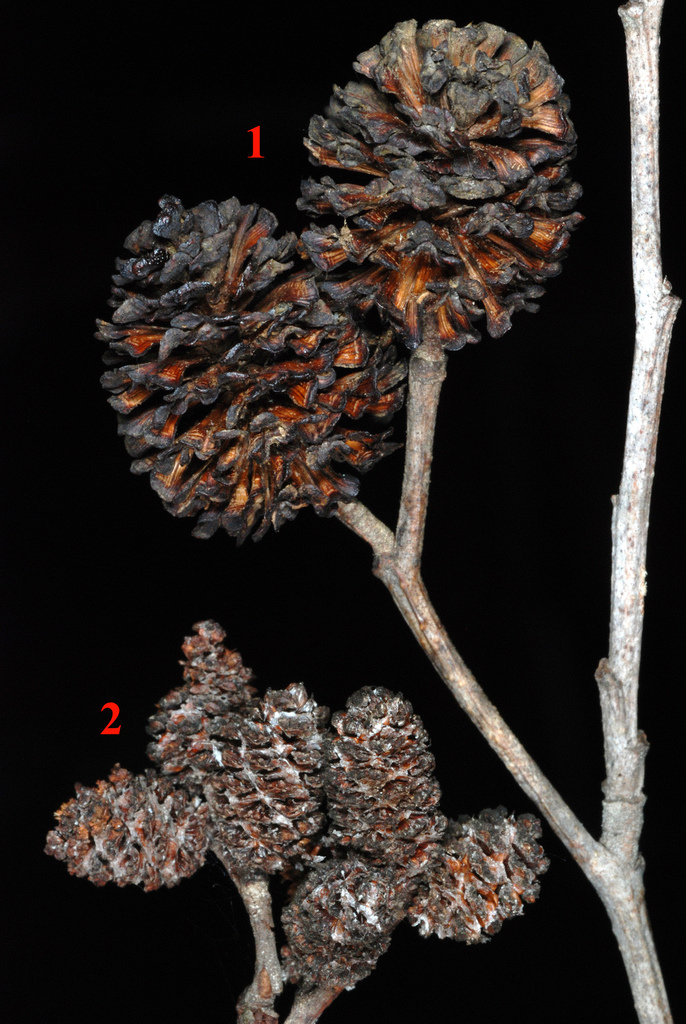
(c) Douglas Goldman, some rights reserved (CC BY-SA), uploaded by Douglas Goldman · licence
Family: Betulaceae · Type: Shrub / Tree · Native
Alnus viridis subsp. sinuata (Thinleaf or sitka alder) is a native California shrub / tree in the Betulaceae family, recognized by thin leaves with double serrations and light resin coating.
Thinleaf alder is a native shrub found in the Klamath Ranges, northern coastal ranges, and western Cascade Range near Grizzly Peak in Shasta County, growing along creeks, seeps, and meadow margins at elevations of 1,000 to 2,700 meters. Flowering in spring, this plant produces small catkin-like flowers typical of alders. Growing with multiple trunks up to 8 meters tall, it forms dense thickets in moist mountain environments. Its thin leaves are distinctively ovate with sharply serrated edges, displaying a shiny yellow-green surface on the upper side and a green underside with occasional hair clusters along the major veins. The shrub is lightly to moderately resinous, with leaf bases that range from tapered to slightly heart-shaped and tips that taper to a sharp point.
Identification and appearance
Key characters: 4 sympatric species; distinguished by thin leaves with double serrations and light resin coating
Habitat and range
Habitat: Along creeks, seeps, meadow margins
Elevation: 1000-2700 m
California counties: Del Norte, Trinity, Humboldt, Siskiyou, Shasta
Outside California: to Alaska, western Canada
Bloom period
Alnus viridis subsp. sinuata blooms Spring.
How to tell it apart
vs Corylus: Alnus has tiny winged seeds from persistent woody cones; Corylus has large nuts in papery husks.; vs Populus: Alnus has woody persistent cone-like catkins; Populus has fluffy cottony seeds from capsules.; vs Quercus: Alnus has woody cone-like catkins and toothed leaves; Quercus has acorns in caps and lobed leaves.; vs Betula: Alnus has woody cones that persist after seeds drop; Betula catkins disintegrate completely, releasing papery scales with seeds.; vs Ulmus: Alnus has woody cone-like catkins; Ulmus has flat, round, papery winged fruits.
Frequently asked questions
Is Alnus viridis subsp. sinuata native to California?
Yes. Alnus viridis subsp. sinuata is native to California (recorded as native).
When does Alnus viridis subsp. sinuata bloom?
Alnus viridis subsp. sinuata blooms Spring.
Where in California does Alnus viridis subsp. sinuata grow?
Alnus viridis subsp. sinuata occurs in Del Norte, Trinity, Humboldt, Siskiyou, Shasta, at elevations of 1000-2700 m.
What plant family does Alnus viridis subsp. sinuata belong to?
Alnus viridis subsp. sinuata is in the Betulaceae family, genus Alnus.
What habitat does Alnus viridis subsp. sinuata grow in?
Alnus viridis subsp. sinuata grows in Along creeks, seeps, meadow margins.
Related species
Other California species in the same genus, family, or bioregion.
Sources: Jepson eFlora · CalPhotos
Last updated 2026-10-07
Data from The California Species Project — 14,000+ California species with verified data from CNPS, CDFW, USFWS, Cal-IPC, and more.