Amaranthus hypochondriacus
Prince's-feather
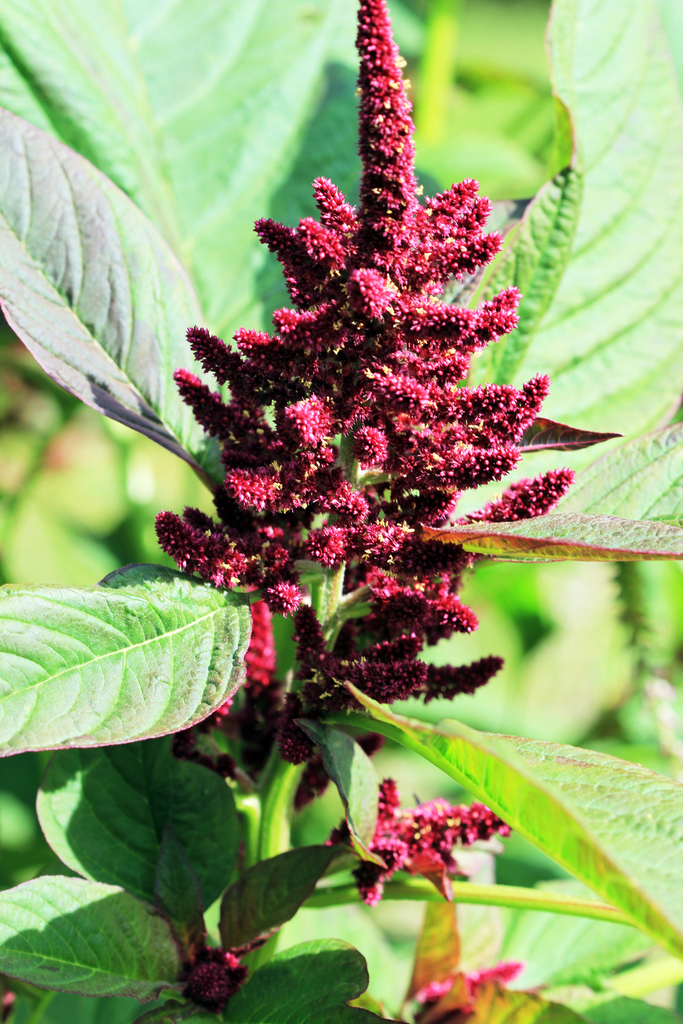
(c) Karelj, some rights reserved (CC BY-SA) · licence
Family: Amaranthaceae · Type: Herb · Not Native
Amaranthus hypochondriacus (Prince's-feather) is a non-native California herb in the Amaranthaceae family, recognized by . Key features: thick stiff lateral branches, cultivated ornamental, rigid dense inflorescence.
Prince's-feather is a naturalized plant found in southern California valleys, San Bernardino Mountains, and southern coastal areas in disturbed areas and roadsides at elevations below 200 meters. Flowering from July to October, this plant produces dark red or purple flowers in thick, stiff panicle-like inflorescences up to 20 centimeters long. Growing with erect stems 1 to 2 meters tall that are often red or purple-tinged and slightly hairy, the plant develops branching or unbranched growth. Its leaves are rhombic-ovate or widely lanceolate, 4 to 12 centimeters long with wedge-shaped bases and acute or obtuse tips. The fruit is a small circumscissile capsule 2 to 3 millimeters long, ranging in color from purple to red or brown.
Identification and appearance
Key characters: 15 sympatric species. Key features: thick stiff lateral branches, cultivated ornamental, rigid dense inflorescence
Habitat and range
Habitat: Disturbed areas, roadsides
Elevation: < 200 m
Outside California: native to southern North America, worldwide cultivated ornamental, pseudocereal and vegetable, rare escape from cultivation
Bloom period
Amaranthus hypochondriacus blooms Jul-Oct.
How to tell it apart
vs Celosia: Amaranthus has bristly flower spikes; Celosia has showy velvety flower plumes or crested combs.; vs Rumex: Amaranthus has dense bristly flower clusters; Rumex has flowers in whorls along stems with papery wings on fruits.; vs Salsola: Amaranthus has soft oval leaves and clustered flowers; Salsola has spine-tipped leaves and papery winged fruits.; vs Euphorbia: Amaranthus lacks milky sap and has separate male/female flowers; Euphorbia has milky sap and cup-like flower clusters.; vs Chenopodium: Amaranthus has bristly flower clusters; Chenopodium has mealy-coated leaves and flowers in loose balls.
Frequently asked questions
Is Amaranthus hypochondriacus native to California?
No. Amaranthus hypochondriacus is not native to California (recorded as not native).
When does Amaranthus hypochondriacus bloom?
Amaranthus hypochondriacus blooms Jul-Oct.
What plant family does Amaranthus hypochondriacus belong to?
Amaranthus hypochondriacus is in the Amaranthaceae family, genus Amaranthus.
What habitat does Amaranthus hypochondriacus grow in?
Amaranthus hypochondriacus grows in Disturbed areas, roadsides.
Related species
Other California species in the same genus, family, or bioregion.
Sources: Jepson eFlora · CalPhotos
Last updated 2026-10-07
Data from The California Species Project — 14,000+ California species with verified data from CNPS, CDFW, USFWS, Cal-IPC, and more.