Amblyopappus pusillus
Amblyopappus
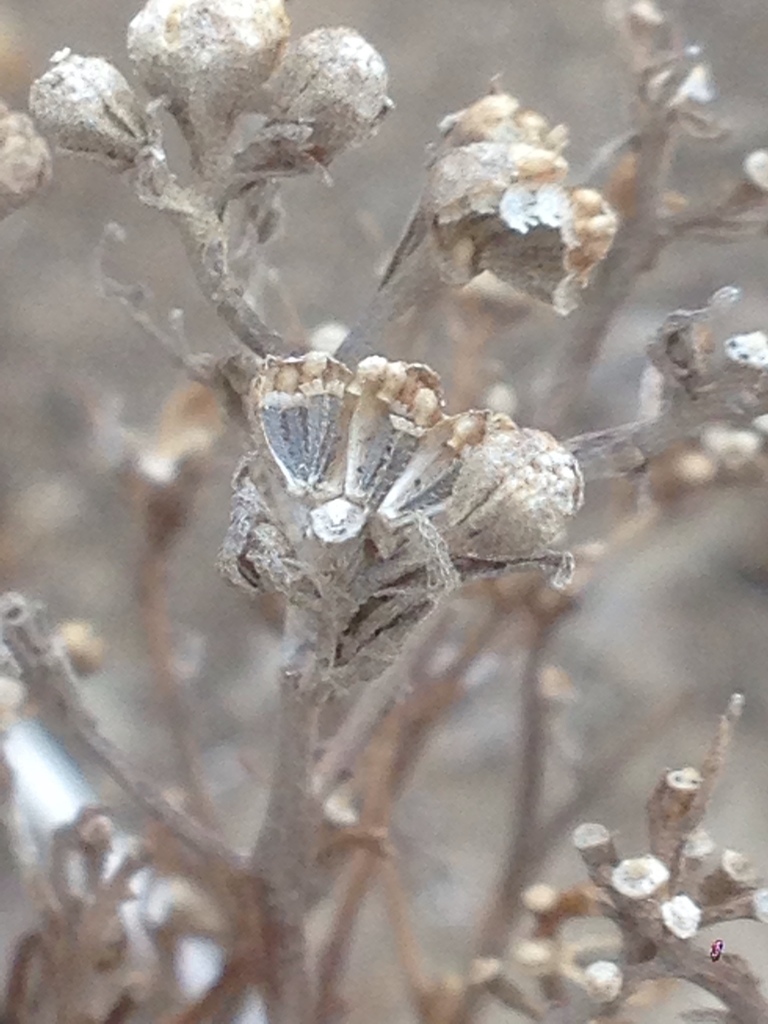
(c) Adam J. Searcy, some rights reserved (CC BY), uploaded by Adam J. Searcy · licence
Family: Asteraceae · Type: Herb · Native
Amblyopappus pusillus (Amblyopappus) is a native California herb in the Asteraceae family, recognized by Monotypic genus endemic to Pacific coast of Americas, representing a unique lineage within tribe Senecioneae.
Amblyopappus is a California native annual found in southern California Coastal, Channel Islands, and central Coastal bioregions on coastal dunes, beaches, and headlands at elevations below 250 meters. Flowering from March to June, this plant produces small yellow flowers in compact clusters with heads 3 to 6 millimeters in diameter. Growing 3 to 40 centimeters tall with erect stems that are often much-branched and slightly sticky, it has a distinctive strong odor. Its leaves are simple, alternate or lower leaves opposite, linear to narrow oblanceolate, ranging 1 to 4 centimeters long and somewhat fleshy. The fruit is small, black, and 1.5 to 2 millimeters long with a white or purplish crown of 7 to 12 scales.
Identification and appearance
Key characters: Monotypic genus endemic to Pacific coast of Americas, representing a unique lineage within tribe Senecioneae
Habitat and range
Habitat: Coastal dunes, beaches, headlands
Elevation: < 250 m
Outside California: Baja California, western South America
Bloom period
Amblyopappus pusillus blooms Generally Mar-Jun.
How to tell it apart
vs Deinandra: Amblyopappus has tiny rays under 1mm; Deinandra has normal-sized visible ray petals.; vs Mesembryanthemum: Amblyopappus is an Asteraceae with daisy flowers; Mesembryanthemum (Aizoaceae) has succulent leaves and different flower structure.; vs Lasthenia: Amblyopappus has sticky resin dots and rays under 1mm; Lasthenia lacks dots and has longer rays.; vs Eatonella: Amblyopappus is hairless with sticky dots; Eatonella is densely woolly white.; vs Adenocaulon: Amblyopappus is coastal with tiny ray flowers; Adenocaulon has no ray flowers and woodland habitat.
Frequently asked questions
Is Amblyopappus pusillus native to California?
Yes. Amblyopappus pusillus is native to California (recorded as native).
When does Amblyopappus pusillus bloom?
Amblyopappus pusillus blooms Generally Mar-Jun.
What plant family does Amblyopappus pusillus belong to?
Amblyopappus pusillus is in the Asteraceae family, genus Amblyopappus.
What habitat does Amblyopappus pusillus grow in?
Amblyopappus pusillus grows in Coastal dunes, beaches, headlands.
Related species
Other California species in the same genus, family, or bioregion.
Sources: Jepson eFlora · Index of California Plant Names · CalPhotos
Last updated 2026-10-07
Data from The California Species Project — 14,000+ California species with verified data from CNPS, CDFW, USFWS, Cal-IPC, and more.