Ambrosia psilostachya
Western ragweed, Western Ragweed
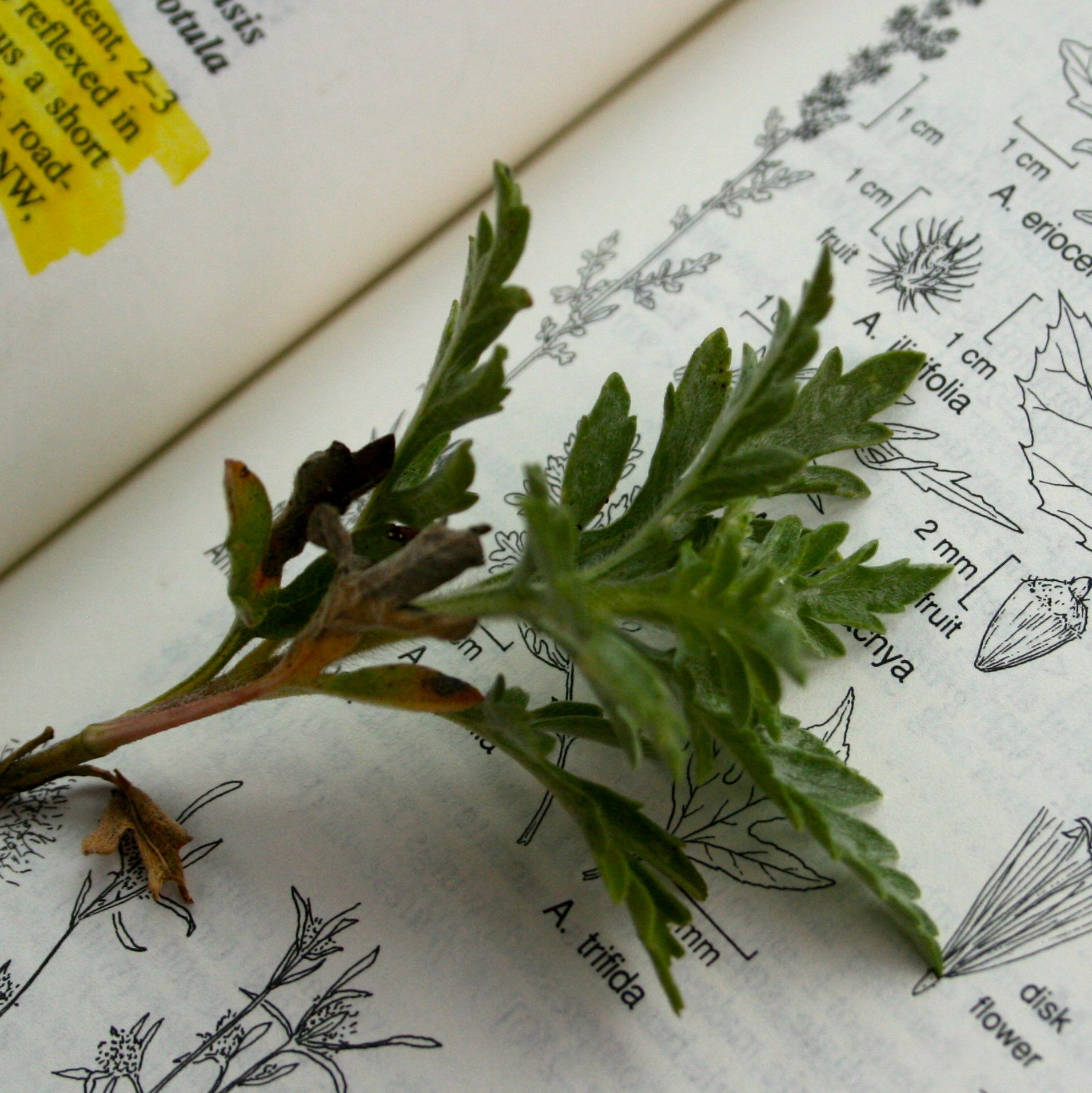
Photo by Chez Brungraber
Family: Asteraceae · Type: Herb · Native
Ambrosia psilostachya (Western ragweed) is a native California herb in the Asteraceae family, recognized by rhizomatous perennial with vestigial spines.
Western ragweed is a California native perennial found in the California Floristic Province in roadsides and dry fields at elevations below 1,000 meters. Flowering from June to November, this plant produces small greenish-white flowers in compact clusters on slender raceme-like stems. Growing with colonial stems 30 to 200 centimeters tall that emerge from rhizome-like roots, it spreads extensively in open disturbed areas. Its leaves are variable, with lower leaves opposite and upper leaves sessile, ranging 2 to 12 centimeters long, lanceolate to ovate with coarsely toothed or pinnately lobed edges marked by tiny resin glands. The fruit develops as a small brown bur with 0 to 7 tiny spines, giving the plant a distinctive bristly appearance.
Identification and appearance
Key characters: 11 sympatric species; rhizomatous perennial with vestigial spines
Habitat and range
Habitat: Common. Roadsides, dry fields
Elevation: < 1000 m
Outside California: to Idaho, eastern North America, Texas, northern Mexico
Bloom period
Ambrosia psilostachya blooms Jun-Nov.
How to tell it apart
vs Artemisia: Ambrosia produces spiny burs as fruits; Artemisia has tiny dry fruits without spines and strongly aromatic foliage.; vs Atriplex: Ambrosia has flower heads in spikes producing spiny burs; Atriplex has inconspicuous flowers with papery bracts and scurfy gray foliage.; vs Baccharis: Ambrosia has both male and female flowers on the same plant; Baccharis has male and female flowers on separate plants.; vs Eriogonum: Ambrosia has greenish flower heads producing spiny burs; Eriogonum has showy clusters of white, pink, or yellow flowers with papery bracts.; vs Salvia: Ambrosia has inconspicuous greenish flowers in the Asteraceae; Salvia has showy tubular lipped flowers typical of mints.
Frequently asked questions
Is Ambrosia psilostachya native to California?
Yes. Ambrosia psilostachya is native to California (recorded as native).
When does Ambrosia psilostachya bloom?
Ambrosia psilostachya blooms Jun-Nov.
What plant family does Ambrosia psilostachya belong to?
Ambrosia psilostachya is in the Asteraceae family, genus Ambrosia.
What habitat does Ambrosia psilostachya grow in?
Ambrosia psilostachya grows in Common. Roadsides, dry fields.
Related species
Other California species in the same genus, family, or bioregion.
Sources: Jepson eFlora · CalPhotos
Last updated 2026-10-07
Data from The California Species Project — 14,000+ California species with verified data from CNPS, CDFW, USFWS, Cal-IPC, and more.