Ammannia coccinea
Purple ammannia
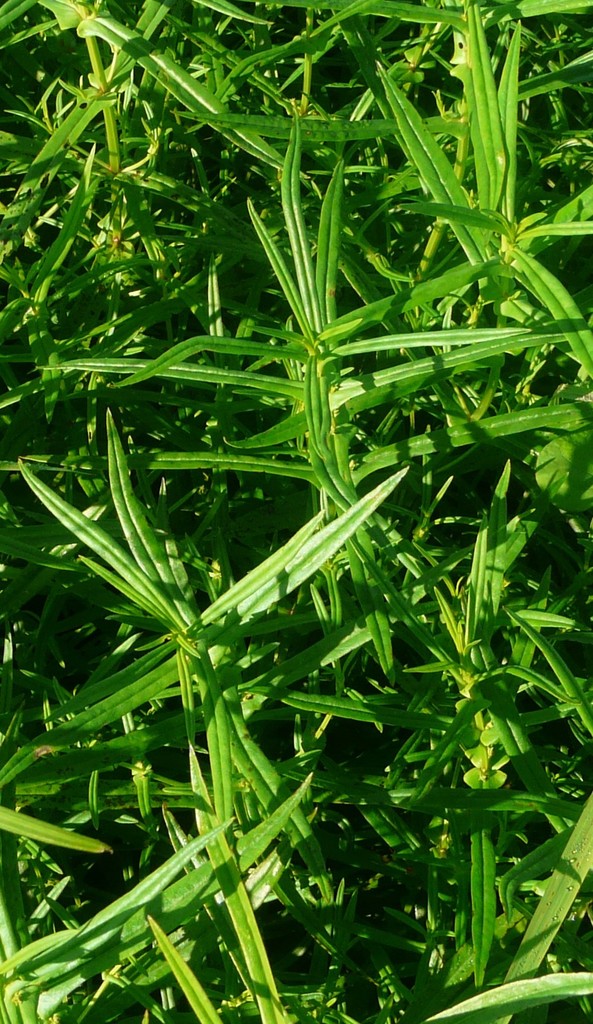
no rights reserved, uploaded by kent ozment · CC0
Family: Lythraceae · Type: Subshrub · Native
Ammannia coccinea (Purple ammannia) is a native California subshrub in the Lythraceae family.
Purple ammannia is a California native annual found in the Central Valley, Sierra Foothills, Coast Ranges, San Francisco Bay Area, and southern deserts in wet places, drying pond margins, and creek edges at elevations below 300 meters. Flowering from June to August, this plant produces small, delicate flowers in deep red to purple tones with bright yellow stamens. Growing with slender stems 10 to 100 centimeters tall, it spreads in moist seasonal habitats with an open, branching structure. Its narrow leaves are 2 to 8 centimeters long and 2 to 15 millimeters wide, arranged oppositely along the stem. The tiny flowers feature 2 to 4 petals and deep yellow anthers, creating subtle clusters of 3 to 5 blossoms.
Identification and appearance
Key characters: 1 sympatric species; anther color and flower number per inflorescence are key differentiators
Habitat and range
Habitat: Wet places, drying ponds, lake, creek margins
Elevation: < 300 m
California counties: Butte, Riverside, Tulare, Ventura, Los Angeles, Colusa, Lake, Santa Barbara, Kern, Fresno, Sutter, Stanislaus, Kings, Marin, Glenn, San Diego, Imperial, San Bernardino, Orange, San Luis Obispo, Sonoma, Tehama, Yolo, Madera, Yuba, Merced, Alameda, Amador, San Joaquin, San Mateo, Contra Costa, Mariposa, Sacramento, Santa Cruz
Outside California: to eastern United States, South America, also southern Europe, eastern Africa as weed in rice fields
Bloom period
Ammannia coccinea blooms Jun-Aug.
How to tell it apart
vs Rumex: Ammannia has ear-lobed leaves and small clustered flowers; Rumex has sheathing leaf bases and papery winged fruits.; vs Epilobium: Ammannia has ear-lobed leaves and superior ovaries; Epilobium has smooth leaf bases and inferior ovaries.; vs Punica: Ammannia is a tiny wetland herb with ear-lobed leaves; Punica is a woody shrub with large leathery flowers.; vs Lythrum: Ammannia has ear-like lobes at leaf base; Lythrum has smooth leaf bases without lobes.; vs Rotala: Ammannia has ear-lobed leaf bases and dense flower clusters; Rotala has tapered leaf bases and solitary flowers.
Frequently asked questions
Is Ammannia coccinea native to California?
Yes. Ammannia coccinea is native to California (recorded as native).
When does Ammannia coccinea bloom?
Ammannia coccinea blooms Jun-Aug.
Where in California does Ammannia coccinea grow?
Ammannia coccinea occurs in Butte, Riverside, Tulare, Ventura, Los Angeles, Colusa, Lake, Santa Barbara and other counties, at elevations of < 300 m.
What plant family does Ammannia coccinea belong to?
Ammannia coccinea is in the Lythraceae family, genus Ammannia.
What habitat does Ammannia coccinea grow in?
Ammannia coccinea grows in Wet places, drying ponds, lake, creek margins.
Related species
Other California species in the same genus, family, or bioregion.
Sources: Jepson eFlora · Index of California Plant Names · CalPhotos
Last updated 2026-10-07
Data from The California Species Project — 14,000+ California species with verified data from CNPS, CDFW, USFWS, Cal-IPC, and more.