Ammi majus
Bishop's weed
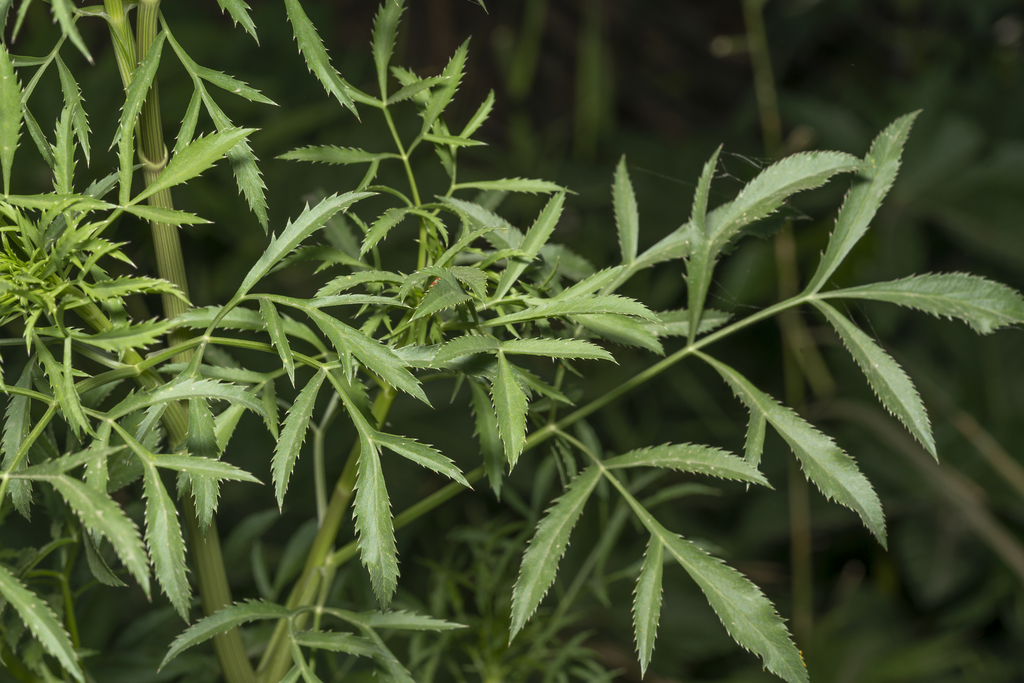
(c) Eleftherios Katsillis, some rights reserved (CC BY), uploaded by Eleftherios Katsillis · licence
Family: Apiaceae · Type: Herb · Not Native
Ammi majus (Bishop's weed) is a non-native California herb in the Apiaceae family, recognized by . visnaga; distinguished by northern range and 20-60 rays vs 60-100.
Bishop's weed is a naturalized annual found in northern coastal, northern coastal-rural, and Sacramento Valley regions in fields, roadsides, and disturbed areas at elevations generally below 1,000 meters. Flowering from May to July, this plant produces white flowers in delicate, branching clusters with 20 to 60 slender rays extending 2 to 7 centimeters. Growing 20 to 80 centimeters tall with erect, branching stems, it develops a complex, finely divided leaf structure. Its leaves are intricately 2-pinnately dissected with oblong blades 6 to 20 centimeters long, featuring segments approximately 10 to 15 millimeters in length. The small oblong fruits measure 1.5 to 2 millimeters long, contributing to its distinctive appearance in disturbed landscapes.
Identification and appearance
Key characters: Geographically isolated from A. visnaga; distinguished by northern range and 20-60 rays vs 60-100
Habitat and range
Habitat: Fields, roadsides, disturbed areas
Elevation: generally < 1000 m
California counties: Napa, San Joaquin, Sonoma, Ventura, Solano, Santa Barbara, Los Angeles, Riverside, San Luis Obispo, San Bernardino, Santa Clara, Butte, Orange, Contra Costa, Lake, San Diego, Yolo
Outside California: native to Eurasia
Bloom period
Ammi majus blooms May-Jul.
How to tell it apart
vs Daucus: Ammi is completely smooth; Daucus is hairy with bristly fruits.; vs Conium: Ammi has prominent leaf-like bracts; Conium lacks bracts and has purple-spotted stems.; vs Visnaga: Ammi has divided leaf-like bracts; Visnaga has thread-like undivided bracts.; vs Perideridia: Ammi has large dissected leaf-like bracts; Perideridia has tiny simple bracts or none.; vs Apiastrum: Ammi has alternate leaves and many rays; Apiastrum has opposite leaves and 2-3 rays.
Frequently asked questions
Is Ammi majus native to California?
No. Ammi majus is not native to California (recorded as not native).
When does Ammi majus bloom?
Ammi majus blooms May-Jul.
Where in California does Ammi majus grow?
Ammi majus occurs in Napa, San Joaquin, Sonoma, Ventura, Solano, Santa Barbara, Los Angeles, Riverside and other counties, at elevations of generally < 1000 m.
What plant family does Ammi majus belong to?
Ammi majus is in the Apiaceae family, genus Ammi.
What habitat does Ammi majus grow in?
Ammi majus grows in Fields, roadsides, disturbed areas.
Related species
Other California species in the same genus, family, or bioregion.
Sources: Jepson eFlora · Index of California Plant Names · CalPhotos
Last updated 2026-10-07
Data from The California Species Project — 14,000+ California species with verified data from CNPS, CDFW, USFWS, Cal-IPC, and more.