Ammophila arenaria
European beachgrass, European Beachgrass
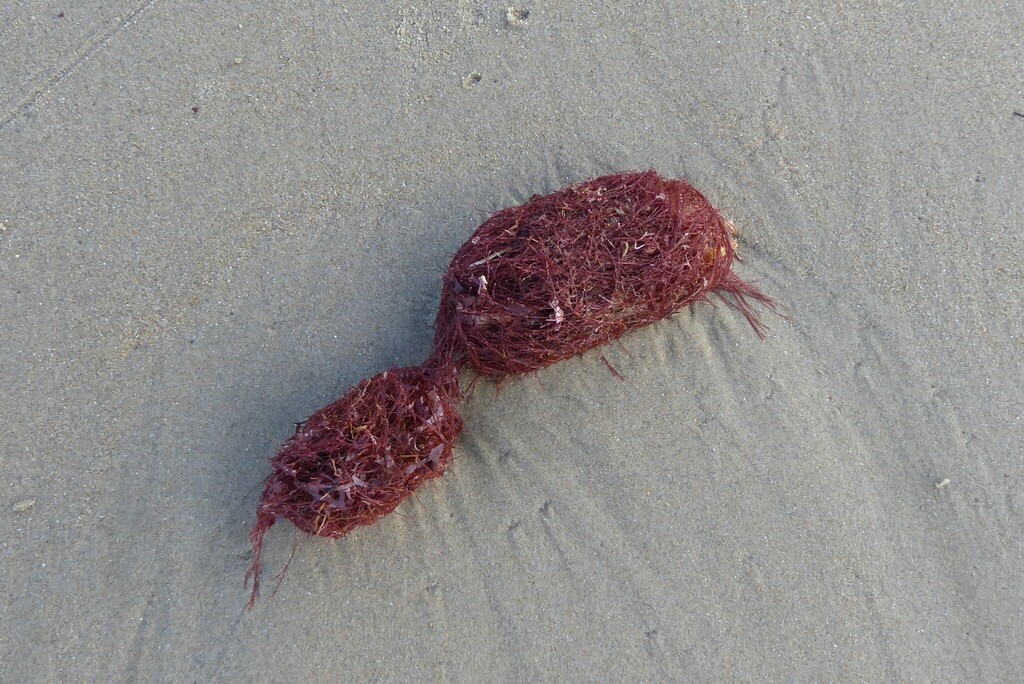
(c) Aalbert Rebergen, some rights reserved (CC BY) · licence
Family: Poaceae · Type: Grass · Not Native
Conservation status: Cal-IPC Yes
Ammophila arenaria (European beachgrass) is a non-native California grass in the Poaceae family, recognized by Only North American representative of this European genus, introduced for dune stabilization but now considered invasive.
European beachgrass is a naturalized perennial found in coastal bioregions including northern California Coast, central California Coast, southern California Coast, and San Nicolas Island in coastal sand dunes at elevations below 240 meters. Flowering from May to August, this grass produces pale straw-colored flower spikes 15 to 30 centimeters long and approximately 2 centimeters wide. Growing with robust stems 50 to 120 centimeters tall, it forms dense clumps that stabilize sandy environments. Its leaves are narrow, 2 to 5 millimeters wide, with distinctive ligules 1 to 3 centimeters long that are sharply pointed at the tip. The grass produces dense cylindrical flower clusters with individual spikelets 10 to 13 millimeters long, featuring prominent callus hairs 2 to 4 millimeters in length.
Identification and appearance
Key characters: Only North American representative of this European genus, introduced for dune stabilization but now considered invasive
Habitat and range
Habitat: Sand dunes
Elevation: < 240 m
California counties: Humboldt, Marin, San Francisco, San Luis Obispo, San Mateo, Santa Barbara, Santa Cruz, Sonoma, Ventura, Del Norte, Monterey, Mendocino, Sacramento, Contra Costa
Outside California: native to northern Europe
Bloom period
Ammophila arenaria blooms May-Aug.
Conservation status
Cal-IPC Yes
How to tell it apart
vs Podalonia: Podalonia is a wasp, not a plant.; vs Sphex: Sphex is a wasp, not a plant.; vs Prionyx: Prionyx is a wasp, not a plant.; vs Gasteruption: Gasteruption is a wasp, not a plant.; vs Trypoxylon: Trypoxylon is a wasp, not a plant.
Frequently asked questions
Is Ammophila arenaria native to California?
No. Ammophila arenaria is not native to California (recorded as not native).
When does Ammophila arenaria bloom?
Ammophila arenaria blooms May-Aug.
Where in California does Ammophila arenaria grow?
Ammophila arenaria occurs in Humboldt, Marin, San Francisco, San Luis Obispo, San Mateo, Santa Barbara, Santa Cruz, Sonoma and other counties, at elevations of < 240 m.
What plant family does Ammophila arenaria belong to?
Ammophila arenaria is in the Poaceae family, genus Ammophila.
Is Ammophila arenaria invasive in California?
Ammophila arenaria is listed by Cal-IPC with an invasiveness rating of Yes.
Related species
Other California species in the same genus, family, or bioregion.
Sources: Jepson eFlora · Index of California Plant Names · CalPhotos
Last updated 2026-10-08
Data from The California Species Project — 14,000+ California species with verified data from CNPS, CDFW, USFWS, Cal-IPC, and more.