Amsinckia eastwoodiae
Eastwood's fiddleneck
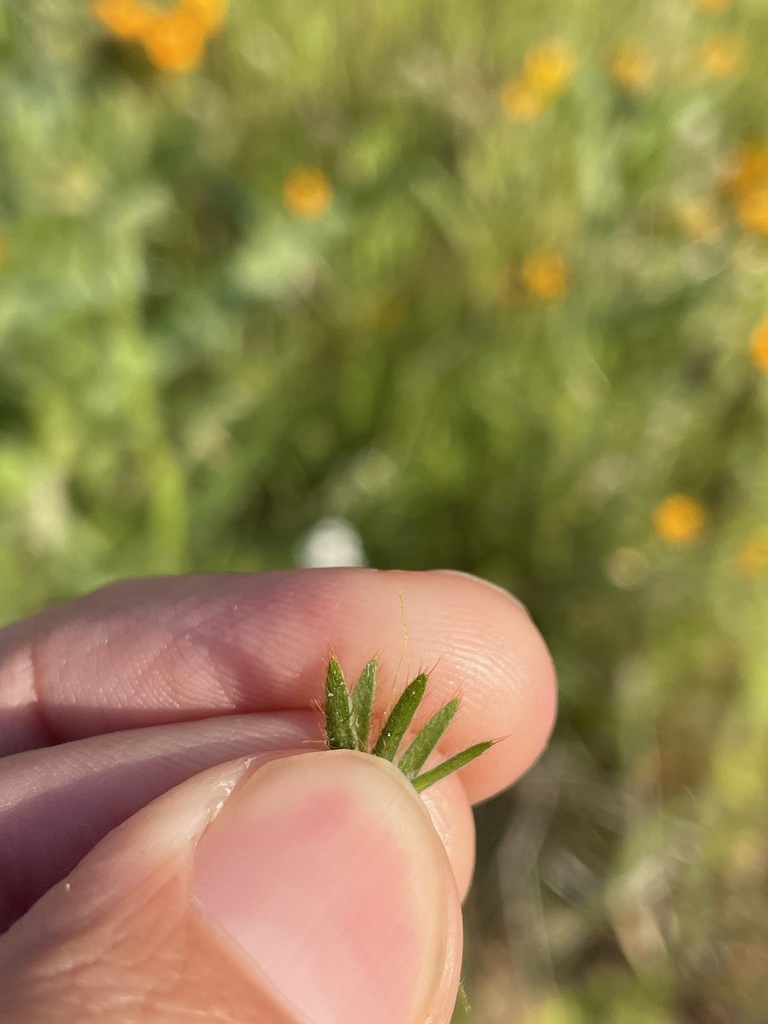
(c) Matt Berger, some rights reserved (CC BY), uploaded by Matt Berger · licence
Family: Boraginaceae · Type: Herb · Native
Amsinckia eastwoodiae (Eastwood's fiddleneck) is a native California herb in the Boraginaceae family, recognized by equal calyx lobes and stamen position diagnostic.
Eastwood's fiddleneck is a California native annual found in the North Coast, North Coast Ranges, Sierra Nevada Foothills, Tehama County, Central Valley, South Coast Ranges, and Southwest regions in open valleys and hills at elevations of 10 to 1,500 meters. Flowering from March to May, this plant produces distinctive bright orange flowers with 10 to 20 millimeter corollas spreading 8 to 14 millimeters wide. Growing with slender stems that reach variable heights, it develops intricate clusters of small orange blossoms. Its leaves are narrow and lance-shaped, typical of the fiddleneck genus, with rough textured surfaces that contribute to its distinctive appearance. The small fruits are 2.5 to 4 millimeters long, characterized by sharp tubercles that aid in seed dispersal.
Identification and appearance
Key characters: 13 sympatric species; equal calyx lobes and stamen position diagnostic
Habitat and range
Habitat: Open valleys, hills
Elevation: 10-1500 m
California counties: San Joaquin, Tulare, Kern, Mariposa, Los Angeles, Fresno, Contra Costa, San Diego, Madera, Stanislaus, San Bernardino, Glenn, Sacramento, Orange, Calaveras, San Luis Obispo, Monterey, Yolo, Amador, Riverside, Butte, Placer, Alameda, Sutter, Humboldt, Merced, Napa, Tuolumne, San Benito
Bloom period
Amsinckia eastwoodiae blooms Mar-May.
How to tell it apart
vs Phacelia: Amsinckia always has orange or yellow flowers; Phacelia flowers are blue, purple, or white.; vs Plantago: Amsinckia has coiled orange flower clusters; Plantago has dense spikes with tiny white-brown flowers.; vs Helminthotheca: Amsinckia has bristly stems but simple leaves; Helminthotheca leaves are prickly-bumpy textured.; vs Echium: Amsinckia flowers are orange-yellow; Echium flowers are blue-purple and distinctly lopsided.; vs Camissoniopsis: Amsinckia has coiled flower clusters; Camissoniopsis has 4-petaled evening primrose flowers.
Frequently asked questions
Is Amsinckia eastwoodiae native to California?
Yes. Amsinckia eastwoodiae is native to California (recorded as native).
When does Amsinckia eastwoodiae bloom?
Amsinckia eastwoodiae blooms Mar-May.
Where in California does Amsinckia eastwoodiae grow?
Amsinckia eastwoodiae occurs in San Joaquin, Tulare, Kern, Mariposa, Los Angeles, Fresno, Contra Costa, San Diego and other counties, at elevations of 10-1500 m.
What plant family does Amsinckia eastwoodiae belong to?
Amsinckia eastwoodiae is in the Boraginaceae family, genus Amsinckia.
What habitat does Amsinckia eastwoodiae grow in?
Amsinckia eastwoodiae grows in Open valleys, hills.
Related species
Other California species in the same genus, family, or bioregion.
Sources: Jepson eFlora · Index of California Plant Names · CalPhotos
Last updated 2026-10-07
Data from The California Species Project — 14,000+ California species with verified data from CNPS, CDFW, USFWS, Cal-IPC, and more.