Ancistrocarphus filagineus
Woolly fishhooks, Woolly Fishhooks
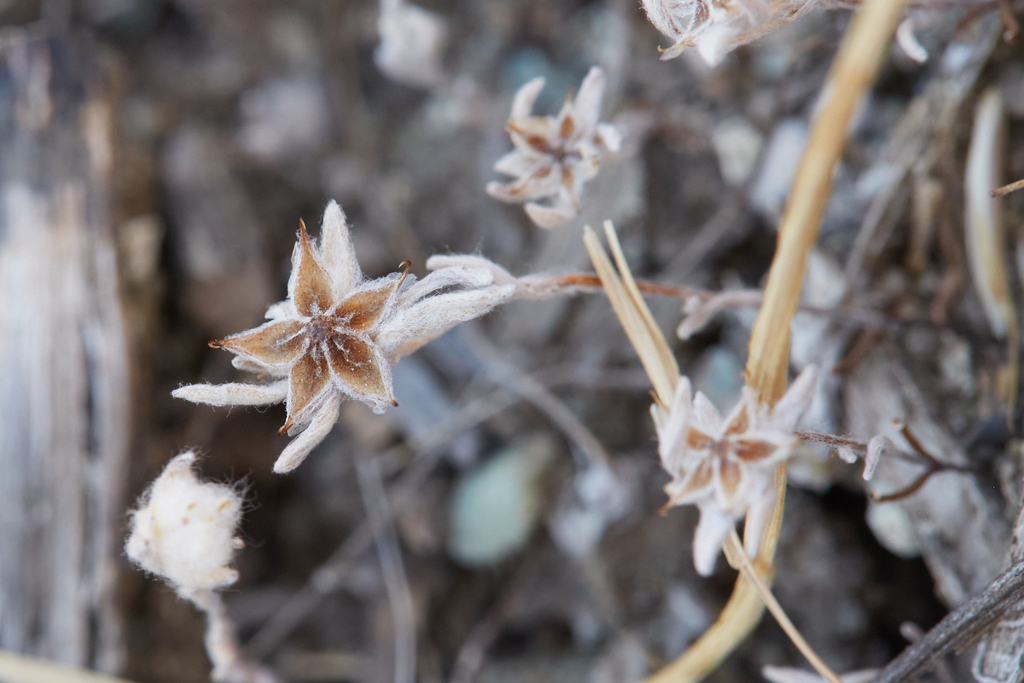
(c) Ken-ichi Ueda, some rights reserved (CC BY) · licence
Family: Asteraceae · Type: Herb · Native
Ancistrocarphus filagineus (Woolly fishhooks) is a native California herb in the Asteraceae family.
Woolly fishhooks is a California native annual herb found in the California Floristic Province (excluding northern coastal, central coastal, and Channel Islands), and western Mojave Desert at elevations of 60 to 1,900 meters in bare or grassy sites, often on serpentine or clay soils, vernally moist areas, and disturbed landscapes like road beds and burns. Flowering from March to June, this plant produces small whitish flower heads 3.5 to 8 millimeters long with distinctive ovate wings on pistillate paleae. Growing with delicate stems and compact growth, it reaches heights of approximately 10 to 20 centimeters. Its leaves are linear-oblanceolate to elliptic, measuring 8 to 16 millimeters long and 2 to 3 millimeters wide, with a narrow base and slightly acuminate tip. The plant's tiny disk flowers feature (4)5(6) nearly equal radial corolla lobes, creating a distinctive and intricate floral structure.
Identification and appearance
Key characters: 0 sympatric species - geographically isolated throughout CA-FP and mountain provinces
Habitat and range
Habitat: Bare or grassy, often serpentine or clay, drainages, road beds, burns, vernally moist sites
Elevation: 60-1900(2100) m
Outside California: to Oregon, southwestern Idaho, northern Nevada, northwestern Baja California
Bloom period
Ancistrocarphus filagineus blooms Mar-Jun.
How to tell it apart
vs Logfia: Ancistrocarphus has distinctive inward-hooked spine tips; Logfia has mushroom-shaped heads without hooks.; vs Psilocarphus: Ancistrocarphus has hooked spine-tipped bracts; Psilocarphus has woolly heads without hooked spines.; vs Hesperevax: Ancistrocarphus has inward-hooked spine tips; Hesperevax has erect or spreading flat, blunt-tipped bracts.; vs Filago: Ancistrocarphus has prominent hooked spine-tipped bracts; Filago has cone-shaped heads without hooks.; vs Stylocline: Ancistrocarphus has distinctive fishhook-tipped bracts; Stylocline lacks hooked spines entirely.
Frequently asked questions
Is Ancistrocarphus filagineus native to California?
Yes. Ancistrocarphus filagineus is native to California (recorded as native).
When does Ancistrocarphus filagineus bloom?
Ancistrocarphus filagineus blooms Mar-Jun.
What plant family does Ancistrocarphus filagineus belong to?
Ancistrocarphus filagineus is in the Asteraceae family, genus Ancistrocarphus.
What habitat does Ancistrocarphus filagineus grow in?
Ancistrocarphus filagineus grows in Bare or grassy, often serpentine or clay, drainages, road beds, burns, vernally moist sites.
Related species
Other California species in the same genus, family, or bioregion.
Sources: Jepson eFlora · Index of California Plant Names · CalPhotos
Last updated 2026-10-07
Data from The California Species Project — 14,000+ California species with verified data from CNPS, CDFW, USFWS, Cal-IPC, and more.