Androsace occidentalis
Western rock-jasmine
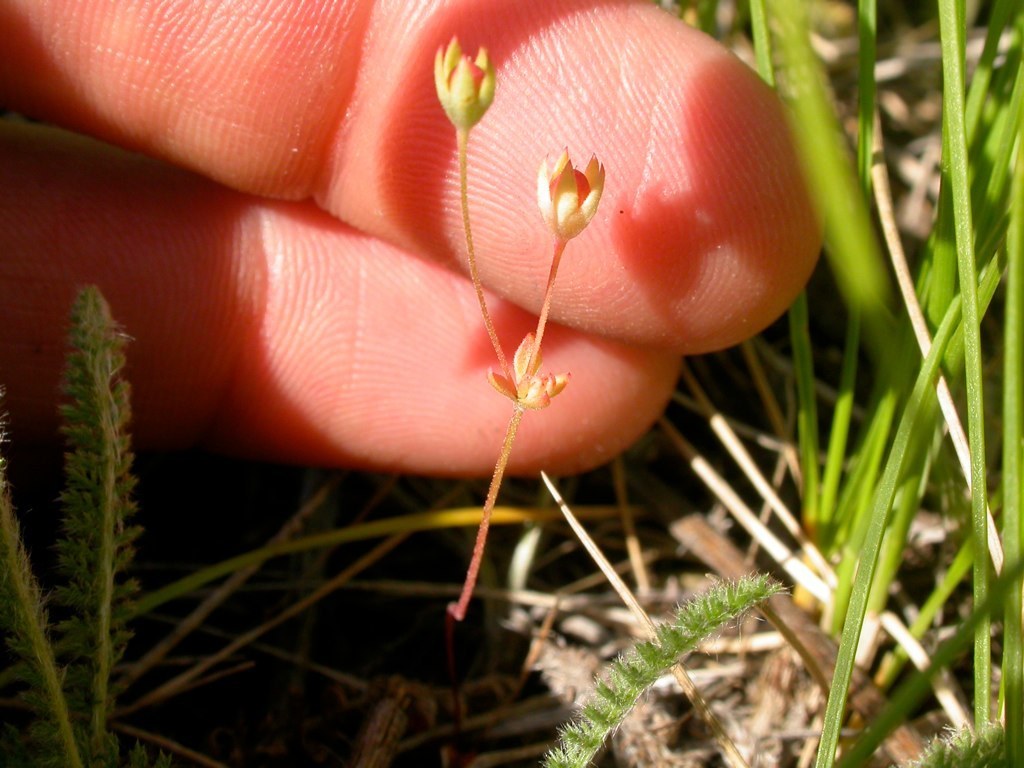
(c) Matt Lavin, some rights reserved (CC BY-SA) · licence
Family: Primulaceae · Type: Herb · Native
Androsace occidentalis (Western rock-jasmine) is a native California herb in the Primulaceae family.
Western rock-jasmine is a California native annual found in northern Sierra Nevada (Emigrant Gap) in generally moist sites at elevations of 1,580 to 1,650 meters. Flowering from April to August, this plant produces delicate white flowers in small clusters with short pedicels. Growing with hairy stems just 3 to 7 centimeters tall, it forms compact low-growing clusters. Its leaves are lance-elliptic, 5 to 15 millimeters long, with edges that range from entire to finely toothed. The tiny white flowers emerge with reddish-tinted calyx lobes, creating a subtle color contrast in its alpine habitat.
Identification and appearance
Key characters: 0 sympatric species; geographically isolated in High Sierra Nevada
Habitat and range
Habitat: Generally moist sites
Elevation: 1580-1650 m
California counties: Placer
Outside California: to British Columbia, Great Lakes, Texas (except Oregon, Washington)
Bloom period
Androsace occidentalis blooms Apr-Aug.
How to tell it apart
vs Pelargonium: Androsace has tiny white flowers (petals 1-3mm) in umbels; Pelargonium has much larger showy flowers in various colors.; vs Primula: Androsace petals face upward (1-3mm long); Primula petals reflex dramatically backward (much larger).
Frequently asked questions
Is Androsace occidentalis native to California?
Yes. Androsace occidentalis is native to California (recorded as native).
When does Androsace occidentalis bloom?
Androsace occidentalis blooms Apr-Aug.
Where in California does Androsace occidentalis grow?
Androsace occidentalis occurs in Placer, at elevations of 1580-1650 m.
What plant family does Androsace occidentalis belong to?
Androsace occidentalis is in the Primulaceae family, genus Androsace.
What habitat does Androsace occidentalis grow in?
Androsace occidentalis grows in Generally moist sites.
Related species
Other California species in the same genus, family, or bioregion.
Sources: Jepson eFlora · Index of California Plant Names · CalPhotos
Last updated 2026-10-07
Data from The California Species Project — 14,000+ California species with verified data from CNPS, CDFW, USFWS, Cal-IPC, and more.