Androstephium breviflorum
Small-flowered androstephium, Small-Flowered Androstephium, small-flowered androstephium, small-flowered androstephium
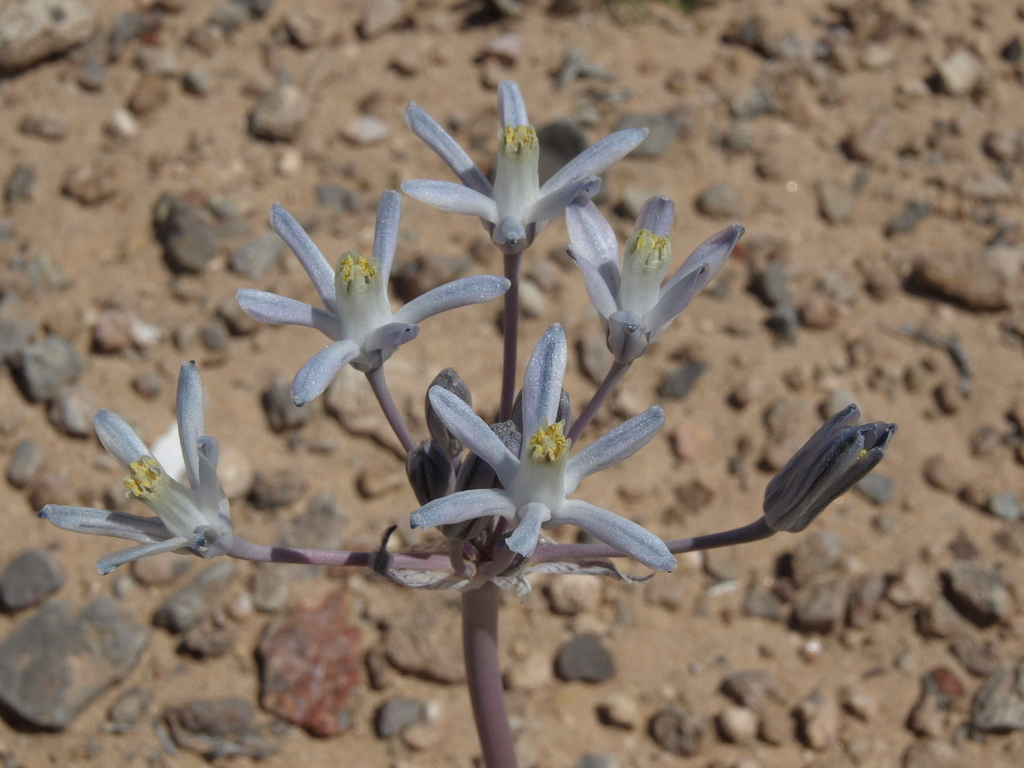
(c) Jim Morefield, some rights reserved (CC BY) · licence
Family: Themidaceae · Type: Herb · Native
Conservation status: CNPS 2B.2
Androstephium breviflorum (Small-flowered androstephium) is a native California herb in the Themidaceae family, recognized by Small genus of southwestern US/northwestern Mexico, representing a distinct lineage within Themidaceae.
Small-flowered androstephium is a rare (CNPS 2B.2) California native perennial found in southern Mojave Desert and northern Sonoran Desert regions in open desert scrub with sandy to rocky soil at elevations of 100 to 1,600 meters. Flowering from March to June, this plant produces white to light violet flowers that dry yellow-brown, with delicate perianth lobes 10 to 14 millimeters long. Growing with slender scapes 10 to 35 centimeters tall and slightly rough near the base, it emerges from a compact underground structure. Its narrow leaves are 10 to 30 centimeters long and only 1.5 to 2 millimeters wide, providing a delicate, grass-like appearance. The fruit is a distinctive 10 to 15 millimeter capsule deeply divided into three lobes.
Identification and appearance
Key characters: Small genus of southwestern US/northwestern Mexico, representing a distinct lineage within Themidaceae
Habitat and range
Habitat: Open desert scrub, sandy to rocky soil
Elevation: 100-1600 m
California counties: San Bernardino, Riverside, Inyo
Outside California: to western Colorado
Bloom period
Androstephium breviflorum blooms Mar-Jun.
Conservation status
CNPS 2B.2
How to tell it apart
vs Muilla: Androstephium has tubular flowers with a crown inside; Muilla has spreading white petals.; vs Bloomeria: Androstephium has pale tubular flowers; Bloomeria has golden spreading stars.; vs Triteleia: Androstephium stamens fuse into a crowned tube; Triteleia stamens remain separate and free.; vs Brodiaea: Androstephium has six fertile stamens; Brodiaea has only three fertile stamens plus petal-like staminodes.; vs Dichelostemma: Androstephium stamens form a crown; Dichelostemma has three sterile petal-like structures alternating with fertile stamens.
Frequently asked questions
Is Androstephium breviflorum native to California?
Yes. Androstephium breviflorum is native to California (recorded as native).
When does Androstephium breviflorum bloom?
Androstephium breviflorum blooms Mar-Jun.
Where in California does Androstephium breviflorum grow?
Androstephium breviflorum occurs in San Bernardino, Riverside, Inyo, at elevations of 100-1600 m.
What plant family does Androstephium breviflorum belong to?
Androstephium breviflorum is in the Themidaceae family, genus Androstephium.
Is Androstephium breviflorum rare or endangered?
Androstephium breviflorum carries California Rare Plant Rank 2B.2, state rank S2?.
Related species
Other California species in the same genus, family, or bioregion.
Sources: Jepson eFlora · CNPS Rare Plant Inventory · Index of California Plant Names · CalPhotos · CDFW CNDDB
Last updated 2026-10-07
Data from The California Species Project — 14,000+ California species with verified data from CNPS, CDFW, USFWS, Cal-IPC, and more.