Anemone oregana var. oregana
Blue windflower
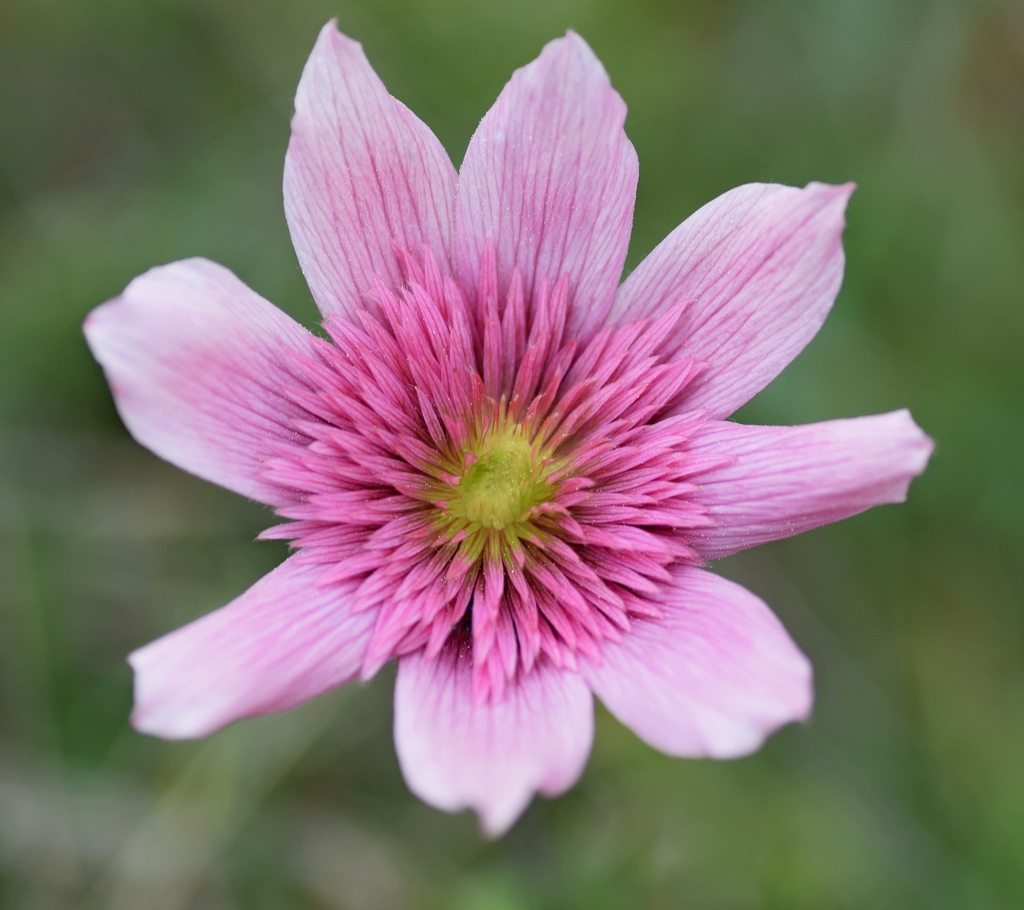
(c) Kostas Zontanos, some rights reserved (CC BY), uploaded by Kostas Zontanos · licence
Family: Ranunculaceae · Type: Herb · Native
Anemone oregana var. oregana (Blue windflower) is a native California herb in the Ranunculaceae family, recognized by . Key features: glabrous peduncle, stalked involucre bracts, blue-purple flowers.
Blue windflower is a California native perennial found in the Klamath Ranges and high Cascade Range in shaded conifer forest sites at elevations of 100 to 1,900 meters. Flowering from March to June, this plant produces blue to purple (and occasionally pink or white) flowers with 5 to 7 sepals 10 to 20 millimeters long. Growing 8 to 30 centimeters tall with a spreading, thick rhizome, it emerges from underground with a single delicate stem. Its leaves feature a distinctive involucre with diamond-shaped or ovate leaflets 2 to 8 centimeters long, with crenate to sharply serrate margins on the upper half. The fruit develops as a small spherical aggregate 8 to 15 millimeters wide with a short, straight beak.
Identification and appearance
Key characters: 6 sympatric species. Key features: glabrous peduncle, stalked involucre bracts, blue-purple flowers
Habitat and range
Habitat: Shaded sites, conifer forest
Elevation: 100-1900 m
California counties: Del Norte, Yuba, Siskiyou, Humboldt, Trinity, Santa Cruz, Shasta
Outside California: to Washington
Bloom period
Anemone oregana var. oregana blooms Mar-Jun.
How to tell it apart
vs Dimorphotheca: Anemone has separate sepals and a whorl of bracts below flower; Dimorphotheca has many ray flowers forming a daisy-like head.; vs Pulsatilla: Anemone has bracts well below the flower; Pulsatilla has bracts directly beneath the flower and silky-hairy foliage.; vs Ranunculus: Anemone has flat flowers without glossy nectaries and a bract whorl; Ranunculus has cup-shaped glossy petals with nectaries.; vs Papaver: Anemone has 5-10 sepals and a bract whorl below flower; Papaver has 4 crinkled petals and no bracts.; vs Romneya: Anemone has 5-10 sepals on a small herb; Romneya has 6 large white crinkled petals on a woody shrub.
Frequently asked questions
Is Anemone oregana var. oregana native to California?
Yes. Anemone oregana var. oregana is native to California (recorded as native).
When does Anemone oregana var. oregana bloom?
Anemone oregana var. oregana blooms Mar-Jun.
Where in California does Anemone oregana var. oregana grow?
Anemone oregana var. oregana occurs in Del Norte, Yuba, Siskiyou, Humboldt, Trinity, Santa Cruz, Shasta, at elevations of 100-1900 m.
What plant family does Anemone oregana var. oregana belong to?
Anemone oregana var. oregana is in the Ranunculaceae family, genus Anemone.
What habitat does Anemone oregana var. oregana grow in?
Anemone oregana var. oregana grows in Shaded sites, conifer forest.
Related species
Other California species in the same genus, family, or bioregion.
- Anemone sp. — Anemone
- Anemone tuberosa — Tuber anemone
- Anemone deltoidea — Columbian windflower
- Anemone drummondii var. drummondii — Drummond's anemone
- Anemone grayi — Blue windflower
- Anemone lyallii — Little mountain thimbleweed
- Aquilegia eximia — Serpentine columbine
- Aquilegia formosa — Crimson columbine
Sources: Jepson eFlora · Index of California Plant Names · CalPhotos
Last updated 2026-10-07
Data from The California Species Project — 14,000+ California species with verified data from CNPS, CDFW, USFWS, Cal-IPC, and more.