Anemopsis californica
Yerba mansa
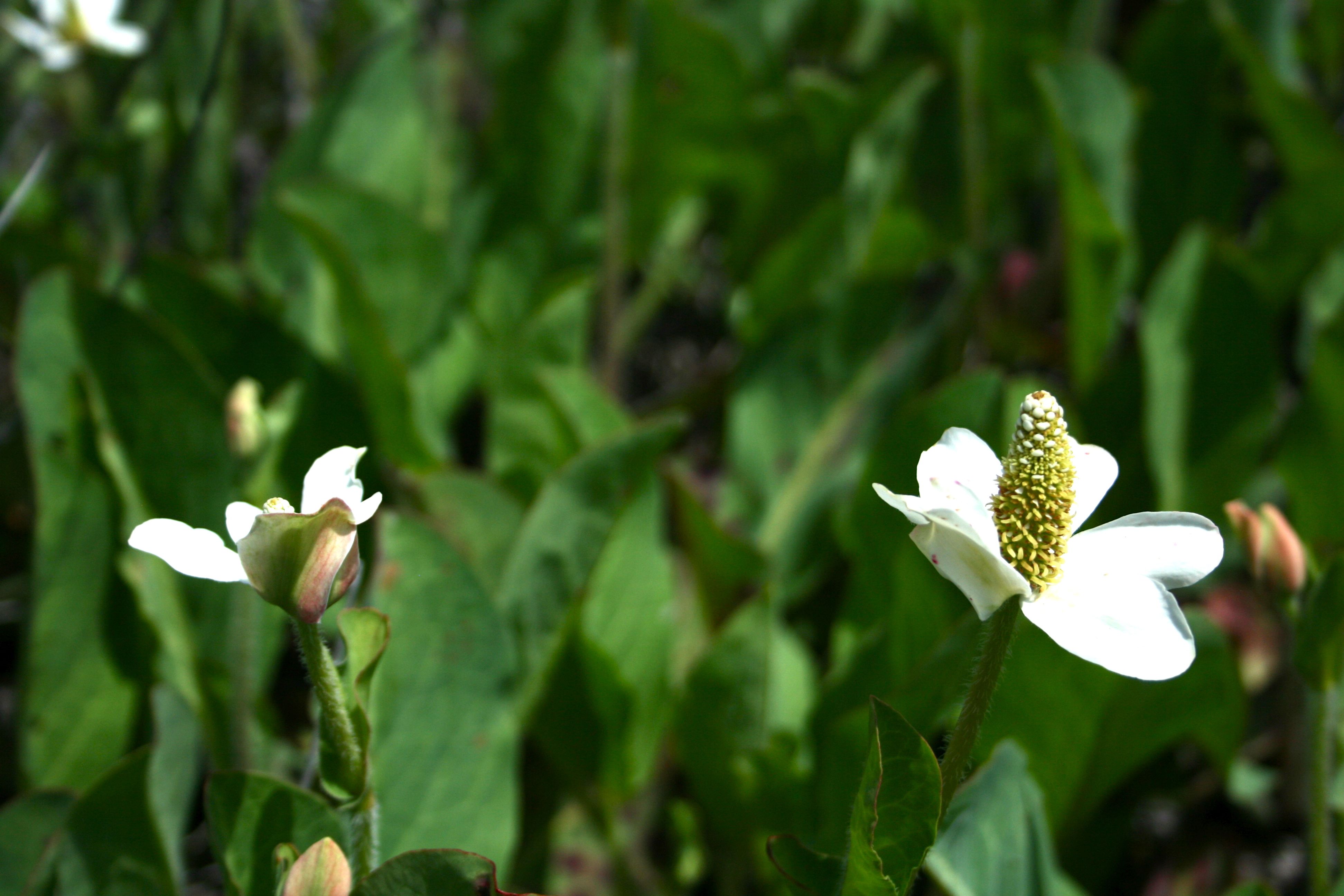
Photo by Chez Brungraber
Family: Saururaceae · Type: Herb · Native
Anemopsis californica (Yerba mansa) is a native California herb in the Saururaceae family, recognized by Monotypic genus representing the only western North American member of Saururaceae, a primarily eastern Asian and eastern North American….
Yerba mansa is a California native perennial found in the southern Sierra Nevada, Central Valley, coastal regions, Channel Islands, and desert areas in saline or alkaline wet habitats at elevations below 2,000 meters. Flowering from March to September, this plant produces distinctive white flowers with petal-like white involucral bracts often tinged with red, forming a compact cone-shaped cluster. Growing with thick woody rhizomes and stems 8 to 80 centimeters tall, it spreads in wet meadows and seeps with characteristic thick underground stems. Its leaves are primarily basal, with blades 3 to 20 centimeters long, ranging from elliptic to oblong, and featuring a heart-shaped base with long petioles. The plant forms dense, low-growing colonies in moist environments, with a unique architectural structure of white flower clusters emerging from its green foliage.
Identification and appearance
Key characters: Monotypic genus representing the only western North American member of Saururaceae, a primarily eastern Asian and eastern North American family
Habitat and range
Habitat: Common. Saline or alkaline soil, wet or moist areas, seeps, springs
Elevation: < 2000 m
California counties: San Bernardino, Orange, Kern, Contra Costa, Fresno, Imperial, Inyo, Los Angeles, Merced, Riverside, San Diego, San Luis Obispo, Santa Barbara, Siskiyou, Solano, Sutter, Tulare, Ventura, Kings, Mono, Modoc, Monterey, San Joaquin, Santa Clara, Alameda, San Benito, Shasta, Yolo, Sacramento, Marin
Outside California: to Oregon, Kansas, Texas, northwestern Mexico
Bloom period
Anemopsis californica blooms Mar-Sep.
Frequently asked questions
Is Anemopsis californica native to California?
Yes. Anemopsis californica is native to California (recorded as native).
When does Anemopsis californica bloom?
Anemopsis californica blooms Mar-Sep.
Where in California does Anemopsis californica grow?
Anemopsis californica occurs in San Bernardino, Orange, Kern, Contra Costa, Fresno, Imperial, Inyo, Los Angeles and other counties, at elevations of < 2000 m.
What plant family does Anemopsis californica belong to?
Anemopsis californica is in the Saururaceae family, genus Anemopsis.
What habitat does Anemopsis californica grow in?
Anemopsis californica grows in Common. Saline or alkaline soil, wet or moist areas, seeps, springs.
Related species
Other California species in the same genus, family, or bioregion.
Sources: Jepson eFlora · Index of California Plant Names · CalPhotos
Last updated 2026-10-07
Data from The California Species Project — 14,000+ California species with verified data from CNPS, CDFW, USFWS, Cal-IPC, and more.