Anisodontea capensis
Cape mallow, Cape Mallow
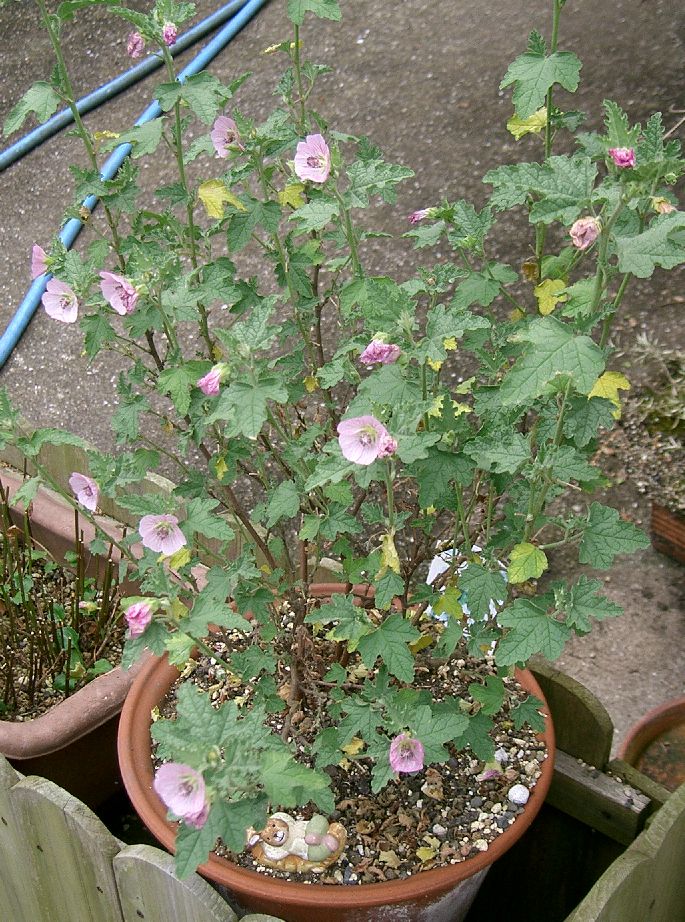
KENPEI (via Wikimedia Commons) · CC BY-SA
Family: Malvaceae · Type: Subshrub · Not Native
Anisodontea capensis (Cape mallow) is a non-native California subshrub in the Malvaceae family, recognized by South African genus occasionally escaping cultivation, distinguished by high chromosome number and multi-segmented fruits.
Cape mallow is a naturalized perennial found in northern coastal ranges, southern California Valley, and other regions in disturbed, generally urban places at elevations especially below 100 meters. Flowering from June to August, this plant produces pale pink flowers with dark veins toward the base, approximately 10 to 15 millimeters wide with distinctive three-lobed petals. Growing as an evergreen plant 0.5 to 2 meters tall with an upright form, it features stems covered in stellate hairs and bristly texture. Its leaves are rough-veined, roughly 2 to 6 centimeters long, with ovate blades that are three-lobed, serrate to crenate-dentate, and have a three-toothed tip. The fruit develops as a small yellow-hairy structure approximately 5 to 6 millimeters in diameter, containing 9 to 12 one-seeded segments.
Identification and appearance
Key characters: South African genus occasionally escaping cultivation, distinguished by high chromosome number and multi-segmented fruits
Habitat and range
Habitat: Disturbed, generally urban places
Elevation: especially < 100 m
Outside California: native to South Africa
Bloom period
Anisodontea capensis blooms Jun-Aug.
Frequently asked questions
Is Anisodontea capensis native to California?
No. Anisodontea capensis is not native to California (recorded as not native).
When does Anisodontea capensis bloom?
Anisodontea capensis blooms Jun-Aug.
What plant family does Anisodontea capensis belong to?
Anisodontea capensis is in the Malvaceae family, genus Anisodontea.
What habitat does Anisodontea capensis grow in?
Anisodontea capensis grows in Disturbed, generally urban places.
Related species
Other California species in the same genus, family, or bioregion.
Sources: Jepson eFlora · CalPhotos
Last updated 2026-10-07
Data from The California Species Project — 14,000+ California species with verified data from CNPS, CDFW, USFWS, Cal-IPC, and more.