Antennaria luzuloides
Rush pussytoes
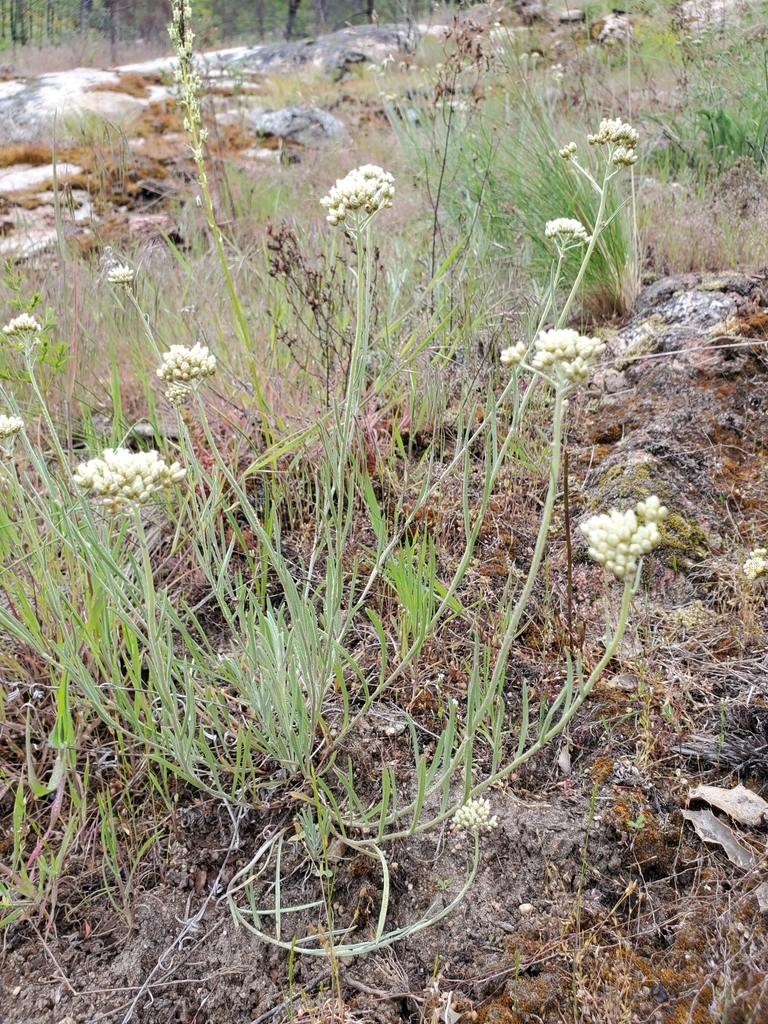
(c) J Straka, some rights reserved (CC BY) · licence
Family: Asteraceae · Type: Subshrub · Native
Antennaria luzuloides (Rush pussytoes) is a native California subshrub in the Asteraceae family, recognized by NONE - geographically isolated species.
Rush pussytoes is a California native perennial found in alpine and subalpine areas at elevations likely between 2,000 to 3,500 meters. Flowering from June to August, this plant produces white flowers in small, narrow clusters with straw-colored or pale phyllary bracts. Growing with stems 7 to 25 centimeters tall emerging from a partly woody base, it forms dense clumps without producing stolons. Its basal leaves are 18 to 45 millimeters long, grayish and woolly-textured, with 1 to 3 prominent veins. The plant produces tiny fruits 1 to 2 millimeters long with a delicate white pappus.
Identification and appearance
Key characters: NONE - geographically isolated species
How to tell it apart
vs Pseudognaphalium: Antennaria forms low cushions with persistent basal rosettes; Pseudognaphalium grows erect to 200 cm without basal rosettes.; vs Eriogonum: Antennaria has papery-bracted flower heads in the Asteraceae; Eriogonum has showy flowers with papery bracts in the buckwheat family.; vs Anaphalis: Antennaria maintains its basal leaf rosette during flowering; Anaphalis has withered basal leaves with longer, uniform stem leaves.; vs Centaurea: Antennaria has tiny woolly heads (3-9mm) in low cushions; Centaurea has much larger flower heads (15-40mm) on tall stems.; vs Petrophytum: Antennaria has papery-bracted flower heads; Petrophytum has dense spikes of small rose-family flowers with 5 separate petals.
Frequently asked questions
Is Antennaria luzuloides native to California?
Yes. Antennaria luzuloides is native to California (recorded as native).
What plant family does Antennaria luzuloides belong to?
Antennaria luzuloides is in the Asteraceae family, genus Antennaria.
Related species
Other California species in the same genus, family, or bioregion.
Sources: Jepson eFlora · CalPhotos
Last updated 2026-10-07
Data from The California Species Project — 14,000+ California species with verified data from CNPS, CDFW, USFWS, Cal-IPC, and more.