Antirrhinum coulterianum
Coulter snapdragon
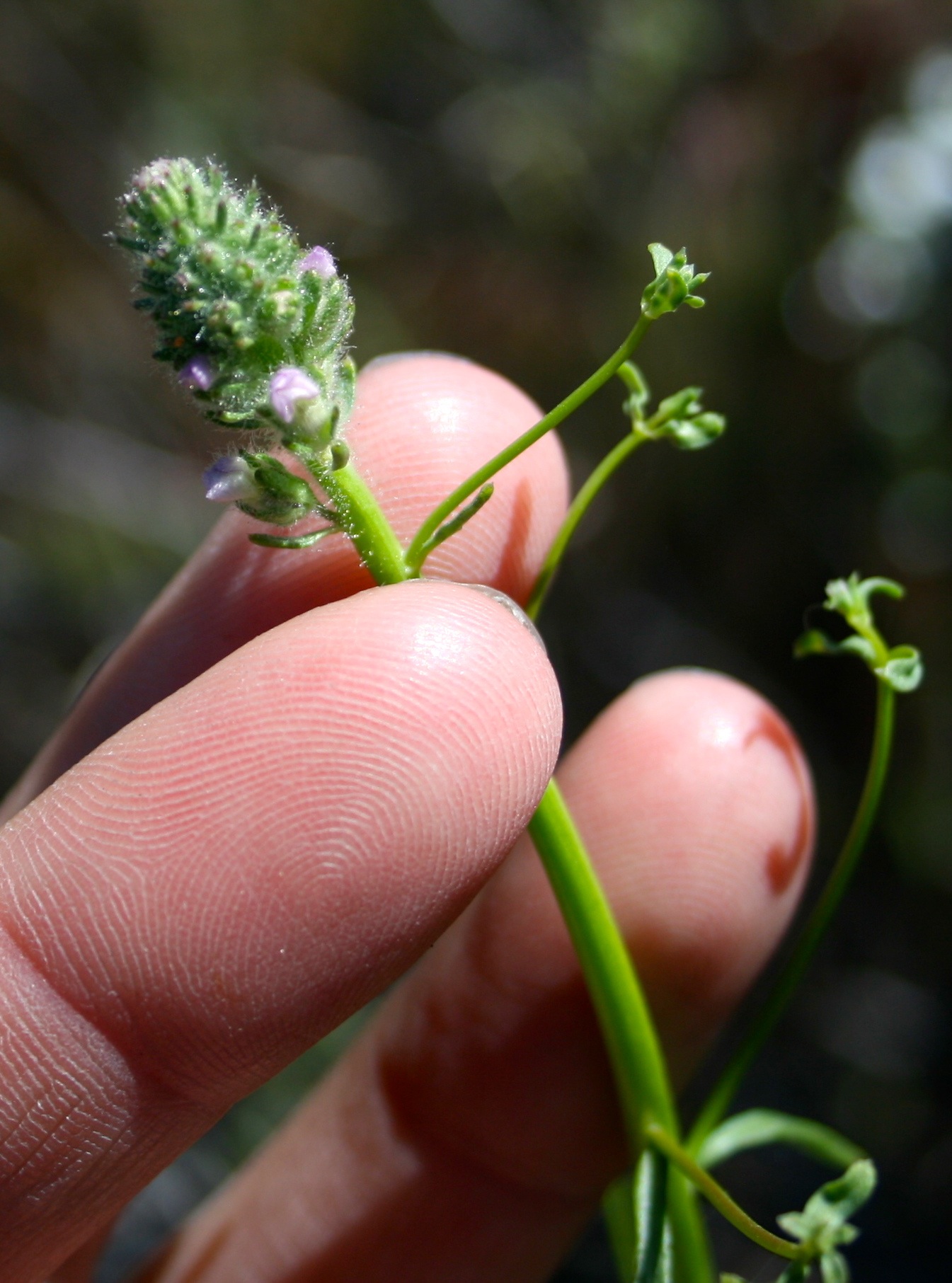
Photo by Chez Brungraber
Family: Plantaginaceae · Type: Vine · Native
Antirrhinum coulterianum (Coulter snapdragon) is a native California vine in the Plantaginaceae family, recognized by twining pedicels and clinging growth habit.
Coulter snapdragon is a California native annual found in southern Coastal Ranges, southwestern California, and the northwestern edge of the Sonoran Desert among shrubs, generally on burned areas at elevations below 2,700 meters. Flowering from April to July, this plant produces white to lavender flowers in racemes with delicate, twining branchlets. Growing with erect but weak stems 12 to 150 centimeters tall that often cling to other plants or debris, it develops an occasional basal rosette. Its leaves are linear to lanceolate, less than 11 centimeters long, with acute to rounded tips and occasional winged petioles up to 3 centimeters. The fruit is 5 to 10 millimeters long with an indehiscent upper chamber containing small black seeds with a netted and ridged surface.
Identification and appearance
Key characters: 7 sympatric species; key features are twining pedicels and clinging growth habit
Habitat and range
Habitat: Among shrubs in desert, generally on burns elsewhere
Elevation: < 2700 m
California counties: Los Angeles, San Diego, Ventura, Riverside, San Bernardino, Orange, Santa Barbara, Nevada
Outside California: northern Baja California
Bloom period
Antirrhinum coulterianum blooms Apr-Jul.
How to tell it apart
vs Linaria: Antirrhinum has a bulging sac at flower base; Linaria has a long backward-pointing spur.; vs Sairocarpus: Antirrhinum has hairy plants with twining flower stalks; Sairocarpus is glabrous with straight stalks.; vs Penstemon: Antirrhinum has closed snapdragon mouth with 4 stamens; Penstemon has open throat with 5 stamens (one sterile).; vs Salvia: Antirrhinum has 4 stamens hidden inside; Salvia has 2 stamens arching out of hooded upper lip.; vs Rosa: Antirrhinum has tubular two-lipped flowers; Rosa has flat open flowers with 5 separate petals and thorny stems.
Frequently asked questions
Is Antirrhinum coulterianum native to California?
Yes. Antirrhinum coulterianum is native to California (recorded as native).
When does Antirrhinum coulterianum bloom?
Antirrhinum coulterianum blooms Apr-Jul.
Where in California does Antirrhinum coulterianum grow?
Antirrhinum coulterianum occurs in Los Angeles, San Diego, Ventura, Riverside, San Bernardino, Orange, Santa Barbara, Nevada, at elevations of < 2700 m.
What plant family does Antirrhinum coulterianum belong to?
Antirrhinum coulterianum is in the Plantaginaceae family, genus Antirrhinum.
What habitat does Antirrhinum coulterianum grow in?
Antirrhinum coulterianum grows in Among shrubs in desert, generally on burns elsewhere.
Related species
Other California species in the same genus, family, or bioregion.
Sources: Jepson eFlora · Index of California Plant Names · CalPhotos
Last updated 2026-10-07
Data from The California Species Project — 14,000+ California species with verified data from CNPS, CDFW, USFWS, Cal-IPC, and more.