Antirrhinum nuttallianum subsp. subsessile
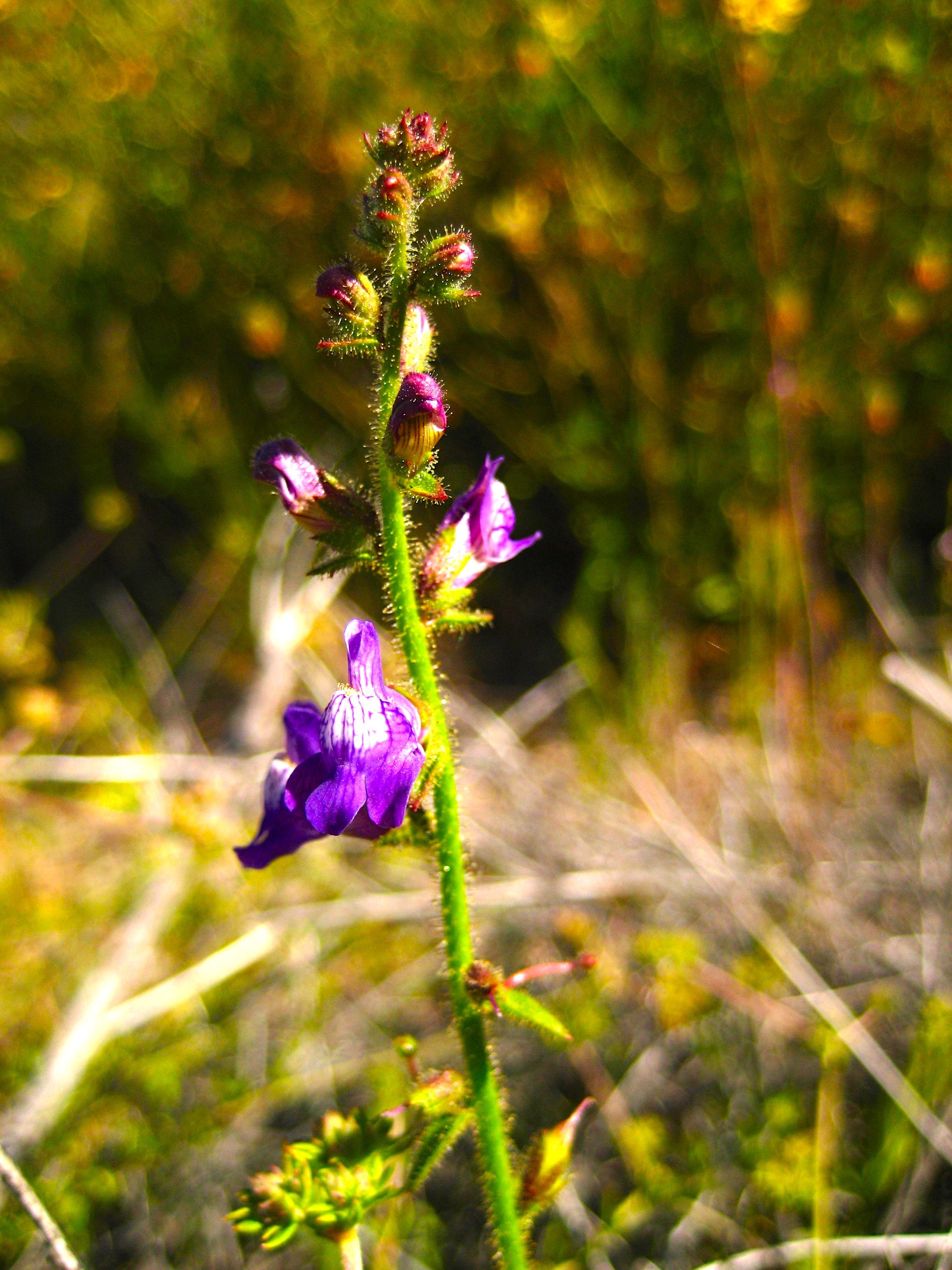
Photo: parent species Antirrhinum nuttallianum · Photo by Chez Brungraber
Family: Plantaginaceae · Type: Annual · Native
Antirrhinum nuttallianum subsp. subsessile is a native California annual in the Plantaginaceae family, recognized by key features: coarse hairs with enlarged tips, flowers at all 1-leaved nodes, shorter pedicels.
Nuttall's snapdragon is a California native annual found in southern coastal California, including the southern Coast Ranges, southern California coast, and Channel Islands, in stabilized coastal dunes and rocky areas at elevations below 1,300 meters. Flowering from March to August, this plant produces flowers with a distinctive lavender and white color pattern, featuring a white blotch on the lower corolla lip interrupted by lavender tones. Growing 6 to 90 centimeters tall with sparse to moderately dense coarse hairs, the plant has stems with enlarged hair tips and opposite leaves at the lower nodes. Its leaves are small, less than 40 millimeters long, with petioles shorter than 14 millimeters, and occur at each one-leaved node along the stem. The fruit is 3 to 11 millimeters long, with seed ridges that are broken into longitudinal or unpatterned fragments.
Identification and appearance
Key characters: 6 sympatric species; key features: coarse hairs with enlarged tips, flowers at all 1-leaved nodes, shorter pedicels
Habitat and range
Habitat: Stabilized coastal dunes, rocky or disturbed areas
Elevation: < 1300 m
California counties: San Diego, Los Angeles, Ventura, Santa Barbara, Orange, Riverside, San Luis Obispo
Outside California: Arizona, southern Baja California
Bloom period
Antirrhinum nuttallianum subsp. subsessile blooms Mar-Aug.
How to tell it apart
vs Linaria: Antirrhinum has a bulging sac at flower base; Linaria has a long backward-pointing spur.; vs Sairocarpus: Antirrhinum has hairy plants with twining flower stalks; Sairocarpus is glabrous with straight stalks.; vs Penstemon: Antirrhinum has closed snapdragon mouth with 4 stamens; Penstemon has open throat with 5 stamens (one sterile).; vs Salvia: Antirrhinum has 4 stamens hidden inside; Salvia has 2 stamens arching out of hooded upper lip.; vs Rosa: Antirrhinum has tubular two-lipped flowers; Rosa has flat open flowers with 5 separate petals and thorny stems.
Frequently asked questions
Is Antirrhinum nuttallianum subsp. subsessile native to California?
Yes. Antirrhinum nuttallianum subsp. subsessile is native to California (recorded as native).
When does Antirrhinum nuttallianum subsp. subsessile bloom?
Antirrhinum nuttallianum subsp. subsessile blooms Mar-Aug.
Where in California does Antirrhinum nuttallianum subsp. subsessile grow?
Antirrhinum nuttallianum subsp. subsessile occurs in San Diego, Los Angeles, Ventura, Santa Barbara, Orange, Riverside, San Luis Obispo, at elevations of < 1300 m.
What plant family does Antirrhinum nuttallianum subsp. subsessile belong to?
Antirrhinum nuttallianum subsp. subsessile is in the Plantaginaceae family, genus Antirrhinum.
What habitat does Antirrhinum nuttallianum subsp. subsessile grow in?
Antirrhinum nuttallianum subsp. subsessile grows in Stabilized coastal dunes, rocky or disturbed areas.
Related species
Other California species in the same genus, family, or bioregion.
Sources: Jepson eFlora · Index of California Plant Names · CalPhotos
Last updated 2026-09-30
Data from The California Species Project — 14,000+ California species with verified data from CNPS, CDFW, USFWS, Cal-IPC, and more.