Antirrhinum thompsonii
Chaparral snapdragon
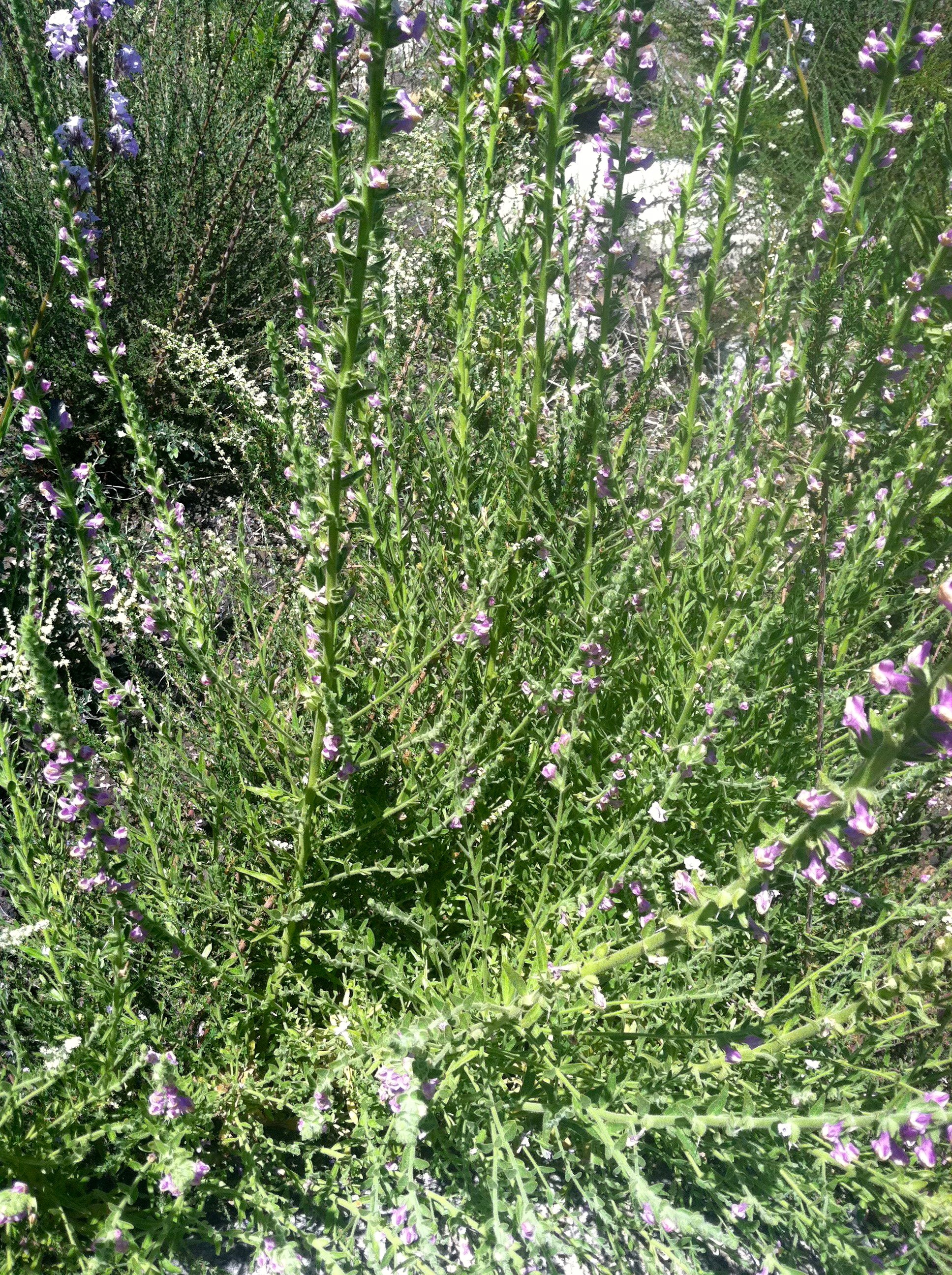
Photo by Chez Brungraber
Family: Plantaginaceae · Type: Subshrub · Native
Antirrhinum thompsonii (Chaparral snapdragon) is a native California subshrub in the Plantaginaceae family, recognized by woody caudex, dense glandular hairs, and withered tan-brown area on flower.
Chaparral snapdragon is a California native perennial found in northern Sierra Nevada foothills, southern San Francisco Bay Area, southern Coast Ranges, northern Channel Islands, Transverse Ranges, and Peninsular Ranges in rocky or disturbed areas at elevations below 2,200 meters. Flowering from April to August and occasionally in October to November, this plant produces pale pink to red flowers with tan-brown areas on the lower lip, approximately 13 to 18 millimeters long. Growing with erect, self-supporting stems 30 to 150 centimeters tall, often emerging from a woody base and densely covered in sticky, glandular hairs. Its leaves are sessile, measuring 8 to 63 millimeters long, ranging from linear to lanceolate with acute to obtuse tips. The fruit is an oblique-ovoid capsule 7 to 11 millimeters long, uniquely dehiscent through three pores at the tip.
Identification and appearance
Key characters: 9 sympatric species; key features are woody caudex, dense glandular hairs, and withered tan-brown area on flower
Habitat and range
Habitat: Rocky or disturbed areas, burns
Elevation: < 2200 m
California counties: Kern, Orange, Los Angeles, Santa Barbara, San Bernardino, Ventura, Monterey, Calaveras, Santa Cruz, Santa Clara, Tuolumne, San Benito, San Luis Obispo, Merced, Alameda, Riverside
Bloom period
Antirrhinum thompsonii blooms Apr-Aug (Oct--Nov).
How to tell it apart
vs Linaria: Antirrhinum has a bulging sac at flower base; Linaria has a long backward-pointing spur.; vs Sairocarpus: Antirrhinum has hairy plants with twining flower stalks; Sairocarpus is glabrous with straight stalks.; vs Penstemon: Antirrhinum has closed snapdragon mouth with 4 stamens; Penstemon has open throat with 5 stamens (one sterile).; vs Salvia: Antirrhinum has 4 stamens hidden inside; Salvia has 2 stamens arching out of hooded upper lip.; vs Rosa: Antirrhinum has tubular two-lipped flowers; Rosa has flat open flowers with 5 separate petals and thorny stems.
Frequently asked questions
Is Antirrhinum thompsonii native to California?
Yes. Antirrhinum thompsonii is native to California (recorded as native).
When does Antirrhinum thompsonii bloom?
Antirrhinum thompsonii blooms Apr-Aug (Oct--Nov).
Where in California does Antirrhinum thompsonii grow?
Antirrhinum thompsonii occurs in Kern, Orange, Los Angeles, Santa Barbara, San Bernardino, Ventura, Monterey, Calaveras and other counties, at elevations of < 2200 m.
What plant family does Antirrhinum thompsonii belong to?
Antirrhinum thompsonii is in the Plantaginaceae family, genus Antirrhinum.
What habitat does Antirrhinum thompsonii grow in?
Antirrhinum thompsonii grows in Rocky or disturbed areas, burns.
Related species
Other California species in the same genus, family, or bioregion.
Sources: Jepson eFlora · Index of California Plant Names · CalPhotos
Last updated 2026-10-07
Data from The California Species Project — 14,000+ California species with verified data from CNPS, CDFW, USFWS, Cal-IPC, and more.