Antirrhinum vexillocalyculatum subsp. breweri
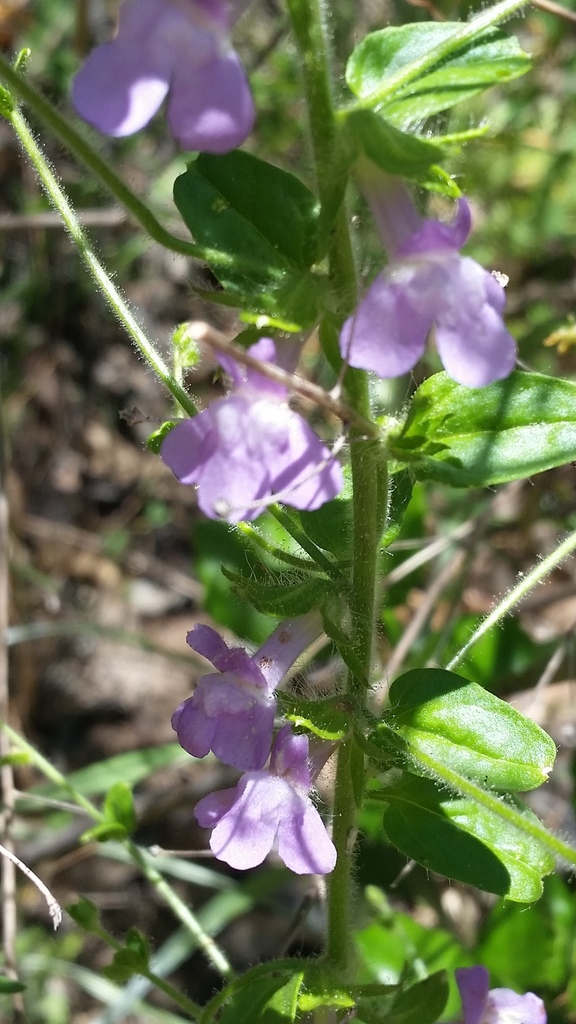
Photo: parent species Antirrhinum vexillocalyculatum · (c) Alex, some rights reserved (CC BY) · licence
Family: Plantaginaceae · Type: Annual · Native
Antirrhinum vexillocalyculatum subsp. breweri is a native California annual in the Plantaginaceae family, recognized by key features: all stem hairs glandular, branchlets with 1 leaf at base, some dark veins.
Brewer's snapdragon is a California native annual found in the Klamath Ranges, northern Coast Ranges, and California Rocky Forests in gravelly lower slopes, rockslides, and disturbed areas, often on serpentine at elevations below 2,000 meters. Flowering from June to September, this plant produces flowers with some dark-veined petals in delicate, complex arrangements. Growing with glandular stems 7 to 76 centimeters tall, it has distinctive branching with a single leaf at the proximal node of its flowering branches. Its leaves and stems feature short glandular hairs less than 3 millimeters long, creating a subtle textural quality. The flower's upper calyx lobe measures 3.3 to 5.3 millimeters, with a lower lobe 2.4 to 3.6 millimeters long, supporting a corolla 8 to 12 millimeters in size.
Identification and appearance
Key characters: 4 sympatric species; key features: all stem hairs glandular, branchlets with 1 leaf at base, some dark veins
Habitat and range
Habitat: Gravelly lower slopes of rockslides, disturbed areas, often on serpentine
Elevation: < 2000 m
California counties: Trinity, Lake, Mendocino, Humboldt, Siskiyou, Shasta, Colusa, Napa, Sonoma, Tehama, Solano, Del Norte, Glenn, Marin, Lassen, Sutter, Sierra
Outside California: southwestern Oregon
Bloom period
Antirrhinum vexillocalyculatum subsp. breweri blooms Jun-Sep.
How to tell it apart
vs Linaria: Antirrhinum has a bulging sac at flower base; Linaria has a long backward-pointing spur.; vs Sairocarpus: Antirrhinum has hairy plants with twining flower stalks; Sairocarpus is glabrous with straight stalks.; vs Penstemon: Antirrhinum has closed snapdragon mouth with 4 stamens; Penstemon has open throat with 5 stamens (one sterile).; vs Salvia: Antirrhinum has 4 stamens hidden inside; Salvia has 2 stamens arching out of hooded upper lip.; vs Rosa: Antirrhinum has tubular two-lipped flowers; Rosa has flat open flowers with 5 separate petals and thorny stems.
Frequently asked questions
Is Antirrhinum vexillocalyculatum subsp. breweri native to California?
Yes. Antirrhinum vexillocalyculatum subsp. breweri is native to California (recorded as native).
When does Antirrhinum vexillocalyculatum subsp. breweri bloom?
Antirrhinum vexillocalyculatum subsp. breweri blooms Jun-Sep.
Where in California does Antirrhinum vexillocalyculatum subsp. breweri grow?
Antirrhinum vexillocalyculatum subsp. breweri occurs in Trinity, Lake, Mendocino, Humboldt, Siskiyou, Shasta, Colusa, Napa and other counties, at elevations of < 2000 m.
What plant family does Antirrhinum vexillocalyculatum subsp. breweri belong to?
Antirrhinum vexillocalyculatum subsp. breweri is in the Plantaginaceae family, genus Antirrhinum.
What habitat does Antirrhinum vexillocalyculatum subsp. breweri grow in?
Antirrhinum vexillocalyculatum subsp. breweri grows in Gravelly lower slopes of rockslides, disturbed areas, often on serpentine.
Related species
Other California species in the same genus, family, or bioregion.
- Antirrhinum vexillocalyculatum subsp. intermedium
- Antirrhinum vexillocalyculatum subsp. vexillocalyculatum
- Antirrhinum virga — Twig-like snapdragon
- Antirrhinum confertiflorum — Ghost flower
- Antirrhinum cornutum — Spurred snapdragon
- Antirrhinum coulterianum — Coulter snapdragon
- Bacopa eisenii — Gila river water hyssop
Sources: Jepson eFlora · Index of California Plant Names · CalPhotos
Last updated 2026-10-06
Data from The California Species Project — 14,000+ California species with verified data from CNPS, CDFW, USFWS, Cal-IPC, and more.