Apera interrupta
Dense silky bent
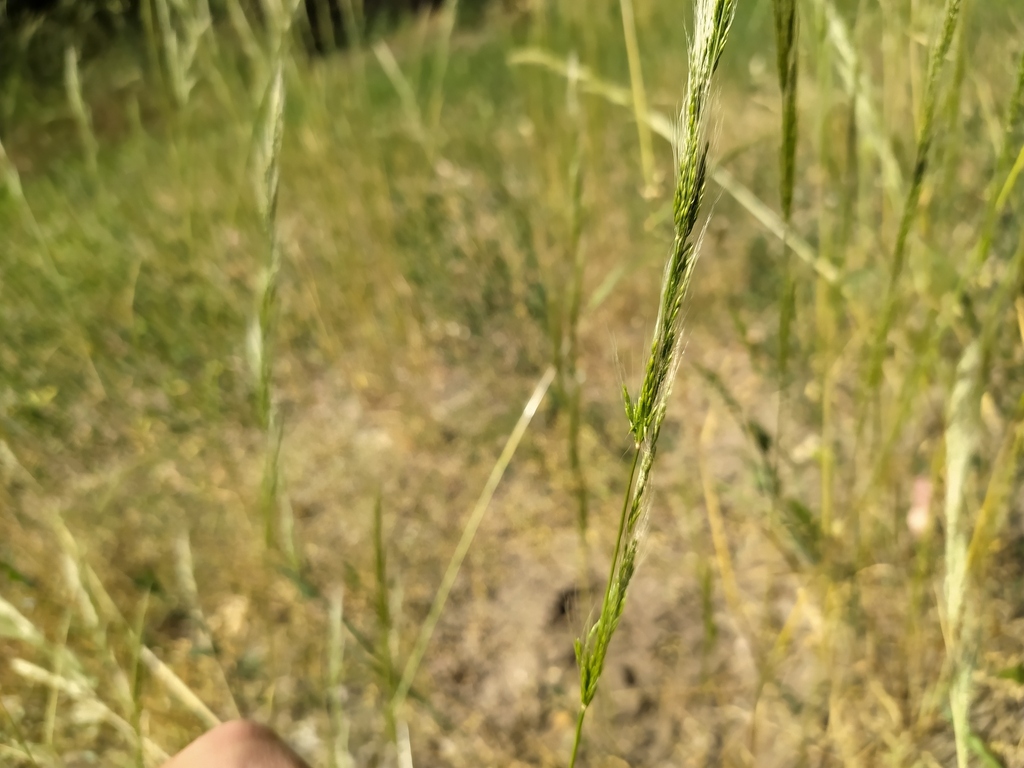
(c) arthur_haendler, some rights reserved (CC BY) · licence
Family: Poaceae · Type: Grass · Not Native
Apera interrupta (Dense silky bent) is a non-native California grass in the Poaceae family, recognized by . Found only in northern montane regions.
Dense silky bent is a naturalized annual grass found in the Klamath Ranges, California Ranges, Modoc Plateau (west of Alturas), and White and Inyo Mountains in disturbed sites at elevations of 1,220 to 1,700 meters. Flowering from June to July, this plant produces pale green to greenish-white flowers in delicate, slender inflorescences 5 to 15 centimeters long. Growing with multiple stems 10 to 60 centimeters tall that can form tufted clusters, it has a somewhat spreading growth habit. Its narrow leaves are 1 to 3 millimeters wide, with slightly rough surfaces and short ligules 1 to 4 millimeters long. The plant's distinctive flowering structures feature small glumes and lemmas with delicate awns 5 to 8 millimeters in length.
Identification and appearance
Key characters: Geographically isolated (0 sympatric species). Found only in northern montane regions.
Habitat and range
Habitat: Disturbed sites
Elevation: 1220-1700 m
Outside California: reported scattered elsewhere in western United States, native to Europe, Asia
Bloom period
Apera interrupta blooms Jun-Jul.
How to tell it apart
vs Cinna: Apera is an annual weed of disturbed sites; Cinna is perennial in moist forests.; vs Calamagrostis: Apera is annual with sparse callus hairs; Calamagrostis is perennial with tufted callus.; vs Ammophila: Ammophila has dense cylindrical spikes; Apera has loose drooping panicles.
Frequently asked questions
Is Apera interrupta native to California?
No. Apera interrupta is not native to California (recorded as not native).
When does Apera interrupta bloom?
Apera interrupta blooms Jun-Jul.
What plant family does Apera interrupta belong to?
Apera interrupta is in the Poaceae family, genus Apera.
What habitat does Apera interrupta grow in?
Apera interrupta grows in Disturbed sites.
Related species
Other California species in the same genus, family, or bioregion.
Sources: Jepson eFlora · CalPhotos
Last updated 2026-10-07
Data from The California Species Project — 14,000+ California species with verified data from CNPS, CDFW, USFWS, Cal-IPC, and more.