Aralia californica
Elk clover, Elk Clover
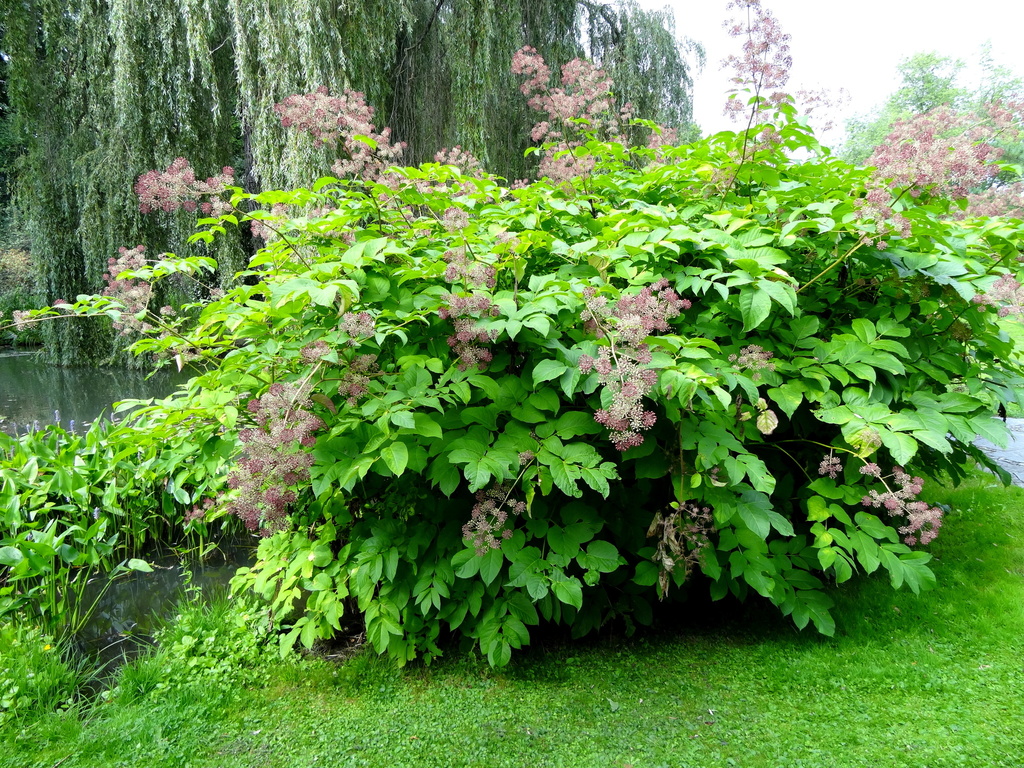
(c) Udo Schmidt, some rights reserved (CC BY-SA) · licence
Family: Araliaceae · Type: Herb · Native
Aralia californica (Elk clover) is a native California herb in the Araliaceae family, recognized by Only Aralia species in CA - represents the large herbaceous members of Araliaceae, contrasting with the woody shrubs and trees typical….
Elk clover is a California native perennial found in the Klamath Ranges, northern Coast Ranges, northern Sierra Nevada, northern Sierra Nevada foothills, San Francisco Bay Area, southern Coast Ranges, Transverse Ranges, and Peninsular Ranges in moist shaded canyons and stream sides at elevations up to 2,500 meters. Flowering from June to August, this plant produces small white flowers in large branching clusters reaching 30 to 45 centimeters long. Growing with massive stout stems two to three meters tall, it develops large, impressive pinnate leaves up to two meters in length with 15 to 30 centimeter leaflets. Its leaves are complex, with multiple pinnate layers featuring ovate to oblong leaflets that are serrated and have slightly heart-shaped bases. The plant produces small spherical black fruits approximately five millimeters in diameter, characteristic of its distinctive woodland habitat.
Identification and appearance
Key characters: Only Aralia species in CA - represents the large herbaceous members of Araliaceae, contrasting with the woody shrubs and trees typical of this family elsewhere
Habitat and range
Habitat: Moist shade, canyons, stream sides
Elevation: < 2500 m
California counties: Humboldt, San Diego, Orange, San Bernardino, Los Angeles, Mendocino, Monterey, Lake, Del Norte, Marin, Santa Clara, Santa Cruz, Trinity, Napa, Sierra, San Luis Obispo, Siskiyou, Shasta, San Mateo, Alameda, Nevada, Ventura, Tehama, El Dorado, Santa Barbara, Sonoma, Glenn, Amador, Yuba, Butte, Plumas, Solano, Colusa, Contra Costa, Tuolumne, Riverside, San Benito
Outside California: Oregon
Bloom period
Aralia californica blooms Jun-Aug.
How to tell it apart
vs Sambucus: Aralia has leaves with many small leaflets in pinnate arrangement; Sambucus has larger leaflets and woody stems with pithy centers.; vs Hedera: Aralia has large divided compound leaves and grows upright; Hedera has simple lobed leaves and climbs with aerial roots.; vs Rosa: Aralia has many small leaflets without teeth and lacks prickles; Rosa has fewer toothed leaflets and thorny stems.; vs Nandina: Aralia has large herbaceous compound leaves; Nandina is a woody shrub with multiple-times-divided delicate leaflets.; vs Koelreuteria: Aralia is an upright herb with divided leaves; Koelreuteria is a tree with compound leaves and papery seed pods.
Frequently asked questions
Is Aralia californica native to California?
Yes. Aralia californica is native to California (recorded as native).
When does Aralia californica bloom?
Aralia californica blooms Jun-Aug.
Where in California does Aralia californica grow?
Aralia californica occurs in Humboldt, San Diego, Orange, San Bernardino, Los Angeles, Mendocino, Monterey, Lake and other counties, at elevations of < 2500 m.
What plant family does Aralia californica belong to?
Aralia californica is in the Araliaceae family, genus Aralia.
What habitat does Aralia californica grow in?
Aralia californica grows in Moist shade, canyons, stream sides.
Related species
Other California species in the same genus, family, or bioregion.
Sources: Jepson eFlora · Index of California Plant Names · CalPhotos
Last updated 2026-10-07
Data from The California Species Project — 14,000+ California species with verified data from CNPS, CDFW, USFWS, Cal-IPC, and more.