Arctostaphylos bakeri subsp. sublaevis
The cedars manzanita, The Cedars Manzanita, Cedars manzanita
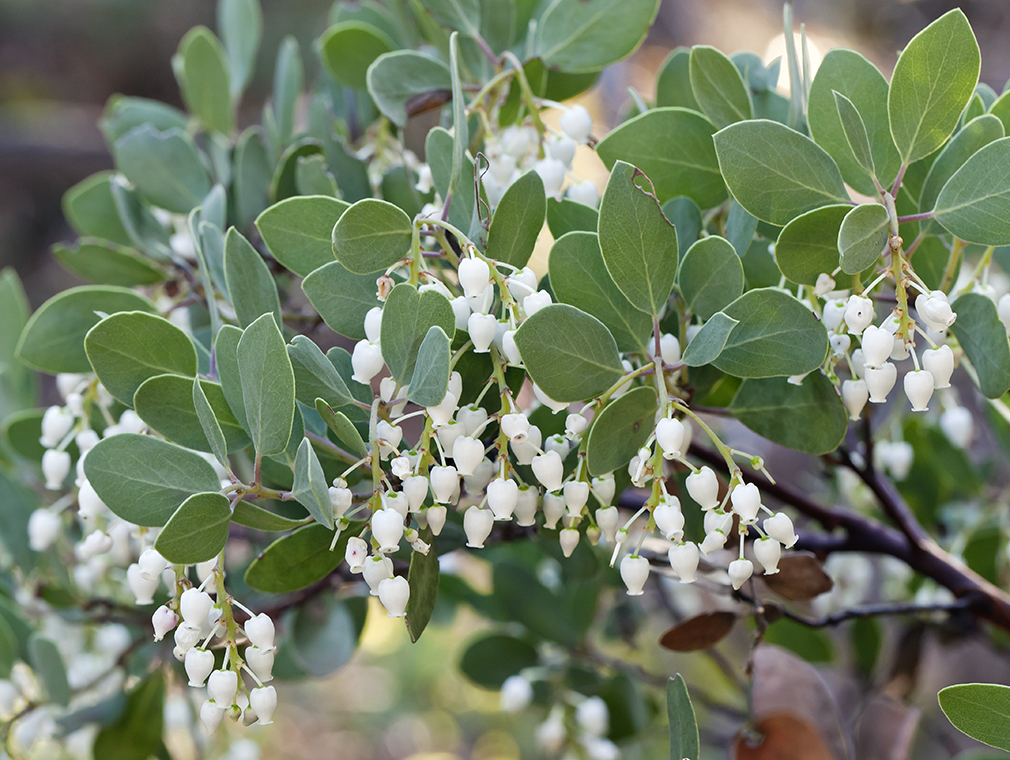
(c) 2012 John Game, some rights reserved (CC BY-SA) · licence
Family: Ericaceae · Type: Shrub · Native
Conservation status: CNPS 1B.2
Arctostaphylos bakeri subsp. sublaevis (The cedars manzanita) is a native California shrub in the Ericaceae family, recognized by subsp. bakeri by less papillate leaves and longer inflorescence axes.
The cedars manzanita is a rare (CNPS 1B.2) California native shrub found in southern North Coast Ranges, specifically from The Cedars to Healdsburg in Sonoma County, in serpentine chaparral near the coast at elevations of 300 to 600 meters. Flowering from February to April, this plant produces pale pink to white flowers in small, delicate clusters. Growing with distinctively gnarled branches 1 to 2 meters tall, it develops a characteristic woody structure with twigs covered in short, non-glandular hairs. Its leaves are small, appressed-puberulent with a slightly papillate surface, featuring petioles 4 to 8 millimeters long that attach to stiff, rounded blades.
Identification and appearance
Key characters: 20 sympatric species; distinguished from subsp. bakeri by less papillate leaves and longer inflorescence axes
Habitat and range
Habitat: Serpentine chaparral near coast
Elevation: 300-600 m
California counties: Sonoma
Bloom period
Arctostaphylos bakeri subsp. sublaevis blooms Feb-Apr.
Conservation status
CNPS 1B.2
How to tell it apart
vs Arbutus: Arctostaphylos fruits are smooth and mealy; Arbutus fruits are bumpy and juicy.; vs Rhus: Arctostaphylos has simple evergreen leaves; Rhus has compound deciduous leaves.; vs Quercus: Arctostaphylos has urn-shaped flowers and berry-like fruits; Quercus has catkins and acorns.; vs Xylococcus: Arctostaphylos leaves are flat; Xylococcus leaves have margins rolled tightly under.; vs Heteromeles: Arctostaphylos has urn-shaped flowers; Heteromeles has flat white flower clusters.
Frequently asked questions
Is Arctostaphylos bakeri subsp. sublaevis native to California?
Yes. Arctostaphylos bakeri subsp. sublaevis is native to California (recorded as native).
When does Arctostaphylos bakeri subsp. sublaevis bloom?
Arctostaphylos bakeri subsp. sublaevis blooms Feb-Apr.
Where in California does Arctostaphylos bakeri subsp. sublaevis grow?
Arctostaphylos bakeri subsp. sublaevis occurs in Sonoma, at elevations of 300-600 m.
What plant family does Arctostaphylos bakeri subsp. sublaevis belong to?
Arctostaphylos bakeri subsp. sublaevis is in the Ericaceae family, genus Arctostaphylos.
Is Arctostaphylos bakeri subsp. sublaevis rare or endangered?
Arctostaphylos bakeri subsp. sublaevis carries California Rare Plant Rank 1B.2, state rank S2.
Related species
Other California species in the same genus, family, or bioregion.
- Arctostaphylos canescens — Hoary manzanita
- Arctostaphylos canescens subsp. canescens — Hoary manzanita
- Arctostaphylos canescens subsp. sonomensis — Sonoma canescent manzanita
- Arctostaphylos catalinae — Santa catalina island manzanita
- Arctostaphylos columbiana — Columbia manzanita
- Arctostaphylos confertiflora — Santa rosa island manzanita
Sources: Jepson eFlora · CNPS Rare Plant Inventory · Index of California Plant Names · CalPhotos · CDFW CNDDB
Last updated 2026-10-07
Data from The California Species Project — 14,000+ California species with verified data from CNPS, CDFW, USFWS, Cal-IPC, and more.