Arctostaphylos viscida subsp. viscida
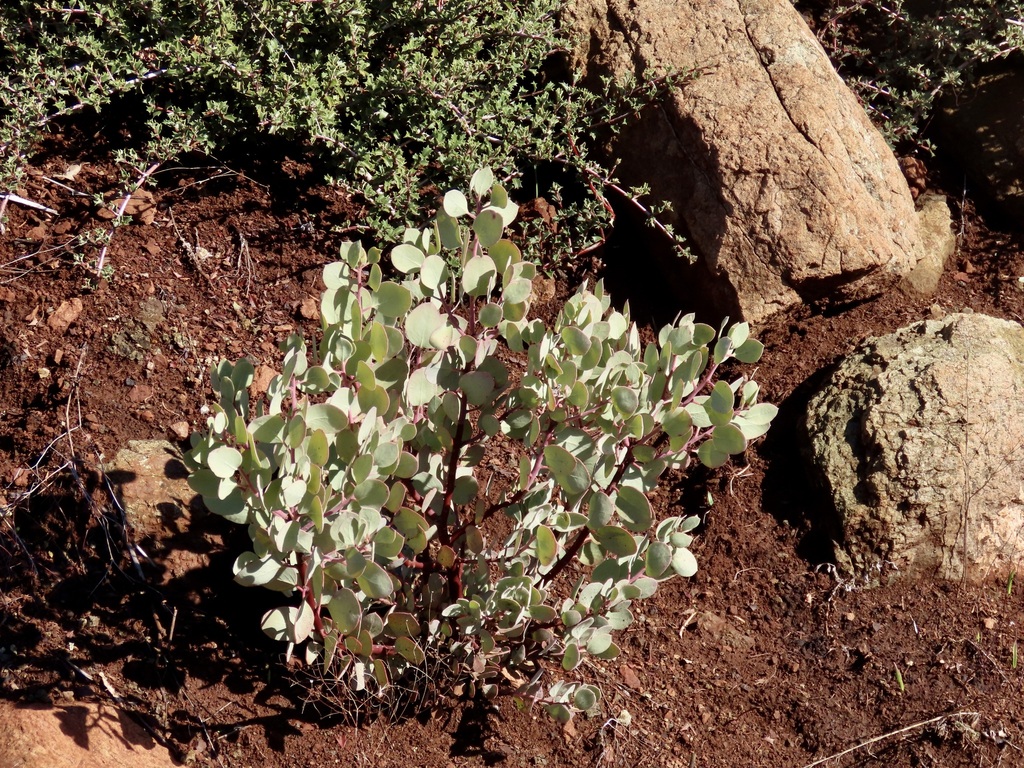
Photo: parent species Arctostaphylos viscida · (c) John Hibbard, some rights reserved (CC BY) · licence
Family: Ericaceae · Type: Shrub / Tree · Native
Arctostaphylos viscida subsp. viscida is a native California shrub / tree in the Ericaceae family, recognized by completely smooth glabrous leaves and fruits distinguish from other viscida subspecies.
Sticky whiteleaf manzanita is a California native shrub found in the Klamath Ranges, northern Coast Ranges, California Ranges, and Sierra Nevada in openings within chaparral and forest habitats at elevations of 30 to 2,000 meters. Flowering from February to April, this plant produces white to pink urn-shaped flowers in small clusters. Growing with smooth, reddish-brown branches 1 to 3 meters tall, it develops a distinctive smooth and twisting bark that peels with age. Its leathery green leaves are smooth, entire, and glabrous, typically 2 to 5 centimeters long with a glossy surface. The smooth, glabrous fruit develops in small clusters, continuing the plant's characteristic clean and elegant form.
Identification and appearance
Key characters: 35 sympatric species; completely smooth glabrous leaves and fruits distinguish from other viscida subspecies
Habitat and range
Habitat: Openings in chaparral, forest
Elevation: 30-2000 m
California counties: Butte, Nevada, El Dorado, Placer, Calaveras, Amador, Shasta, Siskiyou, Napa, Plumas, Trinity, San Mateo, Lake, Tehama, Sonoma, Tulare, Kern, Mariposa, Tuolumne, Humboldt, Colusa, Fresno, Mendocino, Yuba, Marin, Del Norte, Sierra, Sacramento, Madera, Contra Costa
Outside California: southwestern Oregon
Bloom period
Arctostaphylos viscida subsp. viscida blooms Feb-Apr.
How to tell it apart
vs Arbutus: Arctostaphylos fruits are smooth and mealy; Arbutus fruits are bumpy and juicy.; vs Rhus: Arctostaphylos has simple evergreen leaves; Rhus has compound deciduous leaves.; vs Quercus: Arctostaphylos has urn-shaped flowers and berry-like fruits; Quercus has catkins and acorns.; vs Xylococcus: Arctostaphylos leaves are flat; Xylococcus leaves have margins rolled tightly under.; vs Heteromeles: Arctostaphylos has urn-shaped flowers; Heteromeles has flat white flower clusters.
Frequently asked questions
Is Arctostaphylos viscida subsp. viscida native to California?
Yes. Arctostaphylos viscida subsp. viscida is native to California (recorded as native).
When does Arctostaphylos viscida subsp. viscida bloom?
Arctostaphylos viscida subsp. viscida blooms Feb-Apr.
Where in California does Arctostaphylos viscida subsp. viscida grow?
Arctostaphylos viscida subsp. viscida occurs in Butte, Nevada, El Dorado, Placer, Calaveras, Amador, Shasta, Siskiyou and other counties, at elevations of 30-2000 m.
What plant family does Arctostaphylos viscida subsp. viscida belong to?
Arctostaphylos viscida subsp. viscida is in the Ericaceae family, genus Arctostaphylos.
What habitat does Arctostaphylos viscida subsp. viscida grow in?
Arctostaphylos viscida subsp. viscida grows in Openings in chaparral, forest.
Related species
Other California species in the same genus, family, or bioregion.
- Arctostaphylos andersonii — Anderson's manzanita
- Arctostaphylos auriculata — Mount diablo manzanita
- Arctostaphylos bakeri — Baker's manzanita
- Arctostaphylos bakeri subsp. bakeri — Baker's manzanita
- Arctostaphylos bakeri subsp. sublaevis — The cedars manzanita
- Arctostaphylos canescens — Hoary manzanita
- Cassiope mertensiana — White heather
- Cassiope sp. — Moss heather
- Chimaphila menziesii — Little prince's pine
- Chimaphila sp. — Prince's pine
Sources: Jepson eFlora · Index of California Plant Names · CalPhotos
Last updated 2026-10-07
Data from The California Species Project — 14,000+ California species with verified data from CNPS, CDFW, USFWS, Cal-IPC, and more.