Aristida ternipes var. gentilis
Hook three-awn, Hook Three-Awn
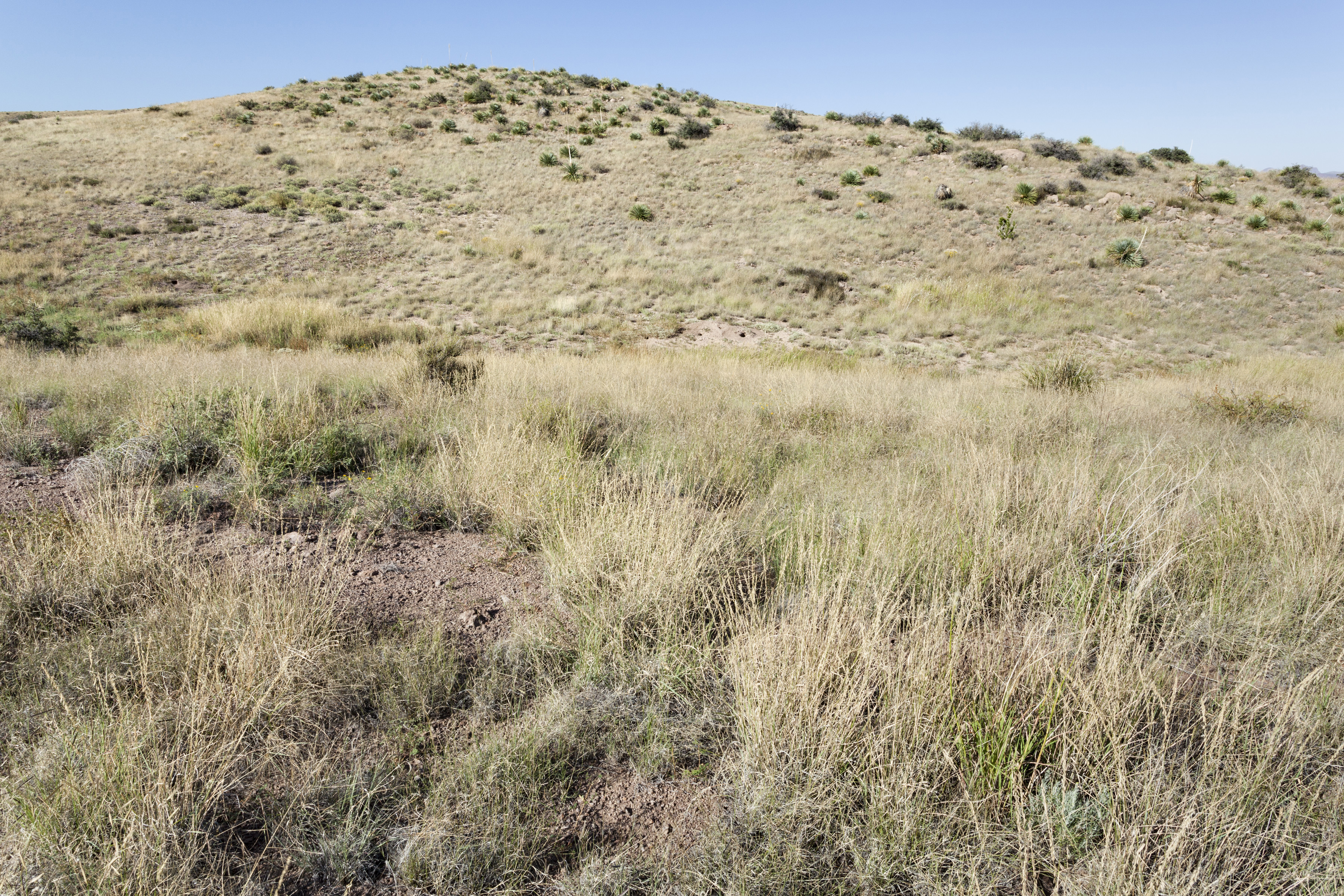
Patrick Alexander from Las Cruces, NM (via Wikimedia Commons) · CC0
Family: Poaceae · Type: Grass · Native
Aristida ternipes var. gentilis (Hook three-awn) is a native California grass in the Poaceae family, recognized by difficult to distinguish, limited diagnostic features.
Hook three-awn is a California native perennial grass found in the northern Coast Ranges, southern Sierra Nevada foothills, Central Valley, southern California coastal areas, northern Channel Islands, Transverse Ranges, Peninsular Ranges, and eastern Mojave Desert in dry hills and slopes at elevations of 100 to 1,350 meters. Flowering from May to November, this grass produces pale greenish-yellow to tan spikelets with distinctive three-parted awns. Growing with stems 25 to 80 centimeters tall, ranging from prostrate to erect and sometimes forming bushy clusters, it has flexible grass blades 5 to 40 centimeters long. Its leaf blades are flat to slightly rolled, with sparse long hairs at the base, giving the plant a delicate, wispy appearance. The spikelets feature glumes 9 to 15 millimeters long with awns that vary in length, creating an intricate and characteristic silhouette.
Identification and appearance
Key characters: 12 sympatric species; difficult to distinguish, limited diagnostic features
Habitat and range
Habitat: dry hills, slopes
Elevation: 100-1350 m
California counties: Tulare, Fresno, Los Angeles, Riverside, San Diego, Kern, San Bernardino, Santa Barbara, Colusa, Yolo, Ventura, Glenn, Butte, Sutter, Solano, Tehama, Mariposa, Orange, Madera
Outside California: to Texas, Central America
Bloom period
Aristida ternipes var. gentilis blooms May-Nov.
How to tell it apart
vs Muhlenbergia: Aristida always has three awns per seed; Muhlenbergia has one awn or none.; vs Hilaria: Aristida has three awns on each spikelet; Hilaria has spikelets grouped in threes with single awns.; vs Bromus: Aristida's three thin straight awns are unmistakable; Bromus has single awns and papery seed coverings.; vs Schismus: Aristida has three long awns per seed; Schismus is a tiny annual with no awns at all.; vs Stipa: Aristida has three straight awns; Stipa has one twisted, bent awn.
Frequently asked questions
Is Aristida ternipes var. gentilis native to California?
Yes. Aristida ternipes var. gentilis is native to California (recorded as native).
When does Aristida ternipes var. gentilis bloom?
Aristida ternipes var. gentilis blooms May-Nov.
Where in California does Aristida ternipes var. gentilis grow?
Aristida ternipes var. gentilis occurs in Tulare, Fresno, Los Angeles, Riverside, San Diego, Kern, San Bernardino, Santa Barbara and other counties, at elevations of 100-1350 m.
What plant family does Aristida ternipes var. gentilis belong to?
Aristida ternipes var. gentilis is in the Poaceae family, genus Aristida.
What habitat does Aristida ternipes var. gentilis grow in?
Aristida ternipes var. gentilis grows in dry hills, slopes.
Related species
Other California species in the same genus, family, or bioregion.
- Aristida adscensionis — Sixweeks three-awn
- Aristida californica — California three-awn
- Aristida dichotoma — Churchmouse three-awn
- Aristida divaricata — Poverty three-awn
- Aristida oligantha — Oldfield three-awn
- Aristida purpurea — Purple three awn
- Arrhenatherum elatius — Tall oat grass
- Arrhenatherum sp. — Oat grass
- Arundo donax — Giant reed
- Arundo sp.
Sources: Jepson eFlora · Index of California Plant Names · CalPhotos
Last updated 2026-10-07
Data from The California Species Project — 14,000+ California species with verified data from CNPS, CDFW, USFWS, Cal-IPC, and more.