Arnica lanceolata subsp. prima
Clasping arnica, Clasping Arnica
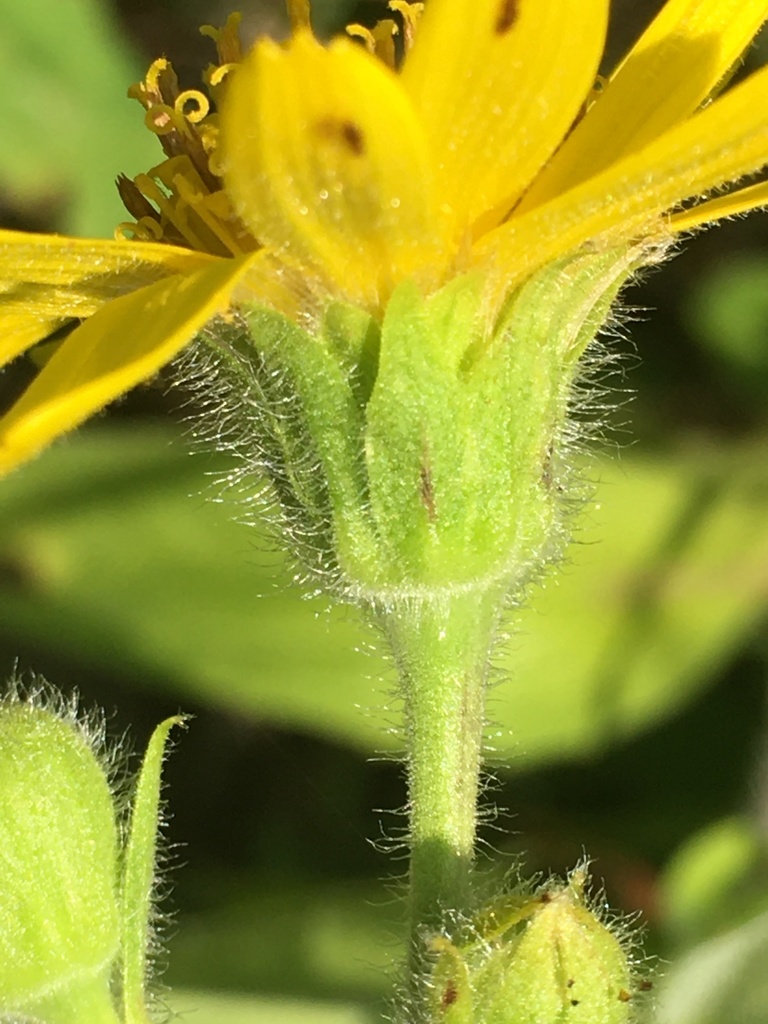
(c) Eric Lamb, some rights reserved (CC BY), uploaded by Eric Lamb · licence
Family: Asteraceae · Type: Perennial · Native
Arnica lanceolata subsp. prima (Clasping arnica) is a native California perennial in the Asteraceae family, recognized by tall stature, sessile lanceolate leaves, and brown pappus.
Clasping arnica is a California native perennial found in the Klamath Ranges, high Cascade Range, Sierra Nevada, and eastern Sierra Nevada in moist areas, stream banks, snow-melt zones, and montane to alpine meadows at elevations of 2,200 to 3,500 meters. Flowering from July to August, this plant produces yellow ray flowers 10 to 20 millimeters long with radiate heads in clusters of 3 to 10. Growing 50 to 80 centimeters tall with 1 to few stems that can branch above the middle, it emerges from a short rhizome and is generally hairy and glandular, especially toward the top of the plant. Its leaves include 4 to 10 pairs of narrowly lanceolate or oblanceolate cauline leaves that are nearly sessile and somewhat toothed, measuring 4 to 12 centimeters long. The fruit is 4 to 8 millimeters long with sparse hairs and sometimes glandular surfaces.
Identification and appearance
Key characters: 16 sympatric species; tall stature, sessile lanceolate leaves, and brown pappus are diagnostic
Habitat and range
Habitat: Moist areas, along stream banks, snow-melt areas, montane to alpine meadows
Elevation: 2200-3500 m
California counties: Inyo, Fresno, Alpine, Tulare, Mariposa, Sierra, Mono, Tuolumne, Siskiyou, Shasta, Madera, Contra Costa, Placer, Trinity, Plumas
Outside California: to southern Alaska, Wyoming
Bloom period
Arnica lanceolata subsp. prima blooms Jul-Aug.
How to tell it apart
vs Senecio: Senecio has alternate leaves; Arnica leaves opposite in pairs - check leaf arrangement first; vs Wyethia: Wyethia has large basal leaves and many-ranked bracts; Arnica stem leaves opposite, bracts in 2 series; vs Packera: Packera has alternate leaves; Arnica leaves opposite in pairs up stem; vs Kyhosia: Kyhosia has alternate leaves; Arnica leaves opposite - check where leaves attach to stem; vs Helianthella: Helianthella leaves mostly alternate; Arnica leaves strictly opposite in pairs
Frequently asked questions
Is Arnica lanceolata subsp. prima native to California?
Yes. Arnica lanceolata subsp. prima is native to California (recorded as native).
When does Arnica lanceolata subsp. prima bloom?
Arnica lanceolata subsp. prima blooms Jul-Aug.
Where in California does Arnica lanceolata subsp. prima grow?
Arnica lanceolata subsp. prima occurs in Inyo, Fresno, Alpine, Tulare, Mariposa, Sierra, Mono, Tuolumne and other counties, at elevations of 2200-3500 m.
What plant family does Arnica lanceolata subsp. prima belong to?
Arnica lanceolata subsp. prima is in the Asteraceae family, genus Arnica.
What habitat does Arnica lanceolata subsp. prima grow in?
Arnica lanceolata subsp. prima grows in Moist areas, along stream banks, snow-melt areas, montane to alpine meadows.
Related species
Other California species in the same genus, family, or bioregion.
Sources: Jepson eFlora · Index of California Plant Names · CalPhotos
Last updated 2026-10-06
Data from The California Species Project — 14,000+ California species with verified data from CNPS, CDFW, USFWS, Cal-IPC, and more.