Artemisia ludoviciana subsp. candicans
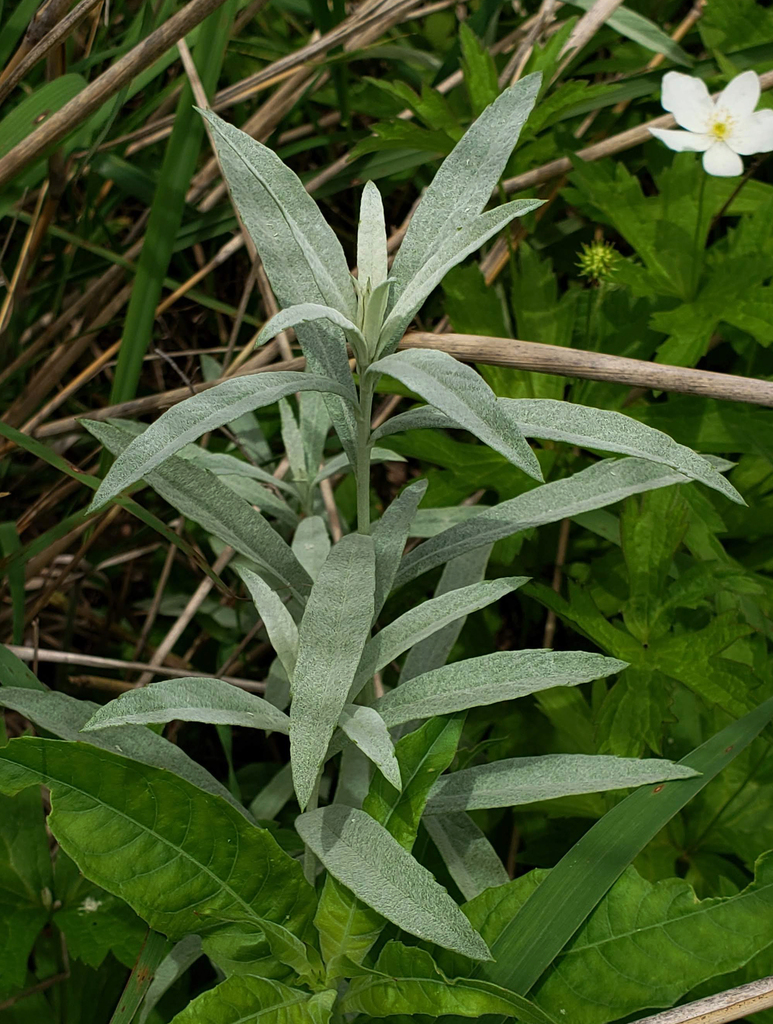
(c) aarongunnar, some rights reserved (CC BY), uploaded by aarongunnar · licence
Family: Asteraceae · Type: Subshrub · Native
Artemisia ludoviciana subsp. candicans is a native California subshrub in the Asteraceae family, recognized by deeply divided leaves with flat margins distinctive.
White sagebrush is a California native perennial found in northern Sierra Nevada and the Modoc Plateau in dry woodland and scrub habitats at elevations to 2,400 meters. Flowering from July to September, this plant produces small whitish flowers in narrow clusters about 4 to 5 millimeters long. Growing with slender stems up to 50 centimeters tall, it develops a distinctive gray-white wooly appearance. Its leaves are deeply divided, with proximal leaves 5 to 10 centimeters long featuring narrow, entire or slightly toothed lobes that are gray-white and densely tomentose on both surfaces. The plant forms compact, silvery-white clumps that stand out in dry, open landscapes.
Identification and appearance
Key characters: 13 sympatric species; deeply divided leaves with flat margins distinctive
Habitat and range
Habitat: dry woodland, scrub
Elevation: < 2400 m
Outside California: to Washington, Montana, Utah
Bloom period
Artemisia ludoviciana subsp. candicans blooms Jul-Sep.
How to tell it apart
vs Salvia: Artemisia has tiny clustered flower heads in the sunflower family; Salvia has two-lipped tubular flowers in the mint family with square stems.; vs Ambrosia: Artemisia has fused anthers and typically silvery foliage; Ambrosia has free anthers and often deeply lobed green leaves.; vs Ericameria: Artemisia is aromatic with inconspicuous greenish heads lacking rays; Ericameria has bright yellow daisy-like heads with showy ray petals.; vs Pseudognaphalium: Artemisia has no seed bristles and woody stems; Pseudognaphalium has fluffy white pappus bristles and soft herbaceous stems.; vs Eschscholzia: Artemisia has tiny greenish clustered flower heads; Eschscholzia has large showy orange or yellow poppy flowers with 4 petals.
Frequently asked questions
Is Artemisia ludoviciana subsp. candicans native to California?
Yes. Artemisia ludoviciana subsp. candicans is native to California (recorded as native).
When does Artemisia ludoviciana subsp. candicans bloom?
Artemisia ludoviciana subsp. candicans blooms Jul-Sep.
What plant family does Artemisia ludoviciana subsp. candicans belong to?
Artemisia ludoviciana subsp. candicans is in the Asteraceae family, genus Artemisia.
What habitat does Artemisia ludoviciana subsp. candicans grow in?
Artemisia ludoviciana subsp. candicans grows in dry woodland, scrub.
Related species
Other California species in the same genus, family, or bioregion.
Sources: Jepson eFlora · CalPhotos
Last updated 2026-10-07
Data from The California Species Project — 14,000+ California species with verified data from CNPS, CDFW, USFWS, Cal-IPC, and more.