Asclepias albicans
White-stemmed milkweed
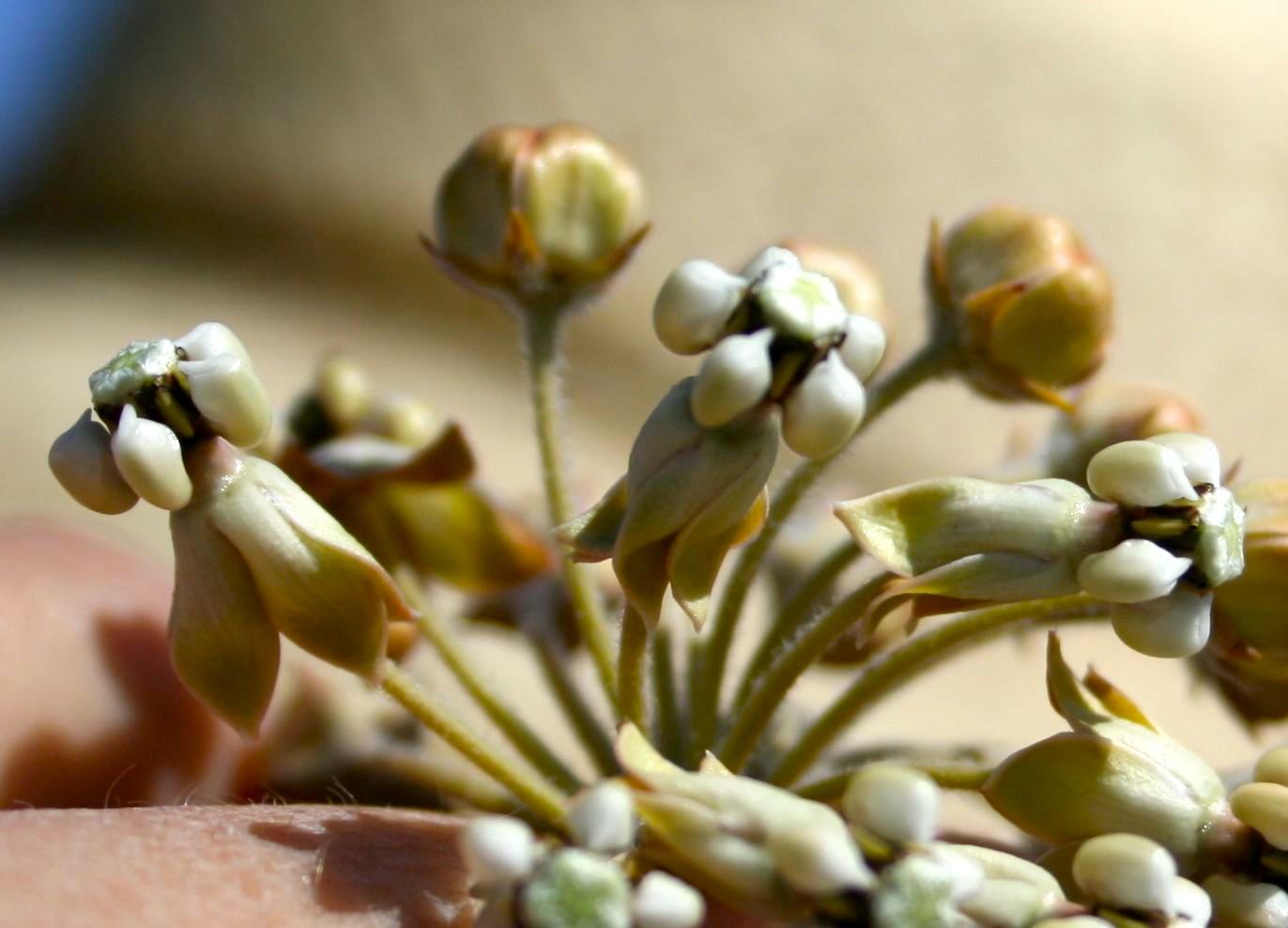
Photo by Chez Brungraber
Family: Apocynaceae · Type: Shrub · Native
Asclepias albicans (White-stemmed milkweed) is a native California shrub in the Apocynaceae family, recognized by unique waxy white stems and shrubby habit.
White-stemmed milkweed is a California native shrub found in the Mojave Desert bioregion in dry washes and gravelly hillsides at elevations of 200 to 1,100 meters. Flowering from March to June, this plant produces pale green-white flowers with occasional brown or pink tinge, with distinctive yellow hoods and prominent horns that extend beyond the corolla. Growing with somewhat erect and waxy stems that are lightly hairy, it forms a distinctive shrub with unique architectural qualities. Its leaves are opposite or whorled in groups of three, characterized by narrow-linear blades that are notably ephemeral. The plant produces pendulous fruits on spreading pedicels, with seeds approximately 6 millimeters long.
Identification and appearance
Key characters: 9 sympatric species; unique waxy white stems and shrubby habit
Habitat and range
Habitat: dry washes, gravelly hillsides
Elevation: 200-1100 m
California counties: Riverside, San Bernardino, Imperial, San Diego, Los Angeles
Outside California: Arizona, Baja California
Bloom period
Asclepias albicans blooms Mar-Jun.
How to tell it apart
vs Gomphocarpus: Asclepias has hoods that touch or nearly touch at their edges; Gomphocarpus has gaps between hood edges.; vs Erigeron: Asclepias has rounded umbel clusters with large individual flowers; Erigeron has daisy-like flowers with many thin ray petals.; vs Lantana: Asclepias has reflexed petals with a raised hood crown; Lantana has flat-faced tubular flowers in dense rounded heads.; vs Apocynum: Asclepias has large showy flowers in dome-shaped clusters; Apocynum has tiny bell-shaped flowers in branched sprays.; vs Baccharis: Asclepias has milky sap and large distinctive flowers; Baccharis has clear sap and tiny fuzzy composite flowers.
Frequently asked questions
Is Asclepias albicans native to California?
Yes. Asclepias albicans is native to California (recorded as native).
When does Asclepias albicans bloom?
Asclepias albicans blooms Mar-Jun.
Where in California does Asclepias albicans grow?
Asclepias albicans occurs in Riverside, San Bernardino, Imperial, San Diego, Los Angeles, at elevations of 200-1100 m.
What plant family does Asclepias albicans belong to?
Asclepias albicans is in the Apocynaceae family, genus Asclepias.
What habitat does Asclepias albicans grow in?
Asclepias albicans grows in dry washes, gravelly hillsides.
Related species
Other California species in the same genus, family, or bioregion.
Sources: Jepson eFlora · Index of California Plant Names · CalPhotos
Last updated 2026-10-07
Data from The California Species Project — 14,000+ California species with verified data from CNPS, CDFW, USFWS, Cal-IPC, and more.