Asparagus officinalis subsp. officinalis
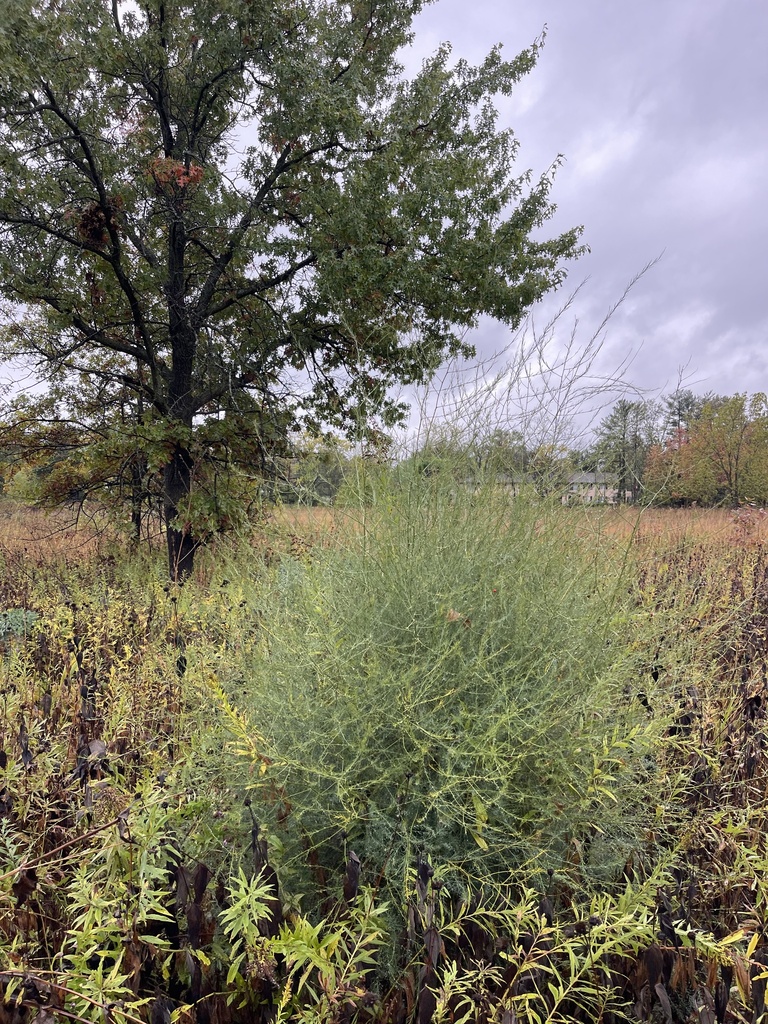
(c) Brandon Corder, some rights reserved (CC BY), uploaded by Brandon Corder · licence
Family: Asparagaceae · Type: Perennial · Not Native
Asparagus officinalis subsp. officinalis is a non-native California perennial in the Asparagaceae family, recognized by erect habit and rhizomatous roots distinguish it from sprawling species.
Asparagus is a naturalized perennial found in California's Central Valley and western and interior regions in disturbed places, roadsides, and fields at elevations generally below 200 meters. Flowering from March to September, this plant produces green-white flowers in small nodding clusters less than 7 millimeters long. Growing up to 3 meters tall with thick, matted rhizomes and slender branchlets less than 1 millimeter wide, it develops erect stems with distinctive spurred leaves. Its leaves are uniquely structured with subtle spurs, creating a delicate architectural form across disturbed landscapes. The fruit develops as small round red berries approximately 6 to 8 millimeters in diameter, providing a subtle ornamental quality to this widespread introduced species.
Identification and appearance
Key characters: 3 sympatric species; erect habit and rhizomatous roots distinguish it from sprawling species
Habitat and range
Habitat: Disturbed places, roadsides, fields
Elevation: generally < 200 m
Outside California: native to Europe
Bloom period
Asparagus officinalis subsp. officinalis blooms Mar-Sep.
How to tell it apart
vs Ruscus: Both flower on green modified stems, but Ruscus cladodes are broad, rigid and leaf-like with flowers borne on their surface; Asparagus cladodes are needle-like to thread-fine and clustered, with flowers in axillary racemes.; vs ferns: Asparagus 'fern' foliage is made of green cladodes and the plant flowers and sets red berries; true ferns never flower, reproducing by spores under the frond.; vs Muehlenbeckia: Asparagus has clustered needle cladodes and red berries; Muehlenbeckia (wireweed) is a wiry vine with small rounded true leaves and a papery ocrea at the nodes.; vs Ephedra: Asparagus is a soft green sprawler with cladodes and berries; Ephedra (Mormon tea) is a rigid jointed desert shrub with opposite scale-leaves and cones.; vs Smilax: Asparagus has soft needle-like cladodes and no tendrils; Smilax (greenbrier) has broad net-veined true leaves and paired tendrils, often on prickly stems.
Frequently asked questions
Is Asparagus officinalis subsp. officinalis native to California?
No. Asparagus officinalis subsp. officinalis is not native to California (recorded as not native).
When does Asparagus officinalis subsp. officinalis bloom?
Asparagus officinalis subsp. officinalis blooms Mar-Sep.
What plant family does Asparagus officinalis subsp. officinalis belong to?
Asparagus officinalis subsp. officinalis is in the Asparagaceae family, genus Asparagus.
What habitat does Asparagus officinalis subsp. officinalis grow in?
Asparagus officinalis subsp. officinalis grows in Disturbed places, roadsides, fields.
Related species
Other California species in the same genus, family, or bioregion.
Sources: Jepson eFlora · CalPhotos
Last updated 2026-09-30
Data from The California Species Project — 14,000+ California species with verified data from CNPS, CDFW, USFWS, Cal-IPC, and more.