Aspidotis carlotta-halliae
Carlotta hall's lace fern, Carlotta Hall's Lace Fern, Carlotta Hall's lace fern, Carlotta Hall's lace fern
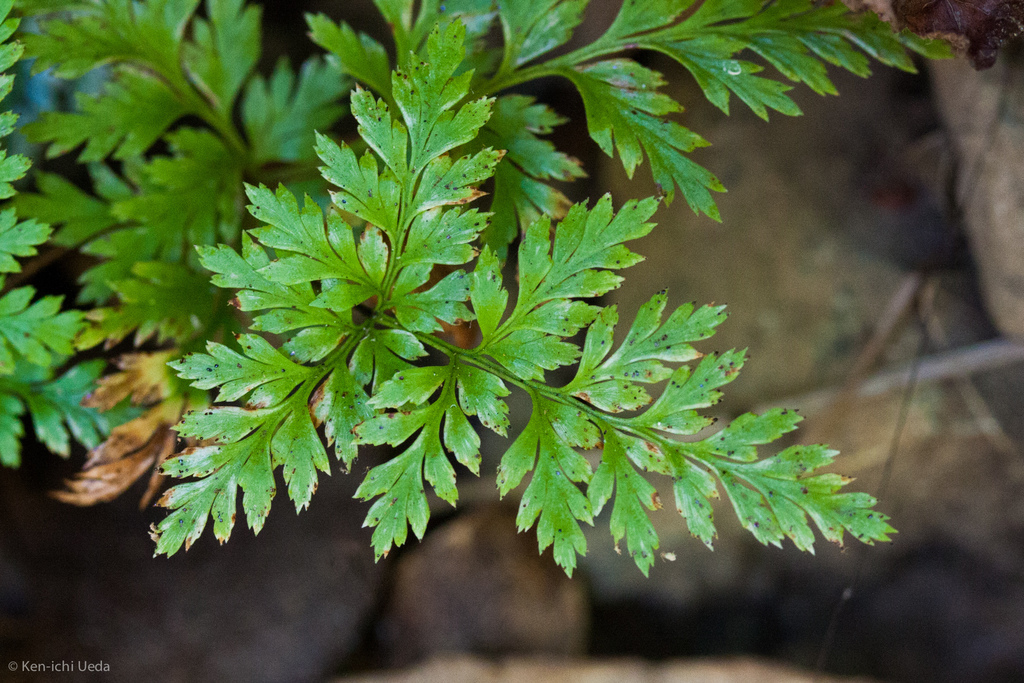
(c) Ken-ichi Ueda, some rights reserved (CC BY) · licence
Family: Pteridaceae · Type: Herb · Native
Conservation status: CNPS 4.2
Aspidotis carlotta-halliae (Carlotta hall's lace fern) is a native California herb in the Pteridaceae family, recognized by leathery texture, fused indusia with deep teeth, and serpentine habitat preference.
Carlotta hall's lace fern is a California native perennial fern found in central western California on serpentine slopes, crevices, and outcrops at elevations of 100 to 1,400 meters. This delicate fern features a complex, leathery leaf structure that is 3-pinnate and typically 8 to 15 centimeters long, with finely dissected pinnae that create an intricate lace-like appearance. Growing with slender, ascending fronds, the fern develops narrow lanceolate to triangular leaf segments with few distinctive teeth. Its leaves are characterized by pinnately dissected segments with small, sparse teeth, creating a delicate and intricate green foliage. The sporangia are notable for their false indusia that are approximately as wide as or wider than long, typically with 3 to 5 segments per section.
Identification and appearance
Key characters: 2 sympatric species; key features are leathery texture, fused indusia with deep teeth, and serpentine habitat preference
Habitat and range
Habitat: Generally serpentine slopes, crevices, outcrops
Elevation: 100-1400 m
California counties: Marin, Monterey, San Luis Obispo, Butte, San Benito, Alameda, Santa Clara
Conservation status
CNPS 4.2
How to tell it apart
vs Conium: Aspidotis has spore cases under leaf margins; poison-hemlock has white flowers in umbels.; vs Pentagramma: Aspidotis has toothed sterile segments; goldback fern segments are entire without teeth.; vs Cryptogramma: Aspidotis segments are connected by thin wing tissue; rock-brake segments are completely separate.; vs Myriopteris: Check the leaf underside - Aspidotis is smooth, Myriopteris has scales, hairs, or glands.; vs Rumohra: Aspidotis segments are stalkless and connected; leather fern segments are distinctly stalked.
Frequently asked questions
Is Aspidotis carlotta-halliae native to California?
Yes. Aspidotis carlotta-halliae is native to California (recorded as native).
Where in California does Aspidotis carlotta-halliae grow?
Aspidotis carlotta-halliae occurs in Marin, Monterey, San Luis Obispo, Butte, San Benito, Alameda, Santa Clara, at elevations of 100-1400 m.
What plant family does Aspidotis carlotta-halliae belong to?
Aspidotis carlotta-halliae is in the Pteridaceae family, genus Aspidotis.
Is Aspidotis carlotta-halliae rare or endangered?
Aspidotis carlotta-halliae carries California Rare Plant Rank 4.2, state rank S3.
What habitat does Aspidotis carlotta-halliae grow in?
Aspidotis carlotta-halliae grows in Generally serpentine slopes, crevices, outcrops.
Related species
Other California species in the same genus, family, or bioregion.
Sources: Jepson eFlora · CNPS Rare Plant Inventory · Index of California Plant Names · CalPhotos · CDFW CNDDB
Last updated 2026-10-07
Data from The California Species Project — 14,000+ California species with verified data from CNPS, CDFW, USFWS, Cal-IPC, and more.