Astragalus accidens var. hendersonii
Henderson's milkvetch
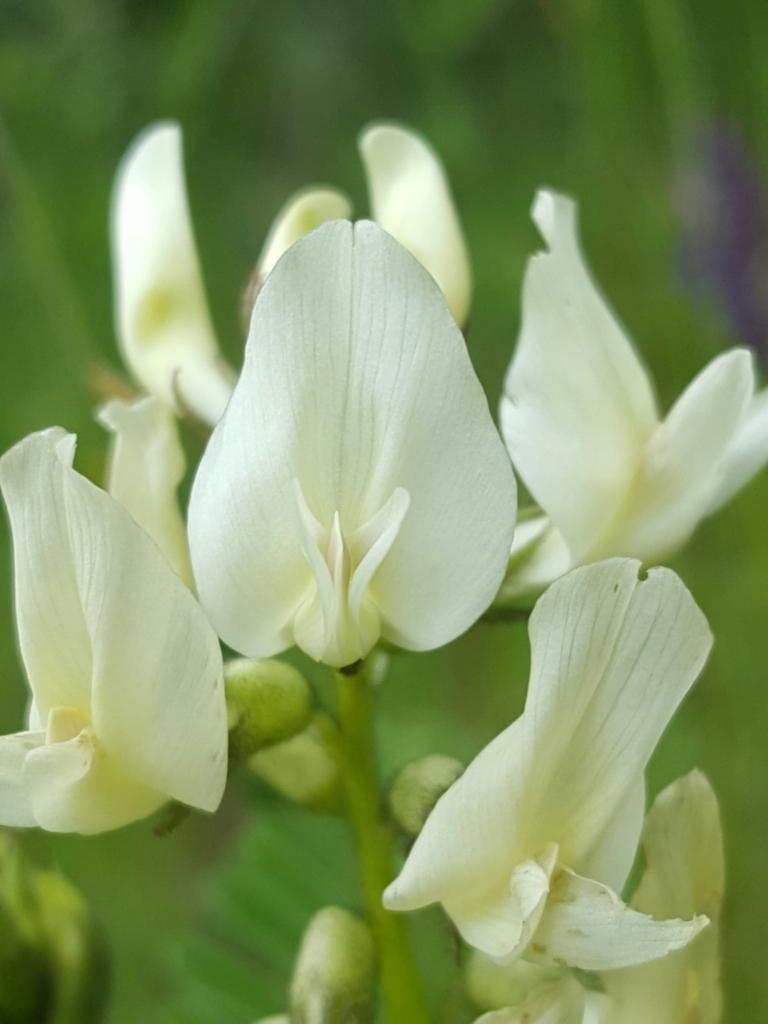
(c) Alex Abair, some rights reserved (CC BY), uploaded by Alex Abair · licence
Family: Fabaceae · Type: Herb · Native
Astragalus accidens var. hendersonii (Henderson's milkvetch) is a native California herb in the Fabaceae family, recognized by large flowers and distinctive thick, plump fruits are key.
Henderson's milkvetch is a California native perennial found in the Klamath Ranges and California Cascade Range in shrubland, open woodland, and roadside areas at elevations below 1,250 meters. Flowering from April to July, this plant produces white flowers with a banner 13.8 to 19.3 millimeters long that is recurved at approximately 45 degrees. Growing with somewhat bushy, ascending stems 30 to 60 centimeters tall, it has a distinctive appearance with sparse, minute, curved hairs. Its compound leaves are 3 to 12 centimeters long, featuring 15 to 29 oblong leaflets 6 to 22 millimeters in length, with tips typically notched. The fruit is a distinctive pendent, plump pod 16 to 25 millimeters long, drying to a leathery or woody texture with a sharp beak.
Identification and appearance
Key characters: 10 sympatric species; large flowers and distinctive thick, plump fruits are key
Habitat and range
Habitat: shrubland, open woodland, roadbanks
Elevation: < 1250 m
California counties: Orange, Siskiyou, Lassen, Alpine, Tehama, Mono, Trinity, El Dorado
Outside California: southwestern Oregon
Bloom period
Astragalus accidens var. hendersonii blooms Apr-Jul.
How to tell it apart
vs Vicia: Astragalus has racemes of flowers; vetches (Vicia) have tendrils at leaf tips and climbing or sprawling habit.; vs Oxytropis: Astragalus keel tip is rounded to slightly pointed; Oxytropis keel has a pronounced pointed beak.; vs Cleomella: Astragalus has pea-shaped flowers; Cleomella has 4-petaled cruciform flowers with long stamens.; vs Lupinus: Astragalus has pinnate compound leaves; lupines have palmate leaves (leaflets radiating from one point).; vs Dalea: Astragalus has typical pea flowers; Dalea has tiny flowers with petals attached to the stamen tube.
Frequently asked questions
Is Astragalus accidens var. hendersonii native to California?
Yes. Astragalus accidens var. hendersonii is native to California (recorded as native).
When does Astragalus accidens var. hendersonii bloom?
Astragalus accidens var. hendersonii blooms Apr-Jul.
Where in California does Astragalus accidens var. hendersonii grow?
Astragalus accidens var. hendersonii occurs in Orange, Siskiyou, Lassen, Alpine, Tehama, Mono, Trinity, El Dorado, at elevations of < 1250 m.
What plant family does Astragalus accidens var. hendersonii belong to?
Astragalus accidens var. hendersonii is in the Fabaceae family, genus Astragalus.
What habitat does Astragalus accidens var. hendersonii grow in?
Astragalus accidens var. hendersonii grows in shrubland, open woodland, roadbanks.
Related species
Other California species in the same genus, family, or bioregion.
Sources: Jepson eFlora · Index of California Plant Names · CalPhotos
Last updated 2026-10-07
Data from The California Species Project — 14,000+ California species with verified data from CNPS, CDFW, USFWS, Cal-IPC, and more.