Astragalus bicristatus
Crested milkvetch, crested milk-vetch, crested milk-vetch
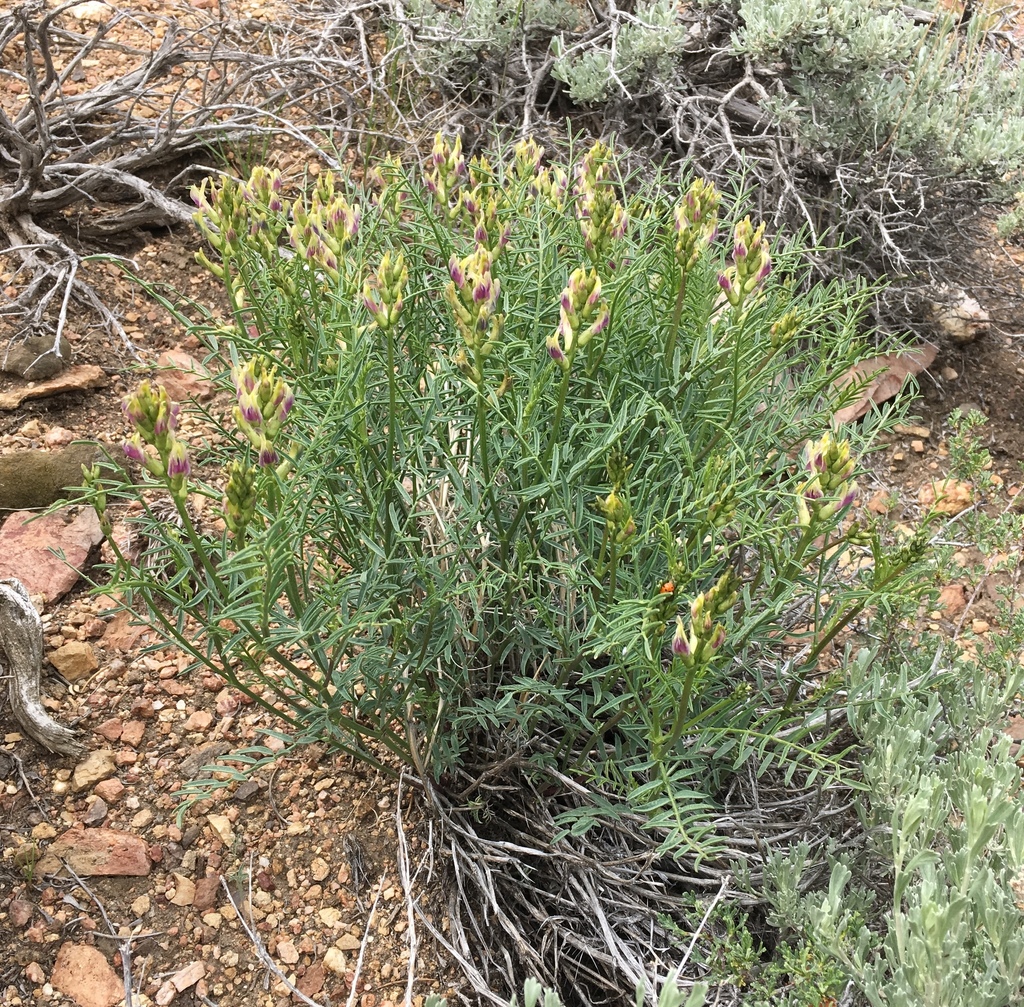
(c) Matt Berger, some rights reserved (CC BY), uploaded by Matt Berger · licence
Family: Fabaceae · Type: Herb · Native
Conservation status: CNPS 4.3
Astragalus bicristatus (Crested milkvetch) is a native California herb in the Fabaceae family, recognized by four-sided pods with prominent flanges distinctive.
Crested milkvetch is a California native perennial ranked 4.3 by CNPS, found in southwestern California's coastal mountains, San Gabriel Mountains, San Bernardino Mountains, and Peninsular Ranges in open, rocky pine forest areas at elevations of 1,700 to 2,750 meters. Flowering from May to August, this plant produces predominantly white flowers in clusters of 5 to 20 with banner petals 15 to 19 millimeters long, distinctively recurved at about 50 degrees. Growing with ascending or sprawling stems less than 50 centimeters tall and often appearing grayish from fine strigose hairs, it forms a sparsely leafy habit. Its compound leaves feature 11 to 23 linear to narrowly oblong leaflets, each 5 to 20 millimeters long with generally obtuse or notched tips. The distinctive fruit is pendulous, 20 to 43 millimeters long, with a stout downcurved base and a prominently flanged, stiffly leathery structure.
Identification and appearance
Key characters: 36 sympatric species; four-sided pods with prominent flanges distinctive
Habitat and range
Habitat: Open, rocky areas in pine forest
Elevation: 1700-2750 m
California counties: Los Angeles, San Bernardino, Riverside, Ventura
Bloom period
Astragalus bicristatus blooms May-Aug.
Conservation status
CNPS 4.3
How to tell it apart
vs Vicia: Astragalus has racemes of flowers; vetches (Vicia) have tendrils at leaf tips and climbing or sprawling habit.; vs Oxytropis: Astragalus keel tip is rounded to slightly pointed; Oxytropis keel has a pronounced pointed beak.; vs Cleomella: Astragalus has pea-shaped flowers; Cleomella has 4-petaled cruciform flowers with long stamens.; vs Lupinus: Astragalus has pinnate compound leaves; lupines have palmate leaves (leaflets radiating from one point).; vs Dalea: Astragalus has typical pea flowers; Dalea has tiny flowers with petals attached to the stamen tube.
Frequently asked questions
Is Astragalus bicristatus native to California?
Yes. Astragalus bicristatus is native to California (recorded as native).
When does Astragalus bicristatus bloom?
Astragalus bicristatus blooms May-Aug.
Where in California does Astragalus bicristatus grow?
Astragalus bicristatus occurs in Los Angeles, San Bernardino, Riverside, Ventura, at elevations of 1700-2750 m.
What plant family does Astragalus bicristatus belong to?
Astragalus bicristatus is in the Fabaceae family, genus Astragalus.
Is Astragalus bicristatus rare or endangered?
Astragalus bicristatus carries California Rare Plant Rank 4.3, state rank S3.
Related species
Other California species in the same genus, family, or bioregion.
Sources: Jepson eFlora · CNPS Rare Plant Inventory · Index of California Plant Names · CalPhotos · CDFW CNDDB
Last updated 2026-10-07
Data from The California Species Project — 14,000+ California species with verified data from CNPS, CDFW, USFWS, Cal-IPC, and more.