Astragalus trichopodus var. antisellii
Antisell milkvetch, Antisell Milkvetch
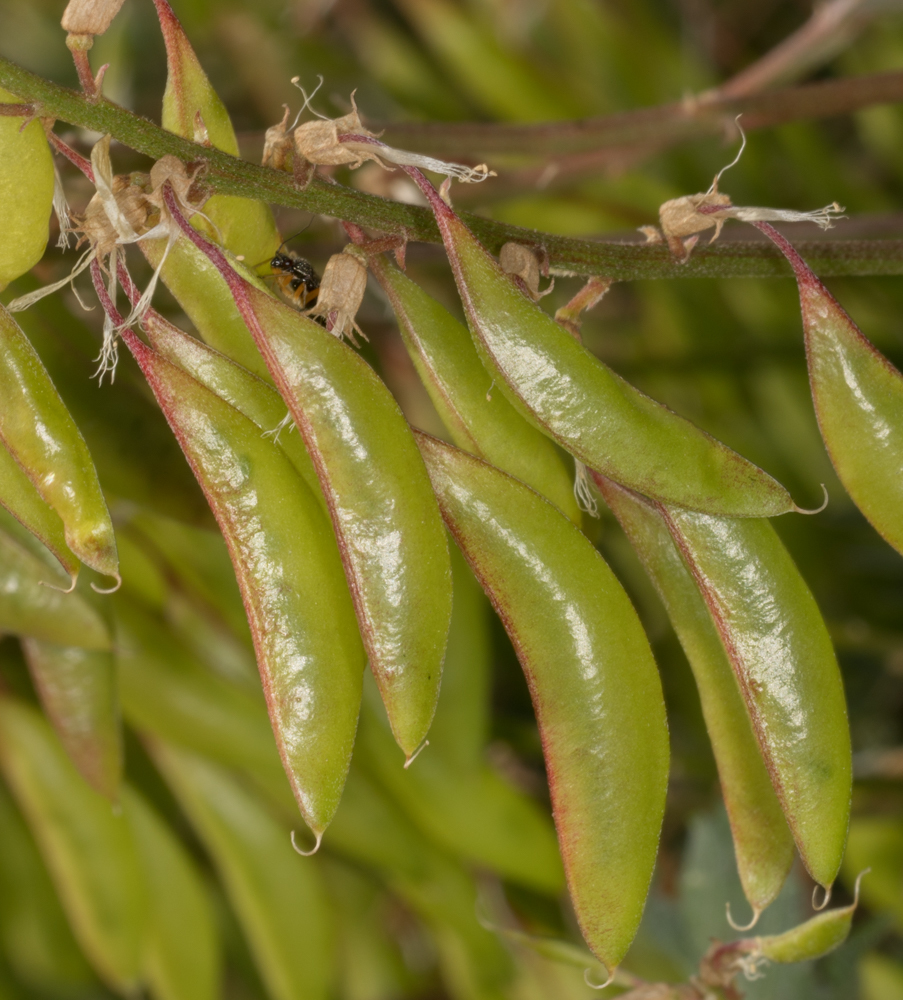
no rights reserved, uploaded by Jesse Rorabaugh · CC0
Family: Fabaceae · Type: Subshrub · Native
Astragalus trichopodus var. antisellii (Antisell milkvetch) is a native California subshrub in the Fabaceae family, recognized by compressed vs. bladdery pods distinguish from related varieties.
Antisell milkvetch is a California native perennial found in southern Sierra Nevada, Tehachapi, southern San Joaquin Valley, southern Coast Ranges, northern coastal Southern California, Transverse Ranges, Peninsular Ranges, and western edge of the Mojave Desert in inland foothills and grassy or shrubby hillsides at elevations below 1,800 meters. Flowering from February to June, this plant produces small flowers in clusters ranging from 10 to 50 blooms, with banner petals 11.4 to 16.7 millimeters long. Growing with slender stems in open chaparral habitats, it forms low-spreading clumps characteristic of milkvetch species. Its leaves are compound with multiple small leaflets typical of the astragalus genus, adapting to dry, open landscapes. The plant develops distinctive elongated pods 15 to 36 millimeters long, slightly compressed and carried on glabrous stalks.
Identification and appearance
Key characters: 54 sympatric species; compressed vs. bladdery pods distinguish from related varieties
Habitat and range
Habitat: Generally inland foothills, grassy or shrubby hillsides, washes, openings in chaparral
Elevation: < 1800 m
California counties: Los Angeles, Ventura, Santa Barbara, San Luis Obispo, Kern, Riverside, Orange, Monterey
Bloom period
Astragalus trichopodus var. antisellii blooms Feb-Jun.
How to tell it apart
vs Vicia: Astragalus has racemes of flowers; vetches (Vicia) have tendrils at leaf tips and climbing or sprawling habit.; vs Oxytropis: Astragalus keel tip is rounded to slightly pointed; Oxytropis keel has a pronounced pointed beak.; vs Cleomella: Astragalus has pea-shaped flowers; Cleomella has 4-petaled cruciform flowers with long stamens.; vs Lupinus: Astragalus has pinnate compound leaves; lupines have palmate leaves (leaflets radiating from one point).; vs Dalea: Astragalus has typical pea flowers; Dalea has tiny flowers with petals attached to the stamen tube.
Frequently asked questions
Is Astragalus trichopodus var. antisellii native to California?
Yes. Astragalus trichopodus var. antisellii is native to California (recorded as native).
When does Astragalus trichopodus var. antisellii bloom?
Astragalus trichopodus var. antisellii blooms Feb-Jun.
Where in California does Astragalus trichopodus var. antisellii grow?
Astragalus trichopodus var. antisellii occurs in Los Angeles, Ventura, Santa Barbara, San Luis Obispo, Kern, Riverside, Orange, Monterey, at elevations of < 1800 m.
What plant family does Astragalus trichopodus var. antisellii belong to?
Astragalus trichopodus var. antisellii is in the Fabaceae family, genus Astragalus.
What habitat does Astragalus trichopodus var. antisellii grow in?
Astragalus trichopodus var. antisellii grows in Generally inland foothills, grassy or shrubby hillsides, washes, openings in chaparral.
Related species
Other California species in the same genus, family, or bioregion.
- Astragalus trichopodus var. lonchus — Santa barbara milkvetch
- Astragalus trichopodus var. trichopodus — Santa barbara milkvetch
- Astragalus umbraticus — Bald mountain milkvetch
- Astragalus webberi — Webber's milkvetch
- Astragalus whitneyi — Balloon milkvetch
- Astragalus whitneyi var. confusus — Conelike milkvetch
Sources: Jepson eFlora · Index of California Plant Names · CalPhotos
Last updated 2026-10-07
Data from The California Species Project — 14,000+ California species with verified data from CNPS, CDFW, USFWS, Cal-IPC, and more.