Atriplex fruticulosa
Ballscale, little oak orach, Little Oak Orach
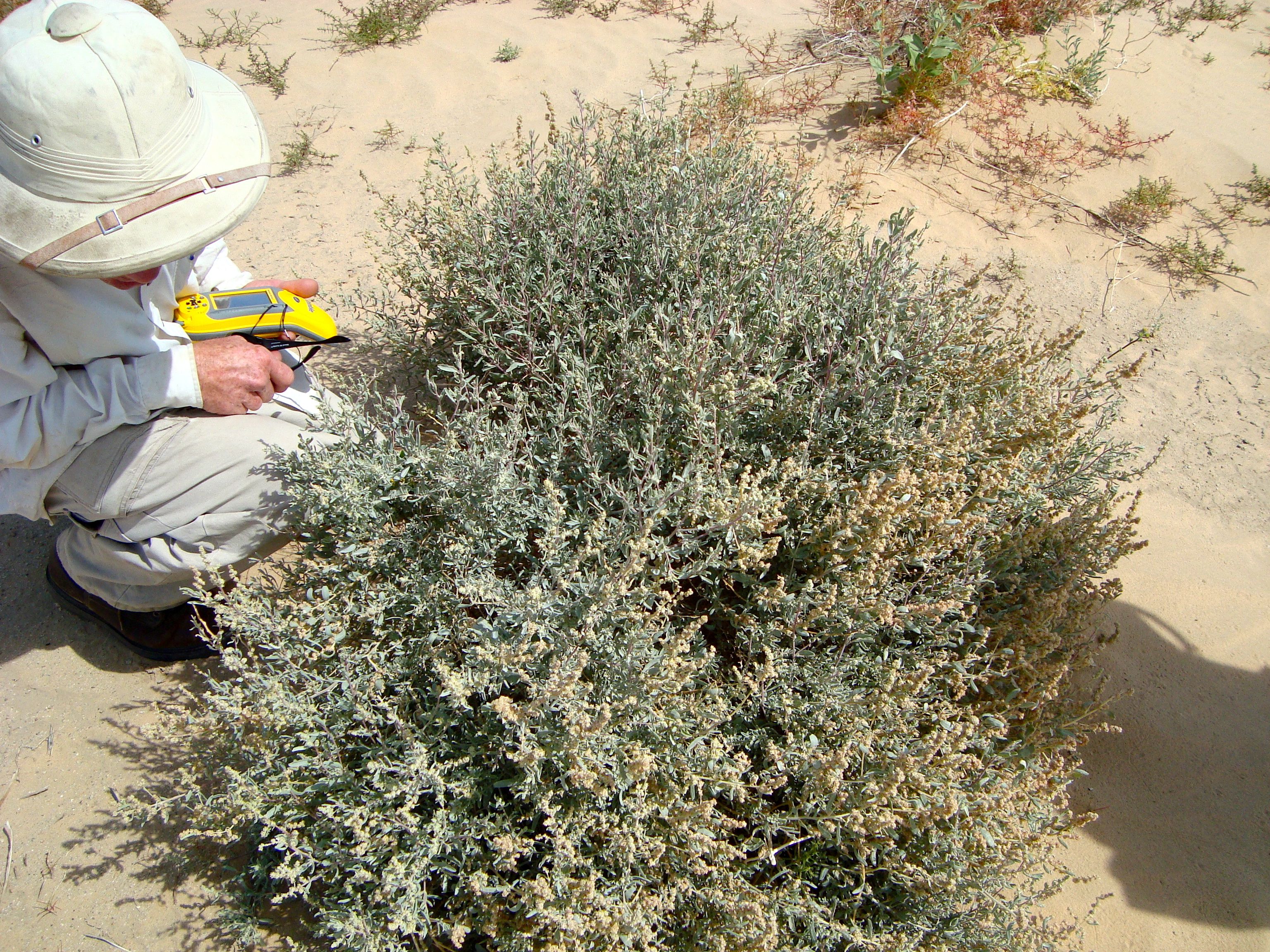
Photo by Chez Brungraber
Family: Chenopodiaceae · Type: Subshrub · Native
Atriplex fruticulosa (Ballscale) is a native California subshrub in the Chenopodiaceae family, recognized by perennial habit, small narrow leaves, hard fruit bracts.
Ballscale is a California native perennial found in northern coastal ranges, northern San Joaquin Valley, San Francisco Bay Area, southern coastal ranges, and western Mojave Desert regions in clay or alkaline scrub habitats at elevations below 1,000 meters. Flowering from April to November, this plant produces gray-scaled flowers with subtle white to green coloration. Growing with a decumbent to erect form reaching 30 to 50 centimeters tall, it develops many branched stems that become smooth with age. Its narrow leaves are 5 to 12 millimeters long, densely covered in gray scales and lance-shaped to elliptical. The plant produces distinctive fan-shaped or spherical fruit bracts that are 3 to 5 millimeters wide with irregular teeth along their edges.
Identification and appearance
Key characters: 43 sympatric species; key features are perennial habit, small narrow leaves, hard fruit bracts
Habitat and range
Habitat: Clay or alkaline soils, open sites, scrub
Elevation: < 1000 m
California counties: Fresno, Santa Barbara, Monterey, Alameda, Kern, Stanislaus, Merced, San Joaquin, Tulare, Contra Costa, Colusa, Glenn, San Luis Obispo, Solano, San Benito, Madera, San Bernardino, Lake, Butte
Bloom period
Atriplex fruticulosa blooms Apr-Nov.
How to tell it apart
vs Artemisia: Atriplex leaves have bead-like scales; Artemisia leaves are finely divided and aromatic when crushed.; vs Ambrosia: Atriplex has simple scaly leaves; Ambrosia has deeply lobed or divided leaves with coarse hairs.; vs Extriplex: Atriplex has 3-5 calyx lobes on male flowers and two seed colors; Extriplex has exactly 4 lobes and uniform dark seeds.; vs Chenopodium: Atriplex has bead-like bladder hairs and paired fruit bracts; Chenopodium has mealy powder and calyx-enclosed fruits.; vs Eriogonum: Atriplex has scaly leaves and paired fruit bracts; Eriogonum has smooth leaves and papery flower tubes.
Frequently asked questions
Is Atriplex fruticulosa native to California?
Yes. Atriplex fruticulosa is native to California (recorded as native).
When does Atriplex fruticulosa bloom?
Atriplex fruticulosa blooms Apr-Nov.
Where in California does Atriplex fruticulosa grow?
Atriplex fruticulosa occurs in Fresno, Santa Barbara, Monterey, Alameda, Kern, Stanislaus, Merced, San Joaquin and other counties, at elevations of < 1000 m.
What plant family does Atriplex fruticulosa belong to?
Atriplex fruticulosa is in the Chenopodiaceae family, genus Atriplex.
What habitat does Atriplex fruticulosa grow in?
Atriplex fruticulosa grows in Clay or alkaline soils, open sites, scrub.
Related species
Other California species in the same genus, family, or bioregion.
Sources: Jepson eFlora · Index of California Plant Names · CalPhotos
Last updated 2026-10-07
Data from The California Species Project — 14,000+ California species with verified data from CNPS, CDFW, USFWS, Cal-IPC, and more.