Baccharis pilularis
Coyote brush
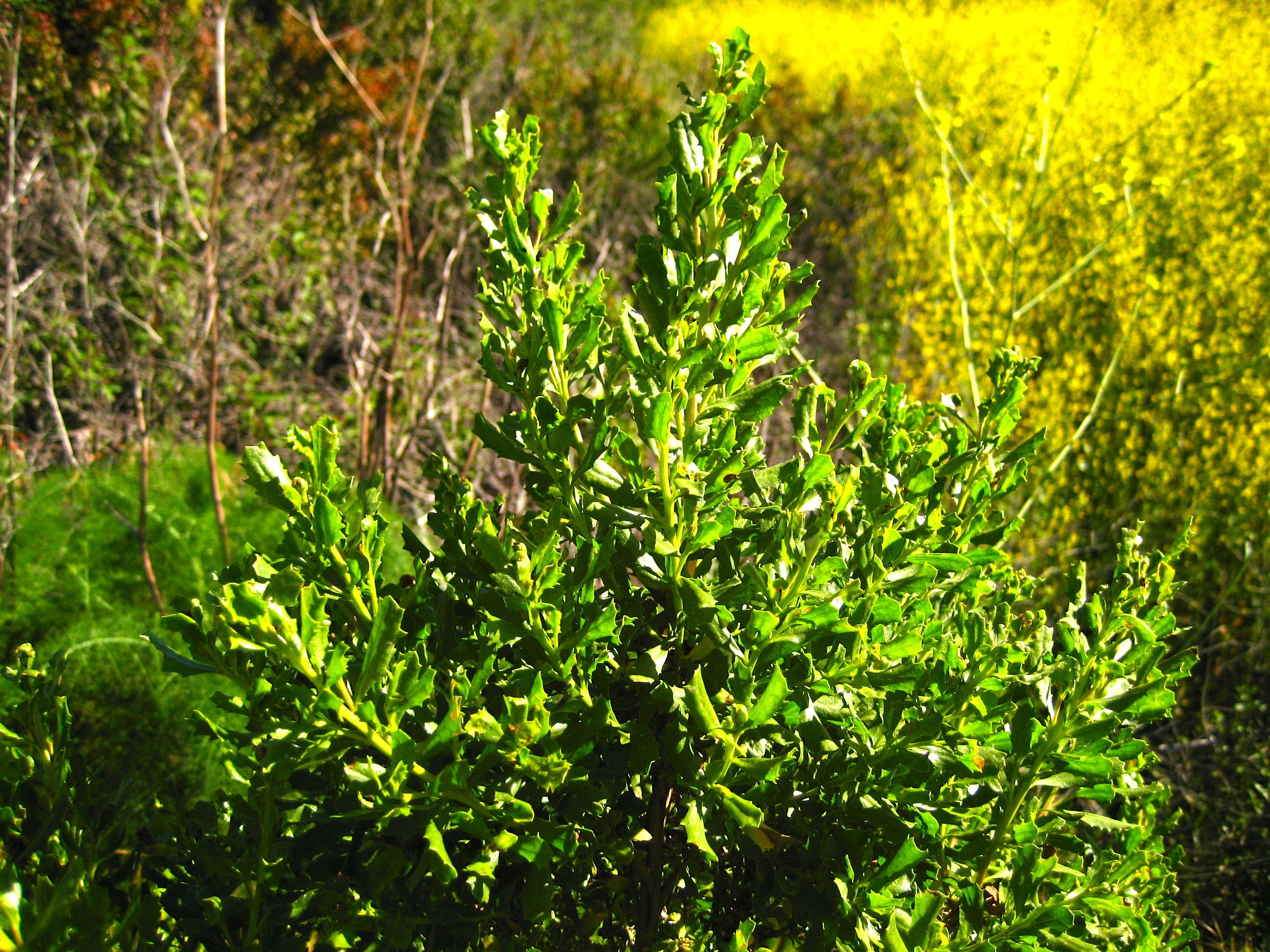
Photo by Chez Brungraber
Family: Asteraceae · Type: Shrub · Native
Baccharis pilularis (Coyote brush) is a native California shrub in the Asteraceae family, recognized by NONE sympatric - geographically isolated.
Coyote brush is a California native shrub found throughout coastal and inner coastal ranges, central western California, and Sierra Nevada foothills in chaparral, coastal scrub, and grassland habitats. Flowering from August to November, this plant produces white to cream-colored flowers in small clustered heads. Growing up to 4.5 meters tall with multiple spreading, erect, or ascending dark brown branches that are generally sticky, it forms diverse growth habits from prostrate mat-like formations to rounded, upright shrubs. Its leaves are oblanceolate to obovate, 5 to 40 millimeters long, entire or slightly toothed, with three main veins and gland-dotted surfaces. The fruit is small, approximately 1 to 2 millimeters long with 8 to 10 subtle ribs.
Identification and appearance
Key characters: NONE sympatric - geographically isolated
How to tell it apart
vs Ericameria: Baccharis has sticky leaves and white fluffy seeds; Ericameria has narrow leaves and bright yellow ray flowers.; vs Salix: Baccharis has sticky resinous leaves and flower heads; Salix has fuzzy catkins and alternate leaves without resin.; vs Quercus: Baccharis has sticky leaves and fluffy seeds; Quercus has lobed or entire leaves and produces acorns.; vs Ceanothus: Baccharis has small clustered flower heads; Ceanothus has dense clusters of showy blue or white 5-petaled flowers.; vs Lepidospartum: Baccharis has sticky leafy branches; Lepidospartum has scale-like leaves on broom-like green stems.
Frequently asked questions
Is Baccharis pilularis native to California?
Yes. Baccharis pilularis is native to California (recorded as native).
What plant family does Baccharis pilularis belong to?
Baccharis pilularis is in the Asteraceae family, genus Baccharis.
Related species
Other California species in the same genus, family, or bioregion.
Sources: Jepson eFlora · Index of California Plant Names · CalPhotos
Last updated 2026-10-07
Data from The California Species Project — 14,000+ California species with verified data from CNPS, CDFW, USFWS, Cal-IPC, and more.