Baccharis plummerae subsp. glabrata
San simeon baccharis, San Simeon Baccharis
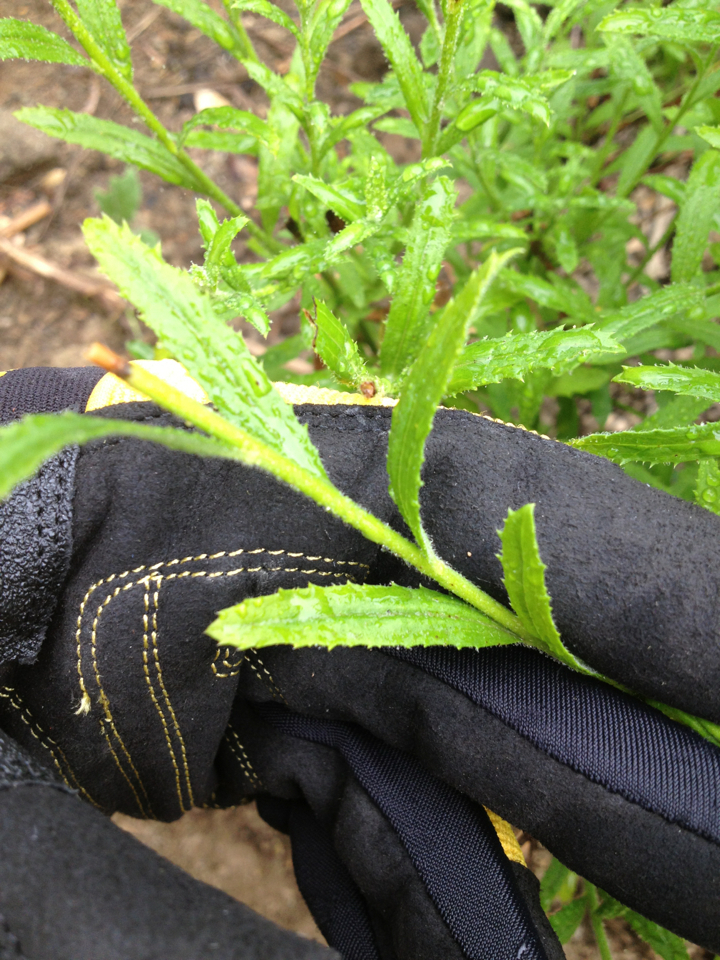
(c) Zack Abbey, some rights reserved (CC BY), uploaded by Zack Abbey · licence
Family: Asteraceae · Type: Shrub · Native
Conservation status: CNPS 1B.2
Baccharis plummerae subsp. glabrata (San simeon baccharis) is a native California shrub in the Asteraceae family, recognized by CNPS 1B.2; differs from subsp. plummerae by glabrous stems and generally 1-veined leaves.
San simeon baccharis is a rare (CNPS 1B.2) California native shrub found in central California Coast and western central South Coast Ranges on rocky, shrubby slopes near beaches, bluffs, and serpentine rock outcrops at elevations below 500 meters. Flowering from June to September, this plant produces white flowers in small clusters. Growing as a compact subshrub up to 80 centimeters tall with nearly smooth stems that have subtle glandular characteristics, it develops a distinctive branching structure. Its leaves are narrow and linear to oblanceolate, measuring 8 to 35 millimeters long, with entire or minutely toothed edges and typically a single main vein. The plant's compact form and specialized habitat make it a unique component of California's coastal shrubland ecosystems.
Identification and appearance
Key characters: 4 sympatric species; CNPS 1B.2; differs from subsp. plummerae by glabrous stems and generally 1-veined leaves
Habitat and range
Habitat: Rocky, shrubby slopes near beach, bluffs, serpentine rock outcrops
Elevation: < 500 m
California counties: Monterey, San Luis Obispo
Bloom period
Baccharis plummerae subsp. glabrata blooms Jun-Sep.
Conservation status
CNPS 1B.2
How to tell it apart
vs Ericameria: Baccharis has sticky leaves and white fluffy seeds; Ericameria has narrow leaves and bright yellow ray flowers.; vs Salix: Baccharis has sticky resinous leaves and flower heads; Salix has fuzzy catkins and alternate leaves without resin.; vs Quercus: Baccharis has sticky leaves and fluffy seeds; Quercus has lobed or entire leaves and produces acorns.; vs Ceanothus: Baccharis has small clustered flower heads; Ceanothus has dense clusters of showy blue or white 5-petaled flowers.; vs Lepidospartum: Baccharis has sticky leafy branches; Lepidospartum has scale-like leaves on broom-like green stems.
Frequently asked questions
Is Baccharis plummerae subsp. glabrata native to California?
Yes. Baccharis plummerae subsp. glabrata is native to California (recorded as native).
When does Baccharis plummerae subsp. glabrata bloom?
Baccharis plummerae subsp. glabrata blooms Jun-Sep.
Where in California does Baccharis plummerae subsp. glabrata grow?
Baccharis plummerae subsp. glabrata occurs in Monterey, San Luis Obispo, at elevations of < 500 m.
What plant family does Baccharis plummerae subsp. glabrata belong to?
Baccharis plummerae subsp. glabrata is in the Asteraceae family, genus Baccharis.
Is Baccharis plummerae subsp. glabrata rare or endangered?
Baccharis plummerae subsp. glabrata carries California Rare Plant Rank 1B.2, state rank S1.
Related species
Other California species in the same genus, family, or bioregion.
Sources: Jepson eFlora · CNPS Rare Plant Inventory · Index of California Plant Names · CalPhotos · CDFW CNDDB
Last updated 2026-10-07
Data from The California Species Project — 14,000+ California species with verified data from CNPS, CDFW, USFWS, Cal-IPC, and more.