Betula occidentalis
Water birch, Water Birch
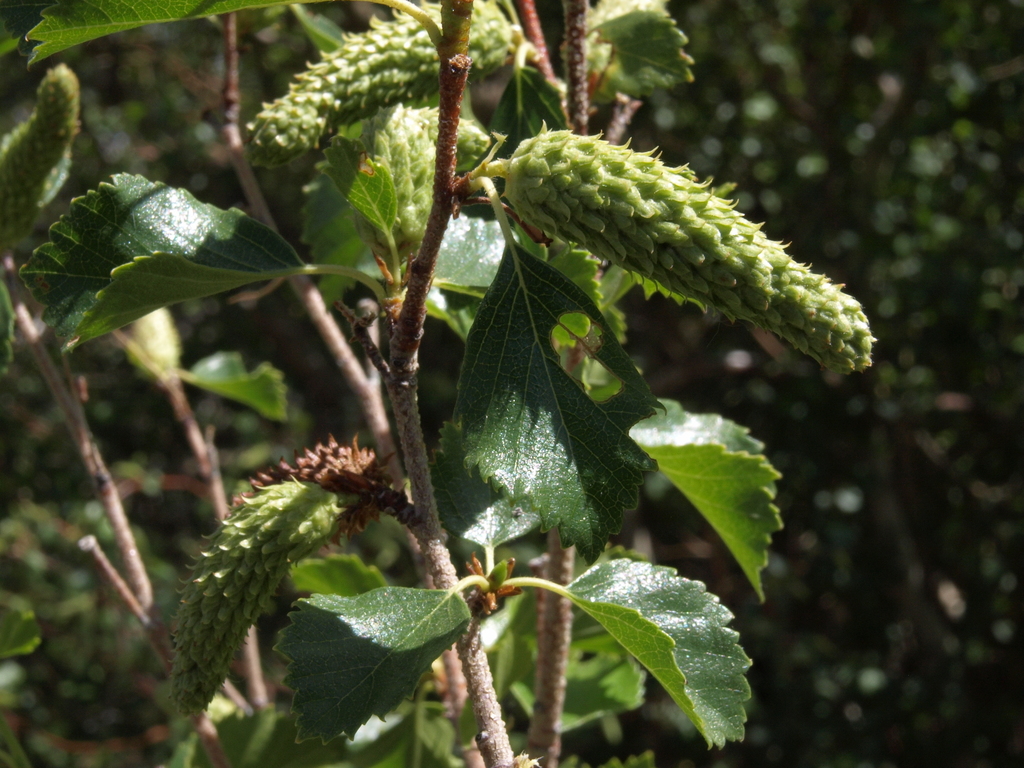
(c) Jim Morefield, some rights reserved (CC BY) · licence
Family: Betulaceae · Type: Shrub / Tree · Native
Betula occidentalis (Water birch) is a native California shrub / tree in the Betulaceae family, recognized by key differences are growth form (tree vs shrub) and leaf size (2-5cm vs 1-2cm).
Water birch is a California native shrub found in the Klamath Ranges, high Cascade Range, Sierra Nevada, Great Basin, and Desert Mountains along streamsides and springs at elevations of 600 to 2,900 meters. Flowering from April to May, this plant produces small flowers with distinctive red-brown to black bark and twigs covered in large, noticeable resin glands. Growing with multiple trunks up to 10 meters tall, it develops an intriguing branching structure with hairy, gland-covered stems. Its leaves are wide-ovate, 2 to 5 centimeters long, with a base that ranges from nearly truncate to tapered, and feature glands especially prominent on the upper leaf surface. The plant's pistillate inflorescences are 3 to 5 centimeters long, with bracts delicately fringed with fine hairs.
Identification and appearance
Key characters: 1 sympatric species; key differences are growth form (tree vs shrub) and leaf size (2-5cm vs 1-2cm)
Habitat and range
Habitat: Streamsides, springs
Elevation: 600-2900 m
California counties: Inyo, Mono, San Diego, Modoc, Siskiyou, Fresno, Sacramento, Tulare, El Dorado, Alpine, Shasta, Humboldt, Plumas, San Mateo
Outside California: scattered in western North America
Bloom period
Betula occidentalis blooms Apr-May.
How to tell it apart
vs Populus: Betula has catkins that disintegrate with three-lobed scales; Populus has capsules that split to release cottony seeds.; vs Alnus: Betula catkins completely disintegrate when ripe; Alnus catkins form persistent woody cone-like structures.; vs Platanus: Betula has alternate toothed leaves and disintegrating catkins; Platanus has palmately lobed leaves and ball-like seed clusters.; vs Quercus: Betula has small winged seeds from catkins; Quercus has acorns in caps.; vs Acer: Betula has alternate leaves and tiny winged seeds; Acer has opposite lobed leaves and paired winged seeds.
Frequently asked questions
Is Betula occidentalis native to California?
Yes. Betula occidentalis is native to California (recorded as native).
When does Betula occidentalis bloom?
Betula occidentalis blooms Apr-May.
Where in California does Betula occidentalis grow?
Betula occidentalis occurs in Inyo, Mono, San Diego, Modoc, Siskiyou, Fresno, Sacramento, Tulare and other counties, at elevations of 600-2900 m.
What plant family does Betula occidentalis belong to?
Betula occidentalis is in the Betulaceae family, genus Betula.
What habitat does Betula occidentalis grow in?
Betula occidentalis grows in Streamsides, springs.
Related species
Other California species in the same genus, family, or bioregion.
Sources: Jepson eFlora · Index of California Plant Names · CalPhotos
Last updated 2026-10-07
Data from The California Species Project — 14,000+ California species with verified data from CNPS, CDFW, USFWS, Cal-IPC, and more.