Blennosperma nanum var. nanum
Common blennosperma
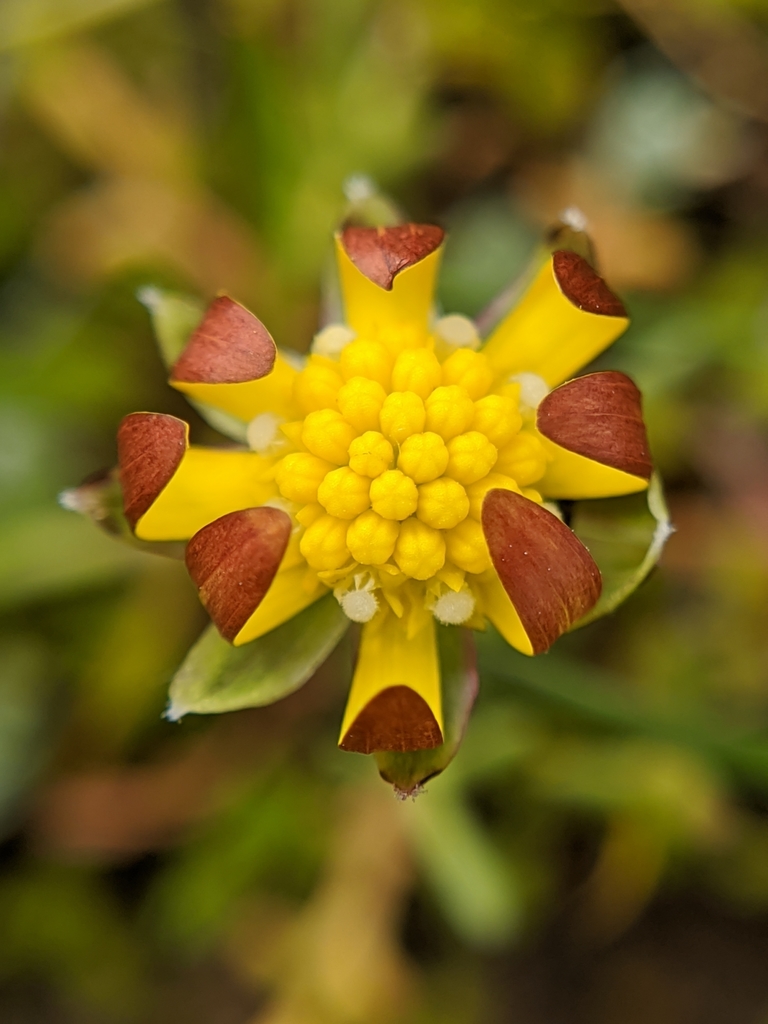
Photo: parent species Blennosperma nanum · no rights reserved · CC0
Family: Asteraceae · Type: Herb · Native
Blennosperma nanum var. nanum (Common blennosperma) is a native California herb in the Asteraceae family, recognized by intermediate size characteristics and yellow stigmas distinguish from congeners.
Common blennosperma is a California native annual found in northern Coast Ranges, California Rocky Formations, Sierra Nevada Foothills, Central Valley, western California, southern California coastal areas, northern Channel Islands, and Peninsular Ranges in open, grassy areas and margins of seeps or vernal pools at elevations below 1,500 meters. Flowering from January to May, this plant produces small yellow flowers in compact disk heads with generally 20 to 60 white pollen-producing florets. Growing with delicate branching stems typically 5 to 15 centimeters tall, it forms loose, spreading clusters in seasonal grassland environments. Its leaves are narrow and lance-shaped, distributed alternately along the stems with reduced size toward the flower heads. The fruit is small, measuring approximately 2.5 to 3 millimeters in length, contributing to its diminutive and ephemeral nature.
Identification and appearance
Key characters: 2 sympatric species; intermediate size characteristics and yellow stigmas distinguish from congeners
Habitat and range
Habitat: Open, grassy areas, often margins of seeps or vernal pools
Elevation: < 1500 m
Bloom period
Blennosperma nanum var. nanum blooms Jan-May.
How to tell it apart
vs Lasthenia: Lasthenia has simple, entire or toothed leaves, never the deeply pinnately lobed lower leaves of Blennosperma.; vs Crocidium: Crocidium has all basal leaves; Blennosperma has leaves along the stem with different shapes at different heights.; vs Grindelia: Grindelia heads are sticky-resinous with reflexed phyllary tips; Blennosperma is never sticky-resinous.; vs Calendula: Calendula has curved boat-shaped fruits; Blennosperma fruits are sticky but straight.; vs Dimorphotheca: Dimorphotheca has simple fuzzy leaves; Blennosperma lower leaves are deeply pinnately divided into finger-like lobes.
Frequently asked questions
Is Blennosperma nanum var. nanum native to California?
Yes. Blennosperma nanum var. nanum is native to California (recorded as native).
When does Blennosperma nanum var. nanum bloom?
Blennosperma nanum var. nanum blooms Jan-May.
What plant family does Blennosperma nanum var. nanum belong to?
Blennosperma nanum var. nanum is in the Asteraceae family, genus Blennosperma.
What habitat does Blennosperma nanum var. nanum grow in?
Blennosperma nanum var. nanum grows in Open, grassy areas, often margins of seeps or vernal pools.
Related species
Other California species in the same genus, family, or bioregion.
Sources: Jepson eFlora · Index of California Plant Names · CalPhotos
Last updated 2026-10-07
Data from The California Species Project — 14,000+ California species with verified data from CNPS, CDFW, USFWS, Cal-IPC, and more.