Blepharizonia laxa
Glandular big tarweed
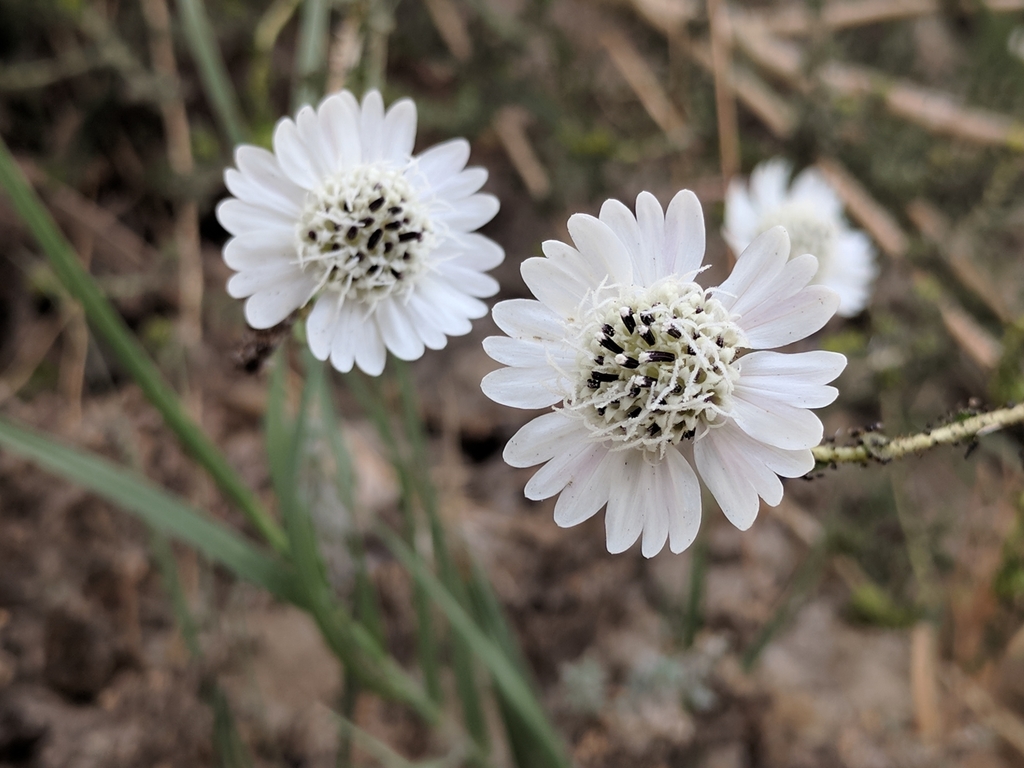
(c) Ken-ichi Ueda, some rights reserved (CC BY), uploaded by Ken-ichi Ueda · licence
Family: Asteraceae · Type: Herb · Native
Blepharizonia laxa (Glandular big tarweed) is a native California herb in the Asteraceae family, recognized by . Key difference appears to be involucre hairiness (coarse-hairy vs canescent) and elevation/range.
Glandular big tarweed is a California native annual found in western San Joaquin Valley, eastern San Francisco Bay, and southern Coast Ranges in openings of woodland, chaparral, and grassland at elevations below 1,500 meters. Flowering from July to November, this plant produces pale yellow to white flowers in distinctive clusters covered with tack-shaped glands. Growing with slender stems 30 to 60 centimeters tall, it spreads in an open, branching form characteristic of tarweeds. Its leaves are narrow and lance-shaped, becoming smaller and more sparse toward the top of the plant. The flower heads are notably distinctive, with involucres that are coarse to stiff-hairy and adorned with scattered glandular structures.
Identification and appearance
Key characters: 1 sympatric species. Key difference appears to be involucre hairiness (coarse-hairy vs canescent) and elevation/range.
Habitat and range
Habitat: Openings in woodland, chaparral, grassland
Elevation: < 1500 m
California counties: Alameda, Contra Costa, Fresno, Kern, Monterey, San Benito, San Luis Obispo, Stanislaus, San Joaquin, Kings, Merced
Bloom period
Blepharizonia laxa blooms Jul-Nov.
How to tell it apart
vs Hemizonia: Blepharizonia ray fruits are hairy; Hemizonia ray fruits are completely smooth.; vs Holocarpha: Blepharizonia lacks pit-gland-tipped bracts on flower stalks; Holocarpha has distinctive pit glands.; vs Deinandra: Blepharizonia has paleae only at disk edge; Deinandra (if annual) also edge-only but ray fruits differ.; vs Osmadenia: Blepharizonia is sticky-glandular; Osmadenia completely lacks sticky glands.; vs Calycadenia: Blepharizonia has shallowly lobed rays; Calycadenia has deeply split, fringed ray petals.
Frequently asked questions
Is Blepharizonia laxa native to California?
Yes. Blepharizonia laxa is native to California (recorded as native).
When does Blepharizonia laxa bloom?
Blepharizonia laxa blooms Jul-Nov.
Where in California does Blepharizonia laxa grow?
Blepharizonia laxa occurs in Alameda, Contra Costa, Fresno, Kern, Monterey, San Benito, San Luis Obispo, Stanislaus and other counties, at elevations of < 1500 m.
What plant family does Blepharizonia laxa belong to?
Blepharizonia laxa is in the Asteraceae family, genus Blepharizonia.
What habitat does Blepharizonia laxa grow in?
Blepharizonia laxa grows in Openings in woodland, chaparral, grassland.
Related species
Other California species in the same genus, family, or bioregion.
Sources: Jepson eFlora · Index of California Plant Names · CalPhotos
Last updated 2026-10-07
Data from The California Species Project — 14,000+ California species with verified data from CNPS, CDFW, USFWS, Cal-IPC, and more.