Bothriochloa barbinodis
Cane bluestem, Cane Bluestem
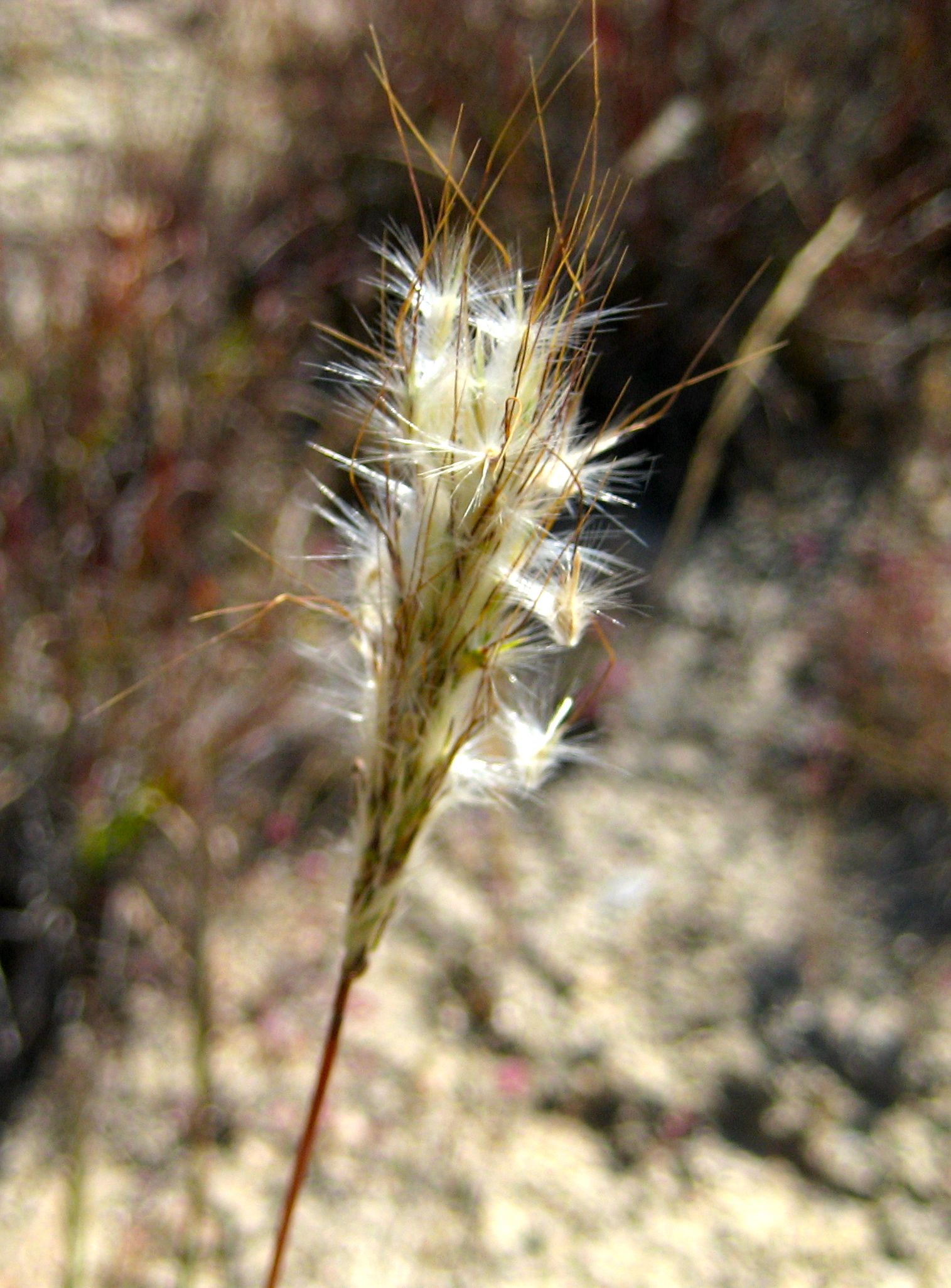
Photo by Chez Brungraber
Family: Poaceae · Type: Grass · Native
Bothriochloa barbinodis (Cane bluestem) is a native California grass in the Poaceae family, recognized by found in SCo, ChI, WTR, SnGb, PR, DMtns, DSon.
Cane bluestem is a California native perennial grass found in southern California, the southern Channel Islands, western Transverse Ranges, San Gabriel Mountains, Peninsular Ranges, desert mountains, and Colorado Desert in dry, gravelly slopes at elevations below 1,200 meters. Flowering from February to September, this grass produces tan to pale brown flowering branches in clustered inflorescences 7 to 14 centimeters long. Growing in dense clumps with stems 60 to 120 centimeters tall, it forms extensive grass communities in arid landscapes. Its leaves are both basal and stem-based, with blade-like leaves reaching 20 to 30 centimeters in length, characterized by a wide membranous groove along the stem. The grass produces distinctive stalked and sessile spikelets, with lower spikelets featuring awns 2 to 3 centimeters long.
Identification and appearance
Key characters: Geographically isolated; found in SCo, ChI, WTR, SnGb, PR, DMtns, DSon
Habitat and range
Habitat: Dry, gravelly slopes
Elevation: < 1200 m
California counties: Ventura, San Bernardino, Imperial, Los Angeles, Orange, Riverside, San Diego, Santa Barbara, Alameda, San Luis Obispo, Kern
Outside California: to Colorado, Oklahoma, Texas, Mexico
Bloom period
Bothriochloa barbinodis blooms Feb-Sep.
How to tell it apart
vs Sorghum: Bothriochloa has branched, finger-like clusters; Sorghum has a dense, compact seed head.; vs Hyparrhenia: Bothriochloa stalks have translucent grooves; Hyparrhenia stalks are smooth without grooves.; vs Heteropogon: Bothriochloa has branched flower clusters; Heteropogon has one simple, unbranched spike.; vs Andropogon: Bothriochloa has paired spikelets at nodes; Andropogon has single spikelets with hairy bristles.
Frequently asked questions
Is Bothriochloa barbinodis native to California?
Yes. Bothriochloa barbinodis is native to California (recorded as native).
When does Bothriochloa barbinodis bloom?
Bothriochloa barbinodis blooms Feb-Sep.
Where in California does Bothriochloa barbinodis grow?
Bothriochloa barbinodis occurs in Ventura, San Bernardino, Imperial, Los Angeles, Orange, Riverside, San Diego, Santa Barbara and other counties, at elevations of < 1200 m.
What plant family does Bothriochloa barbinodis belong to?
Bothriochloa barbinodis is in the Poaceae family, genus Bothriochloa.
What habitat does Bothriochloa barbinodis grow in?
Bothriochloa barbinodis grows in Dry, gravelly slopes.
Related species
Other California species in the same genus, family, or bioregion.
Sources: Jepson eFlora · Index of California Plant Names · CalPhotos
Last updated 2026-10-07
Data from The California Species Project — 14,000+ California species with verified data from CNPS, CDFW, USFWS, Cal-IPC, and more.