Brassica nigra
Black mustard
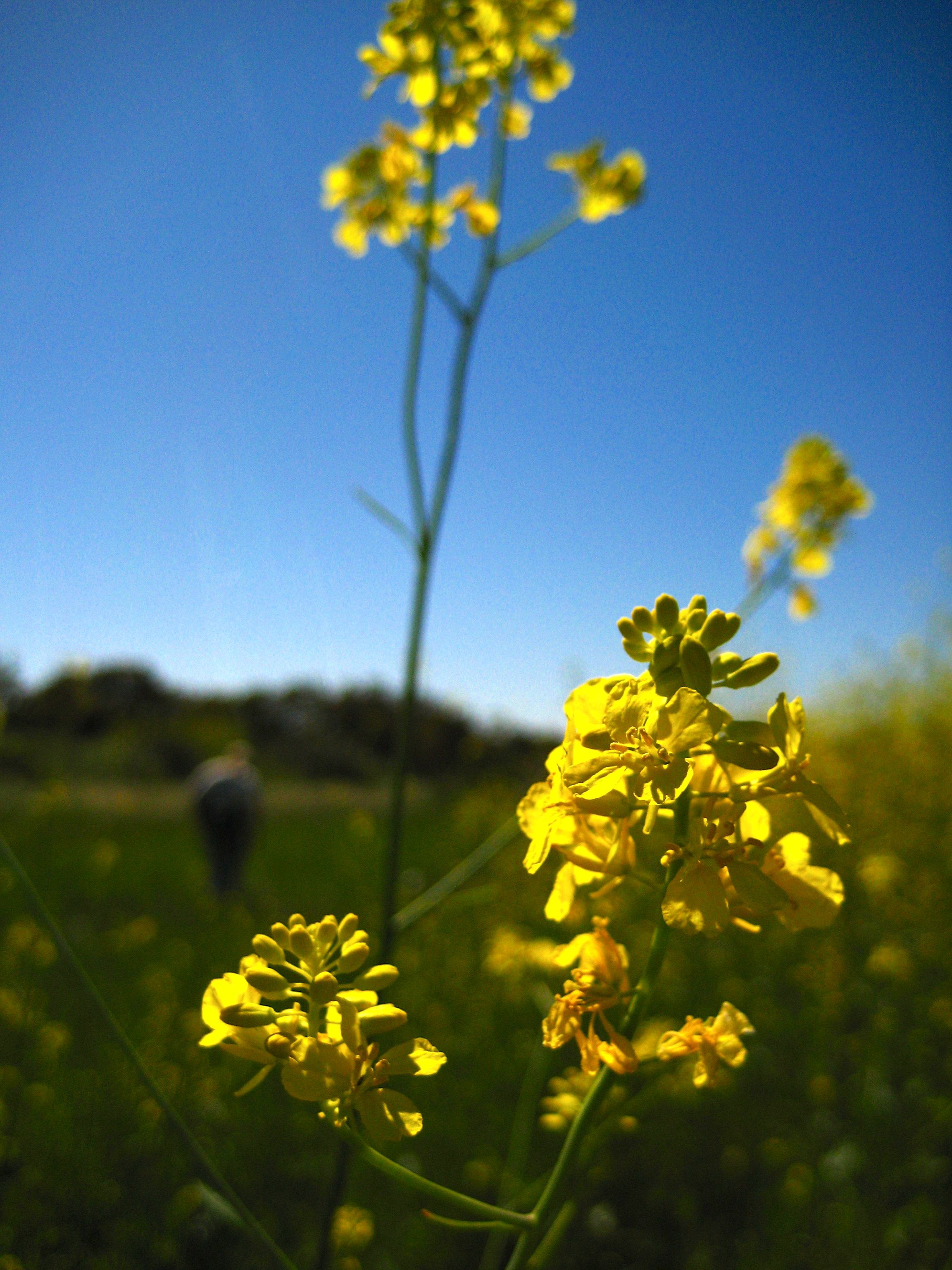
Photo by Chez Brungraber
Family: Brassicaceae · Type: Herb · Not Native
Conservation status: Cal-IPC Yes
Brassica nigra (Black mustard) is a non-native California herb in the Brassicaceae family, recognized by key diagnostic feature is erect, appressed fruits on very short pedicels.
Black mustard is a naturalized annual found in California's Central Valley and Foothills in disturbed areas and fields at elevations below 1,500 meters. Flowering from April to September, this plant produces bright yellow flowers 7 to 11 millimeters long with petals 3 to 4.5 millimeters wide. Growing 3 to 6.5 feet tall with generally branched stems that have sparse to dense stiff hairs, especially on lower parts. Its leaves are pinnately lobed with serrated edges, with basal leaves larger and cauline leaves becoming progressively smaller and sessile toward the stem tips. The fruit develops as an erect, slender pod 1 to 2.5 centimeters long with a terminal seedless segment.
Identification and appearance
Key characters: 6 sympatric species; key diagnostic feature is erect, appressed fruits on very short pedicels
Habitat and range
Habitat: Common. Disturbed areas, fields
Elevation: < 1500 m
California counties: Riverside, Los Angeles, San Bernardino, Orange, San Diego, Ventura, Monterey, San Luis Obispo, San Mateo, Tulare, Yolo, Lake, San Joaquin, Alameda, Santa Clara, Fresno, Santa Barbara, Kern, Sonoma, Butte, Mendocino, Solano, Tuolumne, Santa Cruz, San Francisco, Colusa, Marin, Siskiyou, San Benito, Sutter, Contra Costa, Sacramento, Humboldt, Glenn, El Dorado, Mariposa, Napa, Stanislaus, Nevada, Amador, Placer, Imperial, Inyo
Outside California: widespread North America, native to Europe
Bloom period
Brassica nigra blooms Apr-Sep.
Conservation status
Cal-IPC Yes
How to tell it apart
vs Hirschfeldia: Brassica pods angle outward with faint veining; Hirschfeldia pods press tight against the stem with prominent ribs.; vs Sisymbrium: Brassica has large showy flowers with petals 8-30mm; Sisymbrium has smaller, less conspicuous flowers.; vs Lactuca: Brassica has four-petaled yellow flowers and seed pods; Lactuca has ray flowers like a dandelion and milky sap.; vs Crambe: Brassica pods split open to release many seeds; Crambe produces single-seeded round fruits that don't split.
Frequently asked questions
Is Brassica nigra native to California?
No. Brassica nigra is not native to California (recorded as not native).
When does Brassica nigra bloom?
Brassica nigra blooms Apr-Sep.
Where in California does Brassica nigra grow?
Brassica nigra occurs in Riverside, Los Angeles, San Bernardino, Orange, San Diego, Ventura, Monterey, San Luis Obispo and other counties, at elevations of < 1500 m.
What plant family does Brassica nigra belong to?
Brassica nigra is in the Brassicaceae family, genus Brassica.
Is Brassica nigra invasive in California?
Brassica nigra is listed by Cal-IPC with an invasiveness rating of Yes.
Related species
Other California species in the same genus, family, or bioregion.
Sources: Jepson eFlora · Index of California Plant Names · CalPhotos
Last updated 2026-10-07
Data from The California Species Project — 14,000+ California species with verified data from CNPS, CDFW, USFWS, Cal-IPC, and more.