Brodiaea terrestris subsp. kernensis
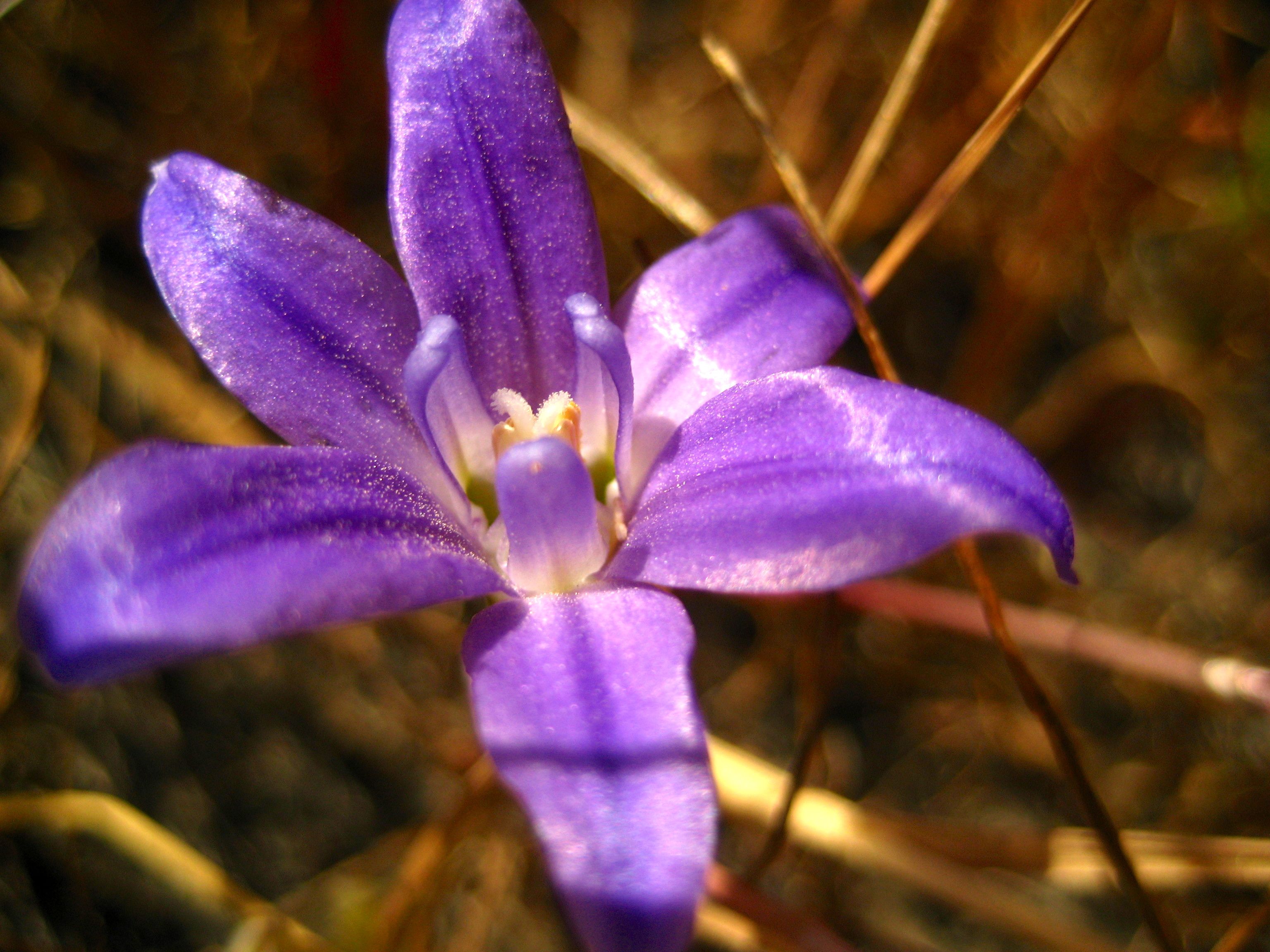
Photo: parent species Brodiaea terrestris · Photo by Chez Brungraber
Family: Themidaceae · Type: Herb · Native
Brodiaea terrestris subsp. kernensis is a native California herb in the Themidaceae family, recognized by larger flowers, violet staminodes, smooth anther tips.
Brodiaea terrestris subspecies kernensis is a California native perennial found in southern Sierra Nevada Foothills, Tehachapi, Transverse Ranges, and Peninsular Ranges in grasslands and open foothill woodlands at elevations below 1,500 meters. Flowering from April to June, this plant produces violet and white flowers with perianth 26 to 36 millimeters long, featuring distinctive staminodes. Growing with slender scapes 2 to 20 centimeters tall, it emerges from underground corms in open grassland settings. Its flower structure is notable for violet staminodes with margins partially incurved, creating an intricate floral display against delicate green backgrounds. Pedicels up to 7.5 centimeters long support the elegant inflorescence, allowing the flowers to emerge gracefully above grassy terrain.
Identification and appearance
Key characters: 9 sympatric species; larger flowers, violet staminodes, smooth anther tips
Habitat and range
Habitat: Grassland, open foothill woodland
Elevation: < 1500 m
California counties: San Diego, San Bernardino, Kern, Riverside, Ventura, Los Angeles, San Benito, Mendocino, Orange, San Luis Obispo, Monterey, Fresno, Tulare, Madera, Santa Barbara
Bloom period
Brodiaea terrestris subsp. kernensis blooms Apr-Jun.
How to tell it apart
vs Triteleia: Count the stamens: Brodiaea has 3 fertile stamens, Triteleia has 6.; vs Dipterostemon: Brodiaea has straight flower stalks; Dipterostemon stalks curve or bend.; vs Dichelostemma: Brodiaea stalks stay straight and upright; Dichelostemma stalks curve, twist, or twine.; vs Sisyrinchium: Brodiaea flowers are tubular; Sisyrinchium flowers are flat and star-shaped.; vs Scilla: Brodiaea has tubular flowers with visible stamens inside; Scilla has bell-shaped flowers.
Frequently asked questions
Is Brodiaea terrestris subsp. kernensis native to California?
Yes. Brodiaea terrestris subsp. kernensis is native to California (recorded as native).
When does Brodiaea terrestris subsp. kernensis bloom?
Brodiaea terrestris subsp. kernensis blooms Apr-Jun.
Where in California does Brodiaea terrestris subsp. kernensis grow?
Brodiaea terrestris subsp. kernensis occurs in San Diego, San Bernardino, Kern, Riverside, Ventura, Los Angeles, San Benito, Mendocino and other counties, at elevations of < 1500 m.
What plant family does Brodiaea terrestris subsp. kernensis belong to?
Brodiaea terrestris subsp. kernensis is in the Themidaceae family, genus Brodiaea.
What habitat does Brodiaea terrestris subsp. kernensis grow in?
Brodiaea terrestris subsp. kernensis grows in Grassland, open foothill woodland.
Related species
Other California species in the same genus, family, or bioregion.
- Brodiaea terrestris subsp. terrestris
- Brodiaea appendiculata — Appendage brodiaea
- Brodiaea californica — California brodiaea
- Brodiaea coronaria — Garland brodiaea
- Brodiaea elegans subsp. elegans — Harvest brodiaea
- Brodiaea filifolia — Thread-leaved brodiaea
- Dichelostemma congestum — Fork-toothed ookow
- Dichelostemma ida-maia — Firecracker flower
- Dichelostemma multiflorum — Wild hyacinth
Sources: Jepson eFlora · Index of California Plant Names · CalPhotos
Last updated 2026-10-07
Data from The California Species Project — 14,000+ California species with verified data from CNPS, CDFW, USFWS, Cal-IPC, and more.