Brodiaea terrestris subsp. terrestris
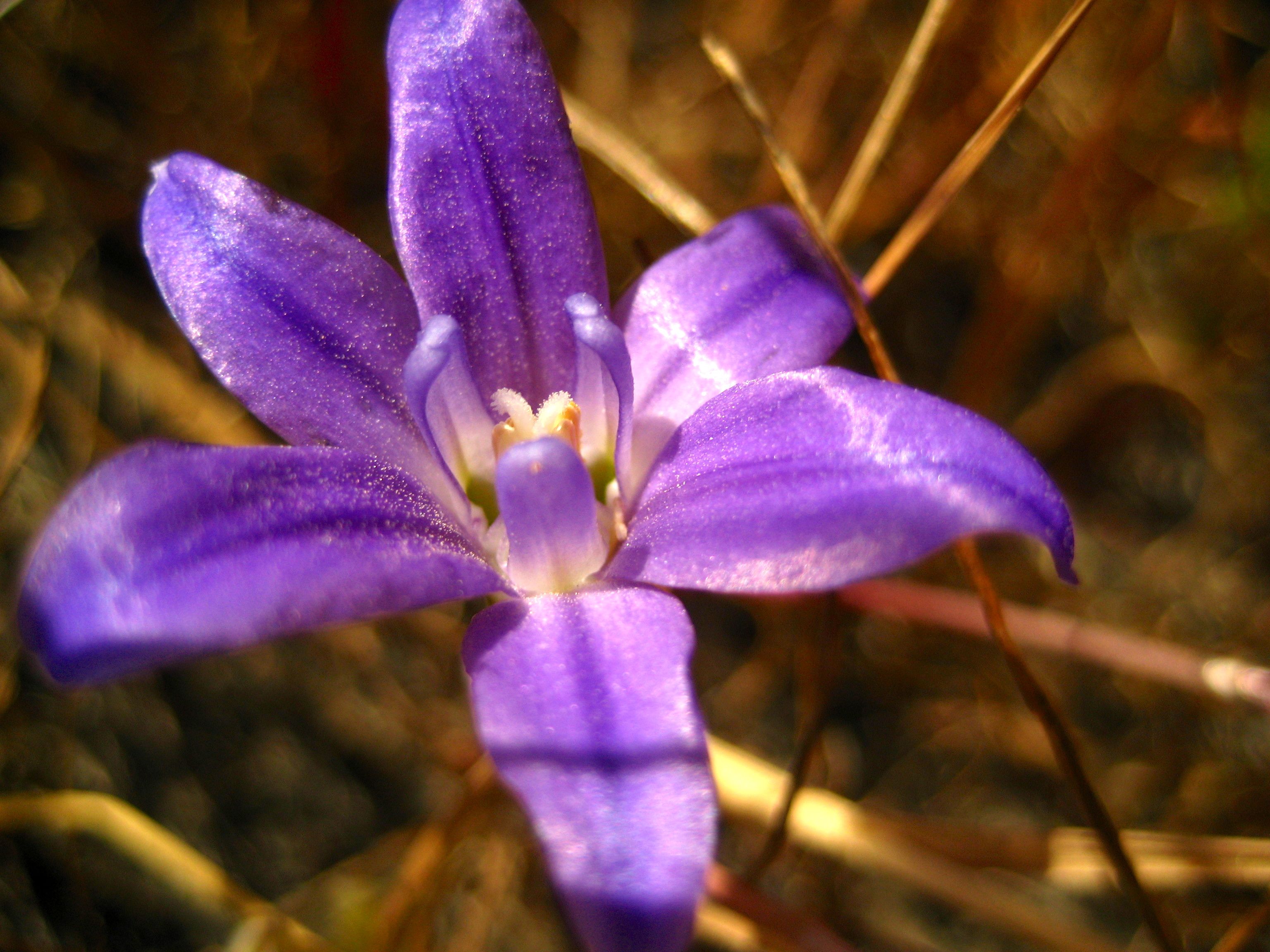
Photo: parent species Brodiaea terrestris · Photo by Chez Brungraber
Family: Themidaceae · Type: Herb · Native
Brodiaea terrestris subsp. terrestris is a native California herb in the Themidaceae family, recognized by short scape, white staminodes, dentate anther lobes.
ground brodiaea is a California native perennial found in northern coastal, western northern coastal ranges, Sacramento Valley, and central western California in coastal prairie and foothill woodland at elevations below 450 meters. Flowering from April to July, this plant produces violet flowers with perianth 15 to 39.5 millimeters long, featuring both outer and inner lobes of varying widths. Growing with slender scapes 0.5 to 7 centimeters tall, it has delicate white staminodes with margins slightly curved below the tip. Its flowers display intricate details, with anthers that have reflexed tips and a distinctive dentate lobe in the notch. The plant produces flowers with pedicels up to 13 centimeters long, creating an elegant display in its native grassland habitats.
Identification and appearance
Key characters: 9 sympatric species; short scape, white staminodes, dentate anther lobes
Habitat and range
Habitat: Coastal prairie, foothill woodland
Elevation: < 450 m
California counties: Humboldt, Monterey, Mendocino, Santa Cruz, San Luis Obispo, Napa, San Mateo, Santa Clara, Contra Costa, San Francisco, San Benito, San Bernardino, Riverside, San Joaquin, Marin, Del Norte, Solano, Sonoma, Alameda, Santa Barbara, Kern, Merced, Yolo
Outside California: southwestern Oregon
Bloom period
Brodiaea terrestris subsp. terrestris blooms Apr-Jul.
How to tell it apart
vs Triteleia: Count the stamens: Brodiaea has 3 fertile stamens, Triteleia has 6.; vs Dipterostemon: Brodiaea has straight flower stalks; Dipterostemon stalks curve or bend.; vs Dichelostemma: Brodiaea stalks stay straight and upright; Dichelostemma stalks curve, twist, or twine.; vs Sisyrinchium: Brodiaea flowers are tubular; Sisyrinchium flowers are flat and star-shaped.; vs Scilla: Brodiaea has tubular flowers with visible stamens inside; Scilla has bell-shaped flowers.
Frequently asked questions
Is Brodiaea terrestris subsp. terrestris native to California?
Yes. Brodiaea terrestris subsp. terrestris is native to California (recorded as native).
When does Brodiaea terrestris subsp. terrestris bloom?
Brodiaea terrestris subsp. terrestris blooms Apr-Jul.
Where in California does Brodiaea terrestris subsp. terrestris grow?
Brodiaea terrestris subsp. terrestris occurs in Humboldt, Monterey, Mendocino, Santa Cruz, San Luis Obispo, Napa, San Mateo, Santa Clara and other counties, at elevations of < 450 m.
What plant family does Brodiaea terrestris subsp. terrestris belong to?
Brodiaea terrestris subsp. terrestris is in the Themidaceae family, genus Brodiaea.
What habitat does Brodiaea terrestris subsp. terrestris grow in?
Brodiaea terrestris subsp. terrestris grows in Coastal prairie, foothill woodland.
Related species
Other California species in the same genus, family, or bioregion.
- Brodiaea appendiculata — Appendage brodiaea
- Brodiaea californica — California brodiaea
- Brodiaea coronaria — Garland brodiaea
- Brodiaea elegans subsp. elegans — Harvest brodiaea
- Brodiaea filifolia — Thread-leaved brodiaea
- Brodiaea insignis — Kaweah brodiaea
- Dichelostemma congestum — Fork-toothed ookow
- Dichelostemma ida-maia — Firecracker flower
- Dichelostemma multiflorum — Wild hyacinth
- Dichelostemma sp.
Sources: Jepson eFlora · Index of California Plant Names · CalPhotos
Last updated 2026-10-07
Data from The California Species Project — 14,000+ California species with verified data from CNPS, CDFW, USFWS, Cal-IPC, and more.