Bursera microphylla
Littleleaf elephant tree, Littleleaf Elephant Tree
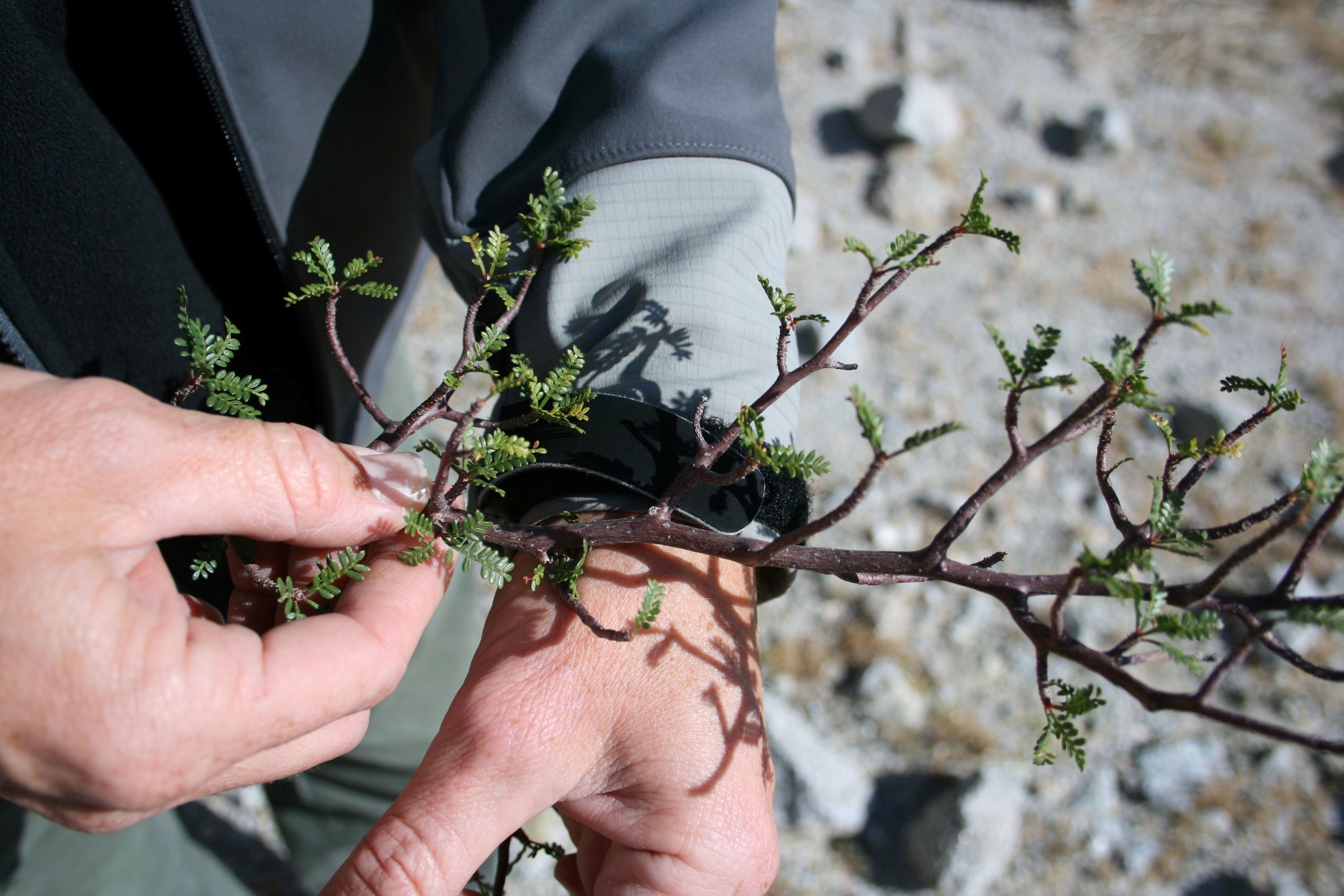
Photo by Chez Brungraber
Family: Burseraceae · Type: Shrub / Tree · Native
Conservation status: CNPS 2B.3
Bursera microphylla (Littleleaf elephant tree) is a native California shrub / tree in the Burseraceae family, recognized by Sonoran Desert genus reaching its northwestern range limit in California.
Littleleaf elephant tree is a California native tree found on the western edge of the Desert South regions in rocky slopes of eastern San Diego, western Imperial, and Riverside counties at elevations below 700 meters. Flowering from May to June, this tree produces white to cream-colored flowers with delicate 3 to 5-parted staminate blooms. Growing up to 4 meters tall with spreading branches that are generally red and mature bark turning white, it develops an distinctive branching structure. Its odd-pinnate leaves have 7 to 33 small leaflets, each 2 to 5 millimeters long, with a distinctively winged leaf axis. The fruit develops as a small 5 to 8 millimeter structure with three yellow stone-like valves.
Identification and appearance
Key characters: Sonoran Desert genus reaching its northwestern range limit in California
Habitat and range
Habitat: Rocky slopes
Elevation: < 700 m
California counties: San Diego, Riverside, Imperial, Inyo
Outside California: to Arizona, Mexico
Bloom period
Bursera microphylla blooms May-Jun.
Conservation status
CNPS 2B.3
How to tell it apart
vs Parkinsonia: Palo verde has smooth green photosynthetic bark, spiny twigs, and bipinnate leaves; Bursera (elephant tree) has whitish, peeling papery bark, no spines, and aromatic resinous foliage.; vs Prosopis: Mesquite is spiny with bipinnate leaves and elongate pods; Bursera is unarmed with once-pinnate leaves and small 3-valved fruits.; vs Fouquieria: Ocotillo has long, wand-like, spiny, mostly unbranched stems; Bursera has a stout, branched, swollen trunk with peeling bark.; vs Schinus: Pepper tree has pinnate leaves but a weeping habit, gray bark, and pink berries; Bursera has a fat pale trunk, red twigs, and dry, 3-parted fruit.; vs Pistacia: Pistache has once-pinnate leaves but ordinary gray bark; Bursera has thin, peeling, whitish, resinous bark and an elephantine swollen base.
Frequently asked questions
Is Bursera microphylla native to California?
Yes. Bursera microphylla is native to California (recorded as native).
When does Bursera microphylla bloom?
Bursera microphylla blooms May-Jun.
Where in California does Bursera microphylla grow?
Bursera microphylla occurs in San Diego, Riverside, Imperial, Inyo, at elevations of < 700 m.
What plant family does Bursera microphylla belong to?
Bursera microphylla is in the Burseraceae family, genus Bursera.
Is Bursera microphylla rare or endangered?
Bursera microphylla carries California Rare Plant Rank 2B.3, state rank S2.
Related species
Other California species in the same genus, family, or bioregion.
Sources: Jepson eFlora · CNPS Rare Plant Inventory · Index of California Plant Names · CalPhotos · CDFW CNDDB
Last updated 2026-10-07
Data from The California Species Project — 14,000+ California species with verified data from CNPS, CDFW, USFWS, Cal-IPC, and more.