Calamagrostis arenaria subsp. arenaria
European beachgrass, maram grass
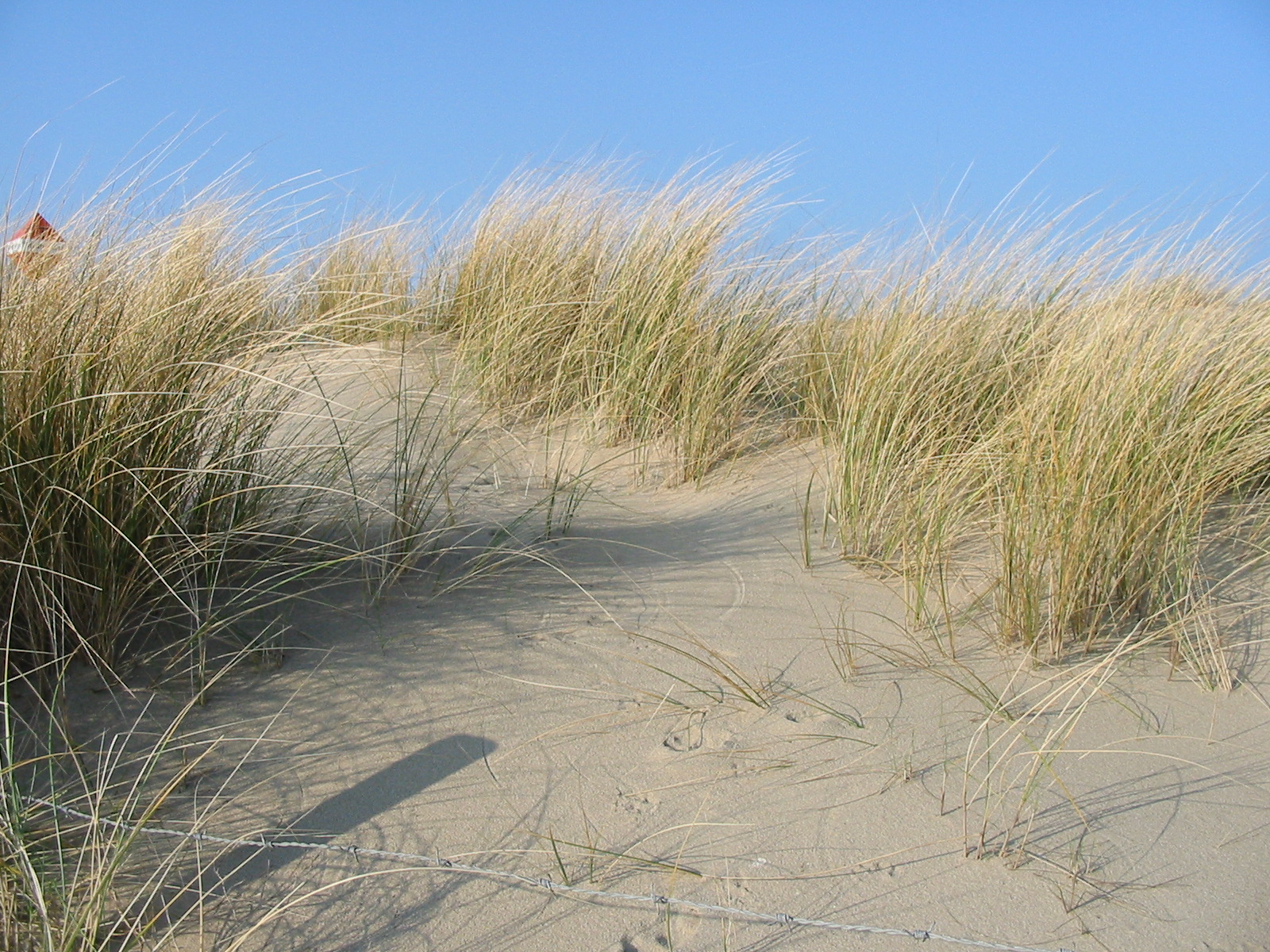
Wikimedia Commons · CC BY-SA
Family: Poaceae (Gramineae) · Not Native
Calamagrostis arenaria subsp. arenaria (European beachgrass, maram grass) is a non-native California plant in the Poaceae (Gramineae) family, recognized by Non-native dune grass; very LONG ligule (10--35 mm); dense cylindric panicle, strongly rhizomatous.
European beachgrass, also known as maram grass, is a non-native grass found in the North Coast, Central Coast, South Coast, and southern Channel Islands bioregions on beaches and coastal sand dunes at elevations below 250 meters. Flowering from May to August, it spreads by rhizomes with stems 5 to 12 decimeters tall and produces a densely cylindric inflorescence 15 to 35 centimeters long with strongly ascending branches and glumes 10 to 14 millimeters long.
Identification and appearance
Key characters: Non-native dune grass; very LONG ligule (10--35 mm); dense cylindric panicle, strongly rhizomatous
Habitat and range
Habitat: Beaches, coastal sand dunes
Elevation: < 250 m
Outside California: native to northern Europe
Bloom period
Calamagrostis arenaria subsp. arenaria blooms May--Aug.
How to tell it apart
vs Leymus: Leymus has spike-like inflorescences; Calamagrostis has open, branching panicles.; vs Koeleria: Koeleria has dense spike-like panicles; Calamagrostis panicles are loose and open.; vs Holcus: Holcus has velvety-hairy spikelets; Calamagrostis has silky basal hairs only.; vs Muhlenbergia: Calamagrostis spikelets are 2-4mm with awns; Muhlenbergia often larger without prominent awns.; vs Spinifex: Spinifex forms spiny seed heads on beaches; Calamagrostis has soft panicles in mountains.
Frequently asked questions
Is Calamagrostis arenaria subsp. arenaria native to California?
No. Calamagrostis arenaria subsp. arenaria is not native to California (recorded as not native).
When does Calamagrostis arenaria subsp. arenaria bloom?
Calamagrostis arenaria subsp. arenaria blooms May--Aug.
What plant family does Calamagrostis arenaria subsp. arenaria belong to?
Calamagrostis arenaria subsp. arenaria is in the Poaceae (Gramineae) family, genus Calamagrostis.
What habitat does Calamagrostis arenaria subsp. arenaria grow in?
Calamagrostis arenaria subsp. arenaria grows in Beaches, coastal sand dunes.
Related species
Other California species in the same genus, family, or bioregion.
- Calamagrostis bolanderi — Bolander's reed grass
- Calamagrostis breviligulata
- Calamagrostis breviligulata subsp. breviligulata — American beachgrass
- Calamagrostis breweri — Short hair reed grass
- Calamagrostis canadensis — Bluejoint reedgrass
- Calamagrostis canadensis var. canadensis — Bluejoint reed grass
- Anatherum eremicum — Southwestern bushy bluestem
- Anatherum virginicum
Sources: Jepson eFlora
Last updated 2026-10-08
Data from The California Species Project — 14,000+ California species with verified data from CNPS, CDFW, USFWS, Cal-IPC, and more.