Calamagrostis ophitidis
Serpentine reed grass
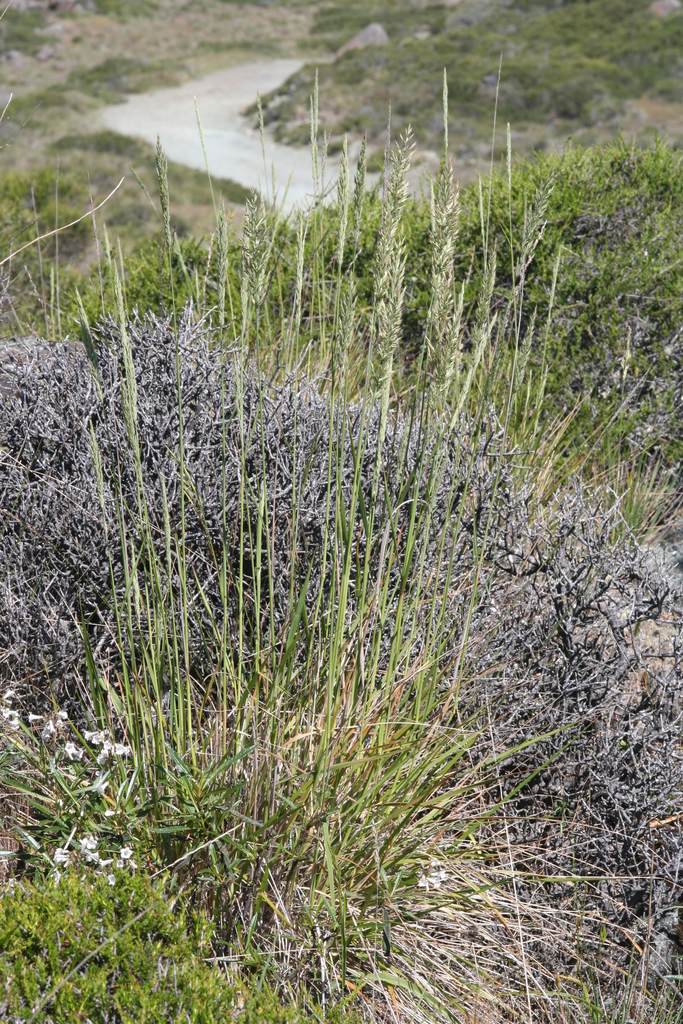
(c) runcator, some rights reserved (CC BY) · licence
Family: Poaceae · Type: Grass · Native
Conservation status: CNPS 4.3
Calamagrostis ophitidis (Serpentine reed grass) is a native California grass in the Poaceae family, recognized by serpentine soils, pale large spikelets, and North Bay distribution.
Serpentine reed grass is a California native perennial ranked 4.3 by CNPS, found in southern North Coast Ranges, northern Central Coast, and northern San Francisco Bay Area in meadows, seeps, grasslands, chaparral, and forests, typically on serpentine soils at elevations below 1,065 meters. Flowering from May to June, this grass produces pale, delicate flower clusters in narrow, dense inflorescences 8 to 15 centimeters long. Growing in clumped formations with stems 5.5 to 10 decimeters tall, it develops multiple nodes and often includes short rhizomes. Its narrow leaves, generally 2 to 4 millimeters wide, are characteristically inrolled and scabrous, with tiny white-opaque hooks between veins visible only under magnification. The plant's distinctive awned flowers feature glumes 6.5 to 8 millimeters long with a twisted, bent awn that may extend slightly beyond the glume tips.
Identification and appearance
Key characters: 6 sympatric species; key features are serpentine soils, pale large spikelets, and North Bay distribution
Habitat and range
Habitat: Meadows, seeps, grassland, chaparral, forest, generally on serpentine soils
Elevation: < 1065 m
California counties: Lake, Marin, Napa, Sonoma, Mendocino, Humboldt
Bloom period
Calamagrostis ophitidis blooms May-Jun.
Conservation status
CNPS 4.3
How to tell it apart
vs Leymus: Leymus has spike-like inflorescences; Calamagrostis has open, branching panicles.; vs Koeleria: Koeleria has dense spike-like panicles; Calamagrostis panicles are loose and open.; vs Holcus: Holcus has velvety-hairy spikelets; Calamagrostis has silky basal hairs only.; vs Muhlenbergia: Calamagrostis spikelets are 2-4mm with awns; Muhlenbergia often larger without prominent awns.; vs Spinifex: Spinifex forms spiny seed heads on beaches; Calamagrostis has soft panicles in mountains.
Frequently asked questions
Is Calamagrostis ophitidis native to California?
Yes. Calamagrostis ophitidis is native to California (recorded as native).
When does Calamagrostis ophitidis bloom?
Calamagrostis ophitidis blooms May-Jun.
Where in California does Calamagrostis ophitidis grow?
Calamagrostis ophitidis occurs in Lake, Marin, Napa, Sonoma, Mendocino, Humboldt, at elevations of < 1065 m.
What plant family does Calamagrostis ophitidis belong to?
Calamagrostis ophitidis is in the Poaceae family, genus Calamagrostis.
Is Calamagrostis ophitidis rare or endangered?
Calamagrostis ophitidis carries California Rare Plant Rank 4.3, state rank S3.
Related species
Other California species in the same genus, family, or bioregion.
Sources: Jepson eFlora · CNPS Rare Plant Inventory · Index of California Plant Names · CalPhotos · CDFW CNDDB
Last updated 2026-10-07
Data from The California Species Project — 14,000+ California species with verified data from CNPS, CDFW, USFWS, Cal-IPC, and more.