Calamagrostis purpurascens
Purple reed grass
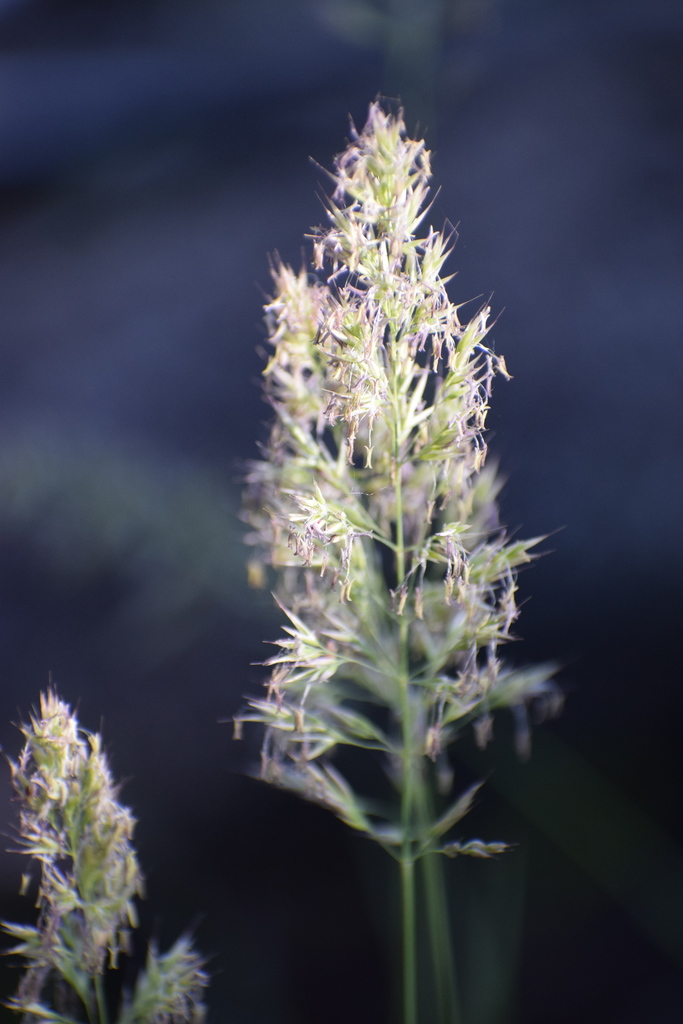
(c) Syd Cannings, some rights reserved (CC BY) · licence
Family: Poaceae · Type: Grass · Native
Calamagrostis purpurascens (Purple reed grass) is a native California grass in the Poaceae family, recognized by soft-hairy upper leaf surfaces at high elevation.
Purple reed grass is a California native perennial found in the Cascade Range, Sierra Nevada, northern eastern Sierra Nevada, and White and Inyo Mountains in rocky slopes, grasslands, meadows, and forests at elevations of 1,300 to 4,000 meters. Flowering from July to September, this grass produces delicate purplish-green flower clusters in dense, narrow inflorescences 4 to 15 centimeters long. Growing in tufted clumps with stems 10 to 80 centimeters tall, it forms compact bunches with short rhizomes extending 1 to 4 centimeters underground. Its leaf blades are narrow, 2 to 5 millimeters wide, flat, with a smooth lower surface and soft-hairy upper surface, and feature a ligule 2 to 6 millimeters long. The plant's distinctive feature is its twisted, bent awn (grass bristle) extending 6 to 7.5 millimeters beyond the spikelet, giving the grass a delicate, feathery appearance.
Identification and appearance
Key characters: 7 sympatric species; key feature is soft-hairy upper leaf surfaces at high elevation
Habitat and range
Habitat: Rocky slopes, grassland, meadows, forest, generally on sandy soils
Elevation: 1300-4000 m
California counties: Fresno, Inyo, Mariposa, Mono, Tulare, Siskiyou, Madera, Glenn, Tuolumne, Tehama, Alpine, Mendocino, Del Norte, Marin
Outside California: to Alaska, Siberia, Greenland
Bloom period
Calamagrostis purpurascens blooms Jul-Sep.
How to tell it apart
vs Leymus: Leymus has spike-like inflorescences; Calamagrostis has open, branching panicles.; vs Koeleria: Koeleria has dense spike-like panicles; Calamagrostis panicles are loose and open.; vs Holcus: Holcus has velvety-hairy spikelets; Calamagrostis has silky basal hairs only.; vs Muhlenbergia: Calamagrostis spikelets are 2-4mm with awns; Muhlenbergia often larger without prominent awns.; vs Spinifex: Spinifex forms spiny seed heads on beaches; Calamagrostis has soft panicles in mountains.
Frequently asked questions
Is Calamagrostis purpurascens native to California?
Yes. Calamagrostis purpurascens is native to California (recorded as native).
When does Calamagrostis purpurascens bloom?
Calamagrostis purpurascens blooms Jul-Sep.
Where in California does Calamagrostis purpurascens grow?
Calamagrostis purpurascens occurs in Fresno, Inyo, Mariposa, Mono, Tulare, Siskiyou, Madera, Glenn and other counties, at elevations of 1300-4000 m.
What plant family does Calamagrostis purpurascens belong to?
Calamagrostis purpurascens is in the Poaceae family, genus Calamagrostis.
What habitat does Calamagrostis purpurascens grow in?
Calamagrostis purpurascens grows in Rocky slopes, grassland, meadows, forest, generally on sandy soils.
Related species
Other California species in the same genus, family, or bioregion.
Sources: Jepson eFlora · Index of California Plant Names · CalPhotos
Last updated 2026-10-07
Data from The California Species Project — 14,000+ California species with verified data from CNPS, CDFW, USFWS, Cal-IPC, and more.