Calendula arvensis
Field-marigold
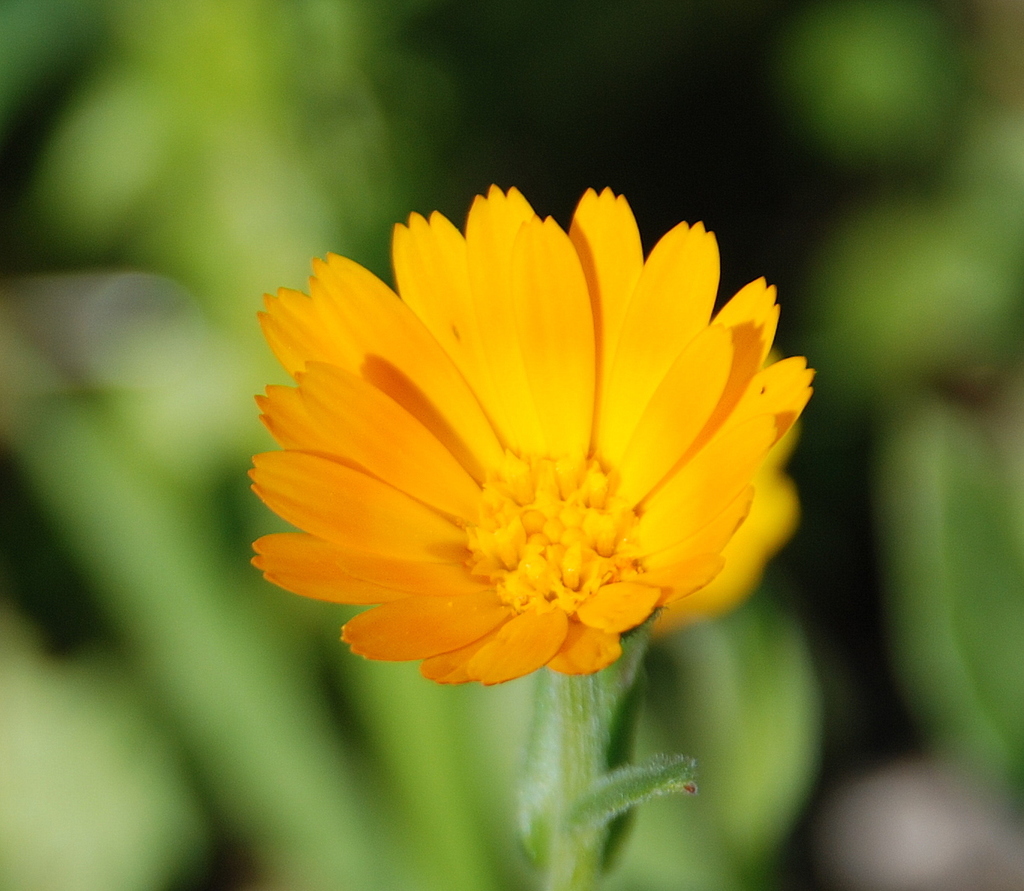
(c) ishaip, some rights reserved (CC BY-SA) · licence
Family: Asteraceae · Type: Herb · Not Native
Calendula arvensis (Field-marigold) is a non-native California herb in the Asteraceae family, recognized by . Key differences: nodding heads, petioled leaves, smaller disk corollas.
Field-marigold is a naturalized perennial found in central Sierra Nevada Foothills, central western California, and southern California coastal regions in disturbed areas and escape from cultivation at elevations below 200 meters. Flowering from March to April, this plant produces yellow to orange flowers in nodding heads with ray flowers creating delicate color variations. Growing with slender stems up to 60 centimeters tall and finely glandular-hairy throughout, it has a distinctive sprawling habit. Its leaves are thin and petioled, measuring up to 7 centimeters long, becoming smaller and more sessile toward the stem's upper sections. The fruit ranges from 3 to 12 millimeters in length, contributing to its successful spread in disturbed landscapes.
Identification and appearance
Key characters: 1 sympatric species. Key differences: nodding heads, petioled leaves, smaller disk corollas
Habitat and range
Habitat: Uncommon. Escape from cultivation in disturbed areas, sometimes established from seed mixes
Elevation: < 200 m
Outside California: native to central Europe, Mediterranean
Bloom period
Calendula arvensis blooms Mar-Apr.
How to tell it apart
vs Tagetes: Calendula has curved crescent-shaped fruits; Tagetes has straight narrow fruits and ferny aromatic leaves.; vs Gerbera: Calendula has curved fruits and smaller flowers; Gerbera has large showy flowers on tall naked stems.; vs Zinnia: Calendula has curved fruits; Zinnia has straight fruits and opposite leaves on stem.; vs Gazania: Calendula has curved fruits and fuzzy leaves; Gazania has straight fruits and white-woolly leaf undersides.; vs Dimorphotheca: Calendula fruits are strongly curved; Dimorphotheca fruits are straight and three-sided.
Frequently asked questions
Is Calendula arvensis native to California?
No. Calendula arvensis is not native to California (recorded as not native).
When does Calendula arvensis bloom?
Calendula arvensis blooms Mar-Apr.
What plant family does Calendula arvensis belong to?
Calendula arvensis is in the Asteraceae family, genus Calendula.
What habitat does Calendula arvensis grow in?
Calendula arvensis grows in Uncommon. Escape from cultivation in disturbed areas, sometimes established from seed mixes.
Related species
Other California species in the same genus, family, or bioregion.
Sources: Jepson eFlora · Index of California Plant Names · CalPhotos
Last updated 2026-10-07
Data from The California Species Project — 14,000+ California species with verified data from CNPS, CDFW, USFWS, Cal-IPC, and more.