Calocedrus decurrens
Bastard cedar
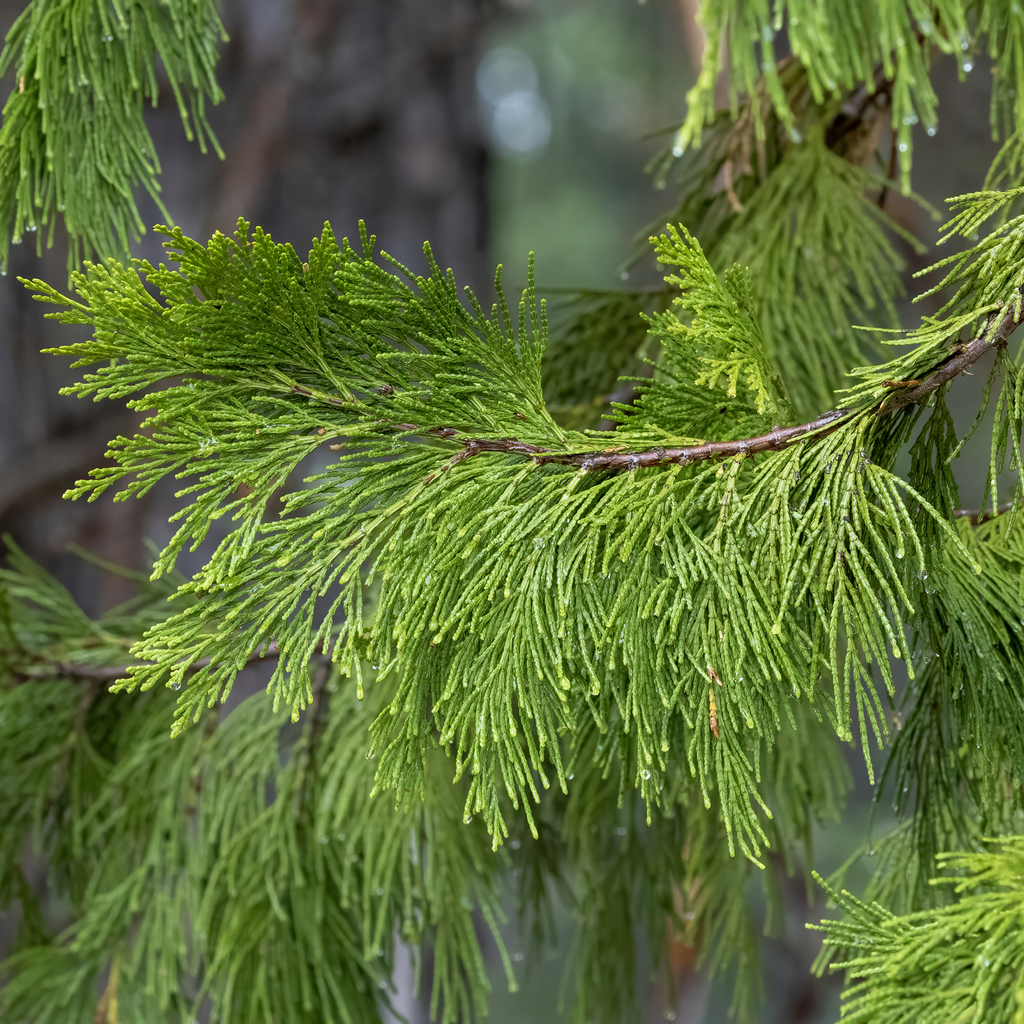
(c) Dan Vickers, some rights reserved (CC BY), uploaded by Dan Vickers · licence
Family: Cupressaceae · Type: Tree · Native
Calocedrus decurrens (Bastard cedar) is a native California tree in the Cupressaceae family, recognized by Monotypic genus with limited distribution in western North America.
Bastard cedar is a native tree found in the Klamath Ranges, northern Coast Ranges, Cascade Range, Sierra Nevada, southern Coast Ranges, Transverse Ranges, Peninsular Ranges, and Modoc Plateau in mixed-evergreen and yellow-pine forests at elevations of 350 to 2,500 meters. Producing light yellow pollen cones and light red-brown seed cones in the fall, this majestic conifer displays distinctive characteristics. Growing to an impressive height of 20 to 69 meters with a trunk up to 4 meters in diameter, it features a wide base and down-curved lower branches covered in thick, fibrous cinnamon-red bark. Its small leaves measure 3 to 10 millimeters long, complementing the tree's distinctive architectural form. The tree's seeds, ranging from 14 to 25 millimeters long including their wing, mature in yellow to red-brown tones during the autumn season.
Identification and appearance
Key characters: Monotypic genus with limited distribution in western North America
Habitat and range
Habitat: Common. Mixed-evergreen, yellow-pine forests
Elevation: 350-2500 m
California counties: Mendocino, Humboldt, Los Angeles, San Bernardino, Lake, Riverside, El Dorado, San Benito, Napa, Fresno, Del Norte, Lassen, Monterey, Kern, Madera, Butte, Placer, Mariposa, Plumas, Inyo, Modoc, Orange, Ventura, Tulare, Siskiyou, San Diego, Tuolumne, Sierra, Trinity, Santa Cruz, Nevada, Calaveras, Santa Barbara, Amador, San Mateo, Shasta, Tehama, Contra Costa, Sacramento, Alameda, San Luis Obispo, Yuba, Colusa, Santa Clara, Glenn, Yolo, Alpine
Outside California: Oregon, western Nevada, northern Baja California
How to tell it apart
vs Sequoiadendron: Calocedrus has flattened sprays with leaves appearing whorled; Sequoiadendron has rope-like twigs with awl leaves evenly pressed in four rows.; vs Juniperus: Calocedrus has hanging woody cones with 6 scales; Juniperus has round berry-like cones.; vs Pinus: Calocedrus has tiny scale leaves in flat sprays; Pinus has long needles in bundles.; vs Sequoia: Calocedrus has only scale leaves appearing whorled in fours; Sequoia has flat needles in two rows on most branches.; vs Cedrus: Calocedrus has scale leaves and hanging cones; Cedrus has needles in clusters and upright barrel-shaped cones.
Frequently asked questions
Is Calocedrus decurrens native to California?
Yes. Calocedrus decurrens is native to California (recorded as native).
Where in California does Calocedrus decurrens grow?
Calocedrus decurrens occurs in Mendocino, Humboldt, Los Angeles, San Bernardino, Lake, Riverside, El Dorado, San Benito and other counties, at elevations of 350-2500 m.
What plant family does Calocedrus decurrens belong to?
Calocedrus decurrens is in the Cupressaceae family, genus Calocedrus.
What habitat does Calocedrus decurrens grow in?
Calocedrus decurrens grows in Common. Mixed-evergreen, yellow-pine forests.
Related species
Other California species in the same genus, family, or bioregion.
Sources: Jepson eFlora · Index of California Plant Names · CalPhotos
Last updated 2026-10-07
Data from The California Species Project — 14,000+ California species with verified data from CNPS, CDFW, USFWS, Cal-IPC, and more.